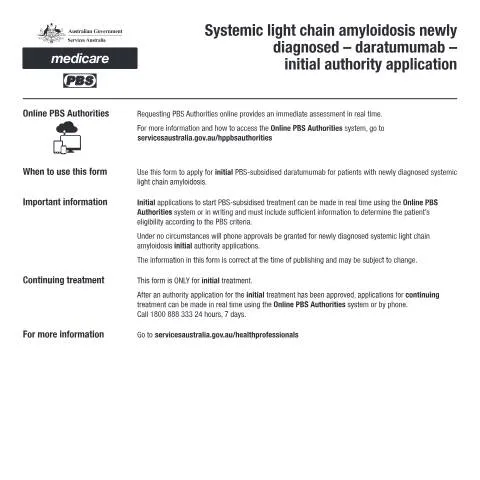
Understanding the Role of PB341 in Treating Systemic Light Chain Amyloidosis
Systemic light chain amyloidosis (AL amyloidosis) is a complex condition that requires careful management and specific therapeutic interventions. The Systemic light chain amyloidosis newly diagnosed - daratumumab - initial authority application form (PB341) plays a pivotal role in facilitating access to treatment for eligible patients. This form is utilized by healthcare professionals to initiate the authority approval process, allowing patients to receive daratumumab, a monoclonal antibody therapy specifically indicated for this condition.
The Process Behind the PB341 Submission
Submitting the PB341 form marks the beginning of a crucial journey for both the healthcare provider and the patient. The healthcare provider, typically an oncologist or a specialist in hematology, must meticulously fill out the form, ensuring that all required information is accurate and complete. This includes details about the patient's diagnosis, previous treatments, and the medical justification for prescribing daratumumab.
Key Steps in the Submission Process
- Patient Assessment: Confirm the diagnosis of systemic light chain amyloidosis through appropriate diagnostic tests.
- Form Completion: Carefully fill out all sections of the PB341 form, providing necessary clinical information and rationale for treatment.
- Submission: Submit the completed form through myGov or directly to Services Australia, following the specified guidelines.
Navigating the Regulatory Framework Governing the PB341 Form
The PB341 form operates within a broader regulatory framework designed to ensure that treatments are used appropriately and effectively. The guidelines laid out by Services Australia aim to provide a structured process that balances patient needs with the responsible use of healthcare resources.
Relevant Legislation and Policies
As part of the Australian healthcare system, the use of the PB341 form is influenced by various legislative and policy measures. The oversight on treatments like daratumumab is essential to maintain high standards of care while preventing misuse of medications. Clinicians must stay informed about any changes to treatment protocols or external criteria impacting the approval process.
What to Expect After Submitting PB341
Once the PB341 form is submitted, healthcare providers may experience a range of responses from Services Australia. Understanding these outcomes can help in managing patient expectations and planning subsequent steps in care.
Possible Outcomes of the Application
| Outcome | Description |
|---|---|
| Approval | The application is approved, allowing the patient to commence treatment with daratumumab. |
| Request for Additional Information | Services Australia may seek further information or clarification on specific points before making a decision. |
| Denial | The application may be denied based on insufficient evidence to meet the criteria for treatment. |
Addressing Denials and Missing Information
Receiving a denial or request for additional information can be disheartening, but it is an integral part of the process. Providers must know how to address these situations effectively.
Steps to Take in Case of a Denial
- Review the Decision: Examine the reasons for denial carefully to understand what information or evidence was lacking.
- Gather Supporting Documentation: Collect additional clinical data, including test results or previous treatment outcomes, that might support the case.
- Resubmit the Application: Complete a new PB341 form or provide the additional information as requested, following any specific instructions from Services Australia.
Preparing Justifications and Supporting Evidence
Completing the PB341 form requires not only filling out the form but also preparing a solid justification for the treatment request. This may include comprehensive patient histories, treatment protocols, and a discussion of alternative therapies considered.
Types of Justifications
- Clinical Evidence: Include test results that confirm the diagnosis of systemic light chain amyloidosis.
- Previous Treatment History: Document prior therapies and their outcomes, emphasizing why daratumumab is necessary.
- Patient-Specific Factors: Outline any unique considerations that affect the patient's treatment plan, such as comorbid conditions or previous reactions to therapies.
Understanding the Interconnectedness of Healthcare Processes
The PB341 form does not exist in isolation; it is part of a larger healthcare ecosystem. Understanding how this form fits into patients' overall treatment pathways is essential for both patients and healthcare providers.
Linking PB341 with Other Healthcare Services
Patients undergoing treatment for systemic light chain amyloidosis may also interact with various healthcare services, including:
- Medicare: For coverage of diagnostic tests and consultations.
- Child Support Services: If the patient is a parent requiring support during treatment.
- Specialist Referrals: Ongoing care from specialists may be necessary for comprehensive management of their health.
Final Thoughts on the PB341 Application Journey
Engaging with the PB341 application process can feel daunting, but understanding its role and the surrounding procedures demystifies the journey for patients and healthcare professionals alike. With thorough preparation and a clear strategy for submitting the application, the path to accessing necessary treatment for systemic light chain amyloidosis can be navigated more effectively.
Understanding Systemic Light Chain Amyloidosis
Systemic Light Chain Amyloidosis (AL Amyloidosis) is a rare but serious condition characterized by the accumulation of misfolded proteins known as amyloid in various tissues and organs. This accumulation can lead to organ dysfunction, particularly affecting the heart, kidneys, liver, and nervous system. It is primarily caused by plasma cell disorders, most commonly multiple myeloma. A timely diagnosis is essential for effective management and treatment.
Symptoms often include fatigue, weight loss, and swelling due to fluid retention, but these can vary significantly depending on the organs involved. Diagnosing AL Amyloidosis typically requires a combination of blood tests, urine tests, imaging studies, and sometimes a biopsy to confirm the presence of amyloid deposits. Due to its complexity, AL Amyloidosis is often misdiagnosed initially, leading to delayed treatment. Recognizing the signs early can significantly impact a patient's quality of life and prognosis.
Initiating Treatment with Daratumumab
Daratumumab is a monoclonal antibody that targets CD38, a surface protein found on multiple myeloma cells, and is increasingly being used for the treatment of AL Amyloidosis. Its approval for use in Australia provides a new avenue for patients who have limited options due to the underlying plasma cell dyscrasia associated with their disease. The medication works by inducing cell death in myeloma cells and has the potential to reduce amyloid deposition.
When initiating treatment with daratumumab, it is important to consider the patient's overall health, the extent of organ involvement, and other existing comorbidities. The therapeutic regimen often includes dexamethasone to manage potential side effects and enhance therapeutic efficacy. Furthermore, patients are closely monitored for any infusion-related reactions during the initial treatment phase. Understanding the specific dosage regimen and the scheduling of infusions is crucial, as it directly impacts patient adherence and overall treatment outcomes.
Completing the Initial Authority Application Form (PB341)
The Initial Authority Application Form PB341 is a critical document for patients seeking access to daratumumab through the Pharmaceutical Benefits Scheme (PBS) in Australia. This form is designed to facilitate the approval process for receiving subsidised medication based on clinical need. It is essential to ensure that all information is accurately completed to avoid delays in treatment.
When filling out the PB341 form, healthcare providers must provide comprehensive details about the patient's diagnosis, previous treatments, and the rationale for using daratumumab. Supporting documentation, such as pathology reports and imaging results, should accompany the application to substantiate the claim. It’s advisable to consult the PBS guidelines while completing the form to ensure compliance with necessary criteria, such as the specific treatment pathways and the patient’s clinical history.
Additionally, it is crucial to stay aware of potential updates to the PBS requirements or changes in daratumumab's therapeutic indications. Regularly checking the Services Australia website or communicating with a healthcare professional can help ensure that the application is robust and adheres to the latest standards.