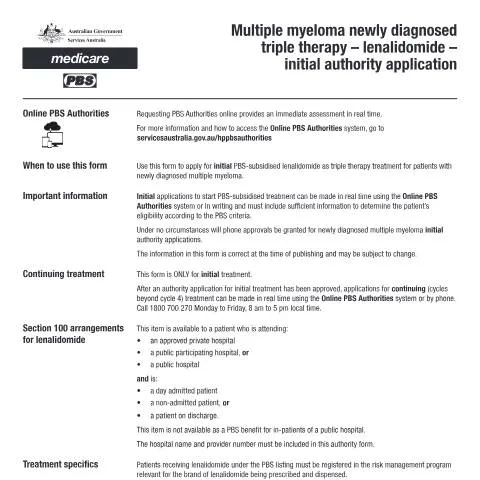
Navigating Diagnosis: The Significance of the PB293 Form for Multiple Myeloma Treatment
When faced with a diagnosis of multiple myeloma, patients and healthcare providers encounter a myriad of decisions regarding treatment options and necessary administrative procedures. One pivotal element in securing access to essential therapies is the PB293 form, formally titled "Multiple myeloma newly diagnosed triple therapy - lenalidomide - initial authority application form." This document serves as a crucial gateway for initiating coverage for lenalidomide treatment, a vital medication in managing this complex condition.
Unpacking the PB293 Form: Who Initiates the Application?
Healthcare providers play a central role in initiating the PB293 application process. Typically, this is undertaken by a medical professional, such as a specialist in haematology or oncology who has the expertise to assess the patient's clinical situation accurately. The healthcare provider must be registered with Services Australia, as this ensures they have the necessary credentials to submit the application effectively.
Characteristics of the Ideal Applicant
The PB293 form targets newly diagnosed multiple myeloma patients who meet specific clinical criteria for lenalidomide treatment. The patients typically include:
- Adults aged 18 and over
- Patients in the initial stages of multiple myeloma
- Individuals eligible for triple therapy regimens as per clinical guidelines
It's important to note that the form is not applicable for all patients with multiple myeloma. Only those who meet the clinical guidelines set out by the relevant health authorities should apply.
Step-by-Step Journey: Completing the PB293 Form
Completing the PB293 form is a detailed process that requires careful attention to various sections, ensuring that all required information is accurately provided. Here’s a breakdown of the key components of the form:
Essential Information to Provide
- Patient Details: Full name, date of birth, address, and Medicare number.
- Clinical Information: Detailed disease history, including diagnostic tests and results.
- Treatment Plan: Information regarding the proposed triple therapy regimen, including dosage specifics and duration.
- Supporting Documentation: Attach any necessary medical records and test results that corroborate the diagnosis and proposed treatment.
Filling Out the Form
While the form is designed to be straightforward, certain sections may require clinical knowledge. Healthcare providers should ensure that:
- The medical terminology used is precise and aligns with the guidelines.
- All fields are completed to avoid delays in processing.
- Signatures and dates are affixed where required to validate the application.
Once completed, the form must be reviewed for accuracy before submission to prevent any administrative hurdles later on.
Submission Channels: Online and Offline Options
Once the form is thoroughly completed, the next step is to submit it through the appropriate channels. Services Australia provides several submission options:
Online Submission via myGov
The preferred method for submitting the PB293 form is through the myGov portal. By logging into myGov, registered healthcare providers can:
- Upload the completed PB293 and any supporting documents digitally.
- Receive immediate confirmation of receipt.
- Track the status of the application in real time.
Paper Submission
For those who prefer or require traditional methods, paper submissions are also acceptable. This involves mailing the completed form to the appropriate Services Australia address. Key points to keep in mind include:
- Ensure that the form is sent via a reliable postal service.
- Consider requesting a tracking option from your postal service to confirm delivery.
Following Up: What Happens After Submission
After submission, healthcare providers can track the status of the application through myGov or by contacting Services Australia directly. It is crucial to stay vigilant during this period to address any potential issues or additional requests for information.
Expected Timelines
| Action | Expected Timeline |
|---|---|
| Application Processing | Approximately 10-20 business days |
| Approval Notification | Sent to both the healthcare provider and the patient |
| Access to Medication | Dependent on approval, typically within a week post-approval |
Addressing Issues: What If Your Application Is Rejected?
It is not uncommon for applications to encounter delays or even rejections. Understanding how to navigate this situation is essential.
Common Reasons for Rejection
Applications may be rejected for several reasons, such as:
- Incomplete information or missing documentation
- Failure to meet clinical criteria for lenalidomide therapy
- Issues related to the patient's Medicare eligibility
Steps to Rectify a Rejected Application
- Review the Rejection Letter: Examine the reasons for rejection carefully.
- Gather Additional Information: Collect any missing documentation or clarification needed.
- Resubmit the Application: Complete the PB293 form again with the additional information that addresses the rejection reasons.
In instances of persistent issues, consider seeking assistance from a health advocate or professional who can guide you through the process.
Compliance and Regulatory Framework: Understanding PB293's Context
The PB293 form operates within a broader regulatory framework established by Services Australia and other health authorities. This framework ensures that patients have access to necessary treatments while maintaining strict compliance with therapeutic guidelines.
The Legal and Procedural Backbone
Under the Administrative Decisions (Judicial Review) Act 1977, there are provisions that allow for the review of administrative decisions, including those related to treatment approvals. This means that if an application is denied, the decision can be challenged, provided there are grounds for such action.
Continual Updates and Revisions
The guidelines surrounding the PB293 form and lenalidomide treatment can evolve. Healthcare providers must stay informed about:
- Updates in clinical practice guidelines regarding multiple myeloma.
- Changes in the eligibility criteria for treatment applications.
Regular training and consultations with Services Australia representatives can be beneficial for providers.
Key Takeaways for Healthcare Providers and Patients
As the PB293 form plays a crucial role in accessing treatments for newly diagnosed multiple myeloma patients, understanding its intricacies is essential for both healthcare providers and patients. Here are some final considerations:
Empowerment through Information
- Educate Patients: Ensure that patients are aware of the need for prompt applications to secure necessary medications.
- Stay Proactive: Encourage patients to follow up on their application status regularly.
Collaboration and Support
Collaboration between healthcare providers and administrative staff can streamline the application process. Establishing efficient communication channels can aid in addressing potential issues promptly.
In the intricate world of healthcare administration, especially concerning treatments like lenalidomide for multiple myeloma, expertise in navigating forms like the PB293 can significantly impact patient outcomes. With the right approach, both healthcare providers and patients can work together to ensure timely access to essential treatments.
Understanding the Initial Authority Application Process for Lenalidomide
When navigating the Australian healthcare system, particularly for a newly diagnosed multiple myeloma patient requiring lenalidomide as part of a triple therapy regimen, understanding the Initial Authority Application process is crucial. This process is designed to ensure that patients receive timely access to medications that are deemed necessary for their treatment under the Pharmaceutical Benefits Scheme (PBS).
The Initial Authority Application Form (PB293) is a pivotal document in securing the necessary approval for lenalidomide. The application must demonstrate that the treatment aligns with PBS criteria, which include specific clinical indications and prior treatment history. Patients and healthcare providers must work closely to compile comprehensive and accurate information to support the application.
For instance, critical information often required includes details about previous therapies the patient has undergone, their response to these treatments, and any contraindications that may affect the use of lenalidomide. The authority also requires evidence of the diagnosis, which may necessitate pathology reports and other medical documentation to substantiate the claim. Such thoroughness can significantly enhance the likelihood of approval.
It’s also vital to consider the timeline associated with the submission of the PB293 form. Although the application is submitted electronically through myGov and can be completed relatively swiftly, the review process by Services Australia may take anywhere from a few days to several weeks. Therefore, it’s advisable to prepare the application as soon as possible after diagnosis to avoid delays in treatment commencement.
Eligibility Criteria and Supporting Documentation
To successfully navigate the Initial Authority Application process for lenalidomide, it’s essential to have a firm grasp of the eligibility criteria set forth by the PBS. The criteria generally outline specific health conditions, treatment histories, and demographic factors that must be met for lenalidomide to be subsidised.
For multiple myeloma patients, the PBS stipulates that lenalidomide is typically approved for those who have undergone prior treatment, such as at least one line of therapy. It is equally important that the patient demonstrates a need for the drug due to the progression of their disease. Alongside the application form, healthcare professionals should include robust supporting documentation, including:
- Medical History: A detailed account of the patient's previous treatments and their responses is vital.
- Pathology Reports: Clear evidence of the diagnosis through laboratory tests must be attached to the application.
- Letters from Specialists: Endorsements from oncologists or haematologists who can confirm the necessity of the treatment can further strengthen the application.
Providing this documentation is not merely bureaucratic; it serves as essential evidence to substantiate the medical necessity of lenalidomide for the patient's ongoing treatment. Be aware that incomplete or ambiguous applications can lead to delays or rejections, necessitating a resubmission and potentially postponing vital therapy.
Challenges and Considerations for Patients and Healthcare Providers
The journey from diagnosis to treatment for multiple myeloma patients can be fraught with challenges, particularly during the Initial Authority Application process for lenalidomide. Both patients and healthcare providers must be prepared to navigate potential obstacles that may arise, including bureaucratic delays, communication with Services Australia, and clarifications regarding medical documentation.
One common challenge is the emotional toll that the waiting period can impose on patients who are eager to start their treatment. During this time, patients may feel anxious about their health and uncertain about the future. Healthcare providers play a crucial role in providing support by maintaining transparent communication about the application status and what to expect during the waiting period.
Additionally, healthcare providers should be well-versed in the intricacies of the PBS criteria and the Initial Authority Application process. Regular training and updates on changes in policy can empower them to assist patients more effectively. Collaborating with pharmacists can also be beneficial, as they can offer valuable insights about the medication and the logistics of obtaining it once approved.
Moreover, patients should be encouraged to stay informed about their treatment options and be proactive about their healthcare decisions. Understanding the benefits and risks associated with lenalidomide therapy, along with any potential side effects, can help patients engage in informed discussions with their providers regarding their treatment plan.
Ultimately, a supportive partnership between patients and healthcare providers can lead to more successful outcomes in managing multiple myeloma and the associated bureaucratic processes.