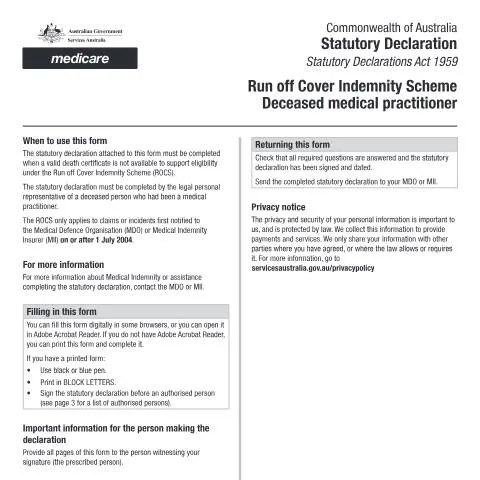
The Significance of the Statutory Declaration ROCS - Deceased Medical Practitioner Form (MO033)
In the complex landscape of Australian healthcare administration, the Statutory Declaration ROCS - Deceased Medical Practitioner Form (MO033) serves a crucial purpose. This document stands as a formal acknowledgment within the context of the deceased medical practitioners, allowing the bereaved families to navigate the necessary processes following the loss of a healthcare provider. Understanding the significance of this form is essential for those involved, particularly when it comes to accessing various health services and ensuring the continuity of care for patients.
Legislative Framework Surrounding MO033
The foundation of the MO033 form is rooted in the legislative framework governing health professionals in Australia. This framework is primarily influenced by several acts and regulations that aim to protect the integrity of the medical profession while providing a clear pathway for the administration of health services.
Legal Basis of the Statutory Declaration
Statutory declarations are governed by the Statutory Declarations Act 1959, which sets out the requirements for making a declaration under oath. The MO033 form operates within this legal framework, allowing individuals to declare certain facts concerning the status of deceased medical practitioners. The accuracy of the information provided in this declaration is critical, as it impacts subsequent actions taken by Services Australia and other relevant authorities.
Interplay with Other Regulations
In addition to the statutory declaration framework, the MO033 form is influenced by regulations from Services Australia, specifically concerning health professional registrations and entitlements. This interplay ensures that the form aligns with the broader objectives of maintaining public health integrity while facilitating the utilization of medical services.
Understanding the Structure of the MO033 Form
Completing the MO033 form requires careful attention to detail. The form is structured in a way that demands precise information about the deceased medical practitioner and the declarant. Below, we explore the key sections of the form, highlighting critical areas and potential pitfalls.
Section Breakdown
- Personal Details of the Deceased: This section requires full name, registration number, and date of death. Ensure accuracy, as discrepancies can lead to delays.
- Details of the Declarant: The individual completing the form must provide their name, relationship to the deceased, and contact details. It is vital to be honest about your relationship, as any misrepresentation may have legal repercussions.
- Declaration Statement: This area includes the declaration that the facts provided are true and correct. Notarization may be required, so be prepared with valid identification.
- Witness Information: The form must be signed in the presence of an authorized witness. Familiarize yourself with who qualifies as a witness, as this can vary based on local regulations.
Common Pitfalls in Form Completion
While the structure of the MO033 form is straightforward, several common mistakes can lead to complications:
- Omitting Key Information: Missing out on crucial details such as registration numbers can result in rejection of the application.
- Incorrect Witness Signature: Failure to have the declaration signed by an appropriate witness can invalidate the document.
- Inconsistencies: Any inconsistencies between the declaration and supporting documents may raise red flags during processing.
The Role of MO033 in the Broader Context of Healthcare Administration
The MO033 form does not exist in isolation. It plays a significant role in the overall healthcare administration landscape, particularly in terms of the continuity of services for patients who were under the care of the deceased medical practitioner. Understanding how this form interacts with other processes is essential for efficient navigation through the system.
Link to Medicare and Centrelink Services
Once the MO033 form is submitted and processed, it can unlock access to various government services, particularly in relation to Medicare and Centrelink. Families may be eligible to claim certain benefits, or in some cases, to transfer patient care to another medical practitioner without interruption.
Implications for Professional Registrations
Filing the MO033 form also has implications for the professional registrations of the deceased. It signals to regulatory bodies that the practitioner is no longer operating, which can affect patient billing, license renewals, and the availability of medical records for ongoing patient management.
A Step-by-Step Guide to Completing and Submitting the MO033 Form
Understanding the complete process surrounding the MO033 form is vital for both the emotional well-being of those involved and the successful navigation of the bureaucratic landscape. Below is a chronological overview of the steps required from the initial trigger to the final decision.
Triggering the Need for MO033
The process typically begins following the death of a medical practitioner. This event prompts family members or legal representatives to assess what needs to be done to ensure that patients are cared for and that proper notifications are made.
Gathering Necessary Information
Before you begin filling out the MO033 form, collect all relevant documentation. This includes:
- Death certificate of the medical practitioner
- Proof of identity for the declarant
- Any prior correspondence with Services Australia or related bodies
Completing the Form
With all necessary information at hand, proceed to complete the MO033 form carefully. Double-check all entries for accuracy to avoid delays in processing.
Witnessing the Declaration
Ensure that the signed declaration takes place in front of an authorized witness. This could be a Commissioner for Declarations, a legal practitioner, or a person holding a position of authority. Make sure that the witness signs and dates the document correctly.
Submitting the Form
The completed form can be submitted online through your myGov account linked to Services Australia or through traditional mail, depending on the preferred method. Ensure to keep a copy of the submitted form for your records.
Awaiting Decision
After submission, you will receive confirmation from Services Australia regarding the status of your application. If any additional information is required, they will reach out directly. It’s advisable to monitor your correspondence and respond promptly to any requests.
Unique Scenarios: Handling Special Cases with MO033
There are several unique situations where the MO033 form may require additional considerations. It's imperative to be aware of these nuances to avoid any potential hiccups in the process.
International Circumstances
For expatriates or individuals living abroad at the time of the medical practitioner's death, the filing process might differ. It may be necessary to secure documentation from local authorities or embassies to validate the circumstances and ensure the form meets Australian standards.
Minor Children as Declarants
In cases where minor children are involved, a guardian or parent must complete the MO033 form on their behalf. It is essential to include legal documentation that substantiates the guardian's role, as this can impact the form’s acceptance.
Complex Situations and Urgency
For families facing urgent circumstances, such as a medical crisis requiring immediate attention, it’s advisable to expedite the completion of the MO033 form. Seek assistance from legal professionals or consult with Services Australia for guidance on prioritizing the submission.
Final Thoughts on Navigating the MO033 Process
Completing the MO033 form is a pivotal step for families needing to address the legacy of a deceased medical practitioner. By understanding the form's intricacies and the broader context of healthcare administration, individuals can navigate the process with greater confidence.
Staying informed about potential complications, unique circumstances, and available resources will empower families to advocate for their needs effectively. As with all administrative procedures, diligence and attention to detail will prove invaluable in achieving a smooth outcome.
Understanding the Statutory Declaration ROCS Process for Deceased Medical Practitioners
When a medical practitioner passes away, certain administrative tasks must be handled with care and compliance. One of the critical aspects is the completion and submission of the Statutory Declaration ROCS for deceased medical practitioners. This form serves a crucial role in documenting the final status of the practitioner and ensuring that all necessary legal and regulatory obligations are fulfilled. Understanding the process is vital for the executor or next of kin, who are often tasked with these responsibilities.
The Statutory Declaration ROCS form (MO033) is a formal declaration submitted to the appropriate authorities in Australia. It involves providing detailed information about the deceased's medical practice, including their qualifications, any outstanding obligations, and the handling of patient records. When filling out this form, accuracy is paramount, as any discrepancies may lead to delays or complications in processing the declaration.
The submission of this form is not just a bureaucratic requirement; it also serves to protect the interests of patients who were under the care of the deceased practitioner. It ensures that patient records are managed responsibly and that any ongoing treatment or medical issues are addressed. Executors and next of kin should gather all relevant documentation, including the deceased’s registration details, to facilitate the process.
Common Pitfalls and How to Avoid Them When Filing the MO033
Filing the Statutory Declaration ROCS (MO033) can be straightforward, but there are common pitfalls that individuals often encounter during the process. Awareness of these issues can save time and ensure compliance with the legal requirements. Here are some frequent mistakes and tips on how to avoid them:
- Incomplete Information: One of the most significant errors occurs when individuals fail to provide all necessary details about the deceased practitioner. Ensure you thoroughly check the form for any required fields that might seem minor but are crucial for the declaration.
- Incorrect Signatures: The declaration must be signed in the presence of an approved witness. Failure to do so could result in the form being rejected. Always verify that your witness is on the list of acceptable witnesses as outlined by state regulations.
- Timeliness: Submit the MO033 as soon as possible after the practitioner’s passing. Some jurisdictions may have specific timelines within which this form must be submitted, and delays can lead to complications, particularly concerning patient care and records management.
- Misunderstanding the Legal Language: The statutory declaration is a legal document, and misunderstanding its terms can lead to misinterpretations. If you find yourself uncertain about any section of the form, it is advisable to seek legal counsel or assistance from a professional with experience in statutory declarations.
By being aware of these common pitfalls, those responsible for filing the MO033 can navigate the process more effectively, ensuring that the necessary legal requirements are met without unnecessary delays or complications.
Alternative Pathways: When to Seek Legal Advice for ROCS Submissions
While filling out the Statutory Declaration ROCS (MO033) may seem manageable for many, certain circumstances may warrant seeking legal advice. Understanding when it’s appropriate to consult with a legal professional can help ensure the process goes smoothly and all responsibilities are fulfilled appropriately. The following situations might indicate the need for legal assistance:
- Complex Business Structures: If the deceased practitioner was part of a larger medical practice or had complex business relationships, navigating the legal requirements of the ROCA submission can become intricate. Legal advice can ensure that all aspects of the deceased’s practice are compliant with relevant regulations.
- Contested Estates: In cases where the deceased’s estate is contested or there are disputes among heirs or beneficiaries, engaging a lawyer can help clarify the obligations of the executor in relation to the Statutory Declaration ROCS and beyond.
- Pending Legal Issues: If the deceased was involved in any ongoing legal matters or complaints, particularly within the medical profession, legal advice may be essential to navigate these complexities and ensure proper representation of the deceased’s practice in the ROCS.
- Uncertainty in Legal Obligations: If you are unsure whether certain issues, such as patient records or ongoing care protocols, need to be addressed in the declaration, consulting a legal professional can provide clarity and guidance.
Engaging legal counsel can provide peace of mind, ensuring that all statutory requirements are met and that the executor or next of kin are protected from potential future liabilities.