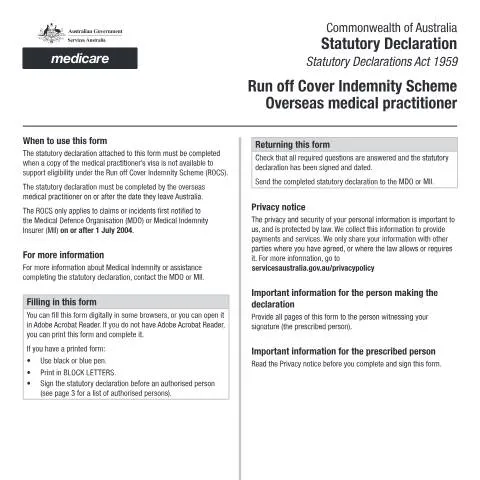
Navigating the MO035 Form: Your Pathway to Registration as an Overseas Medical Practitioner
For overseas medical practitioners looking to practice in Australia, successfully completing the Statutory Declaration ROCS - Overseas Medical Practitioner Form (MO035) is a crucial step. This form acts as a formal declaration of your qualifications and adherence to Australian standards, pivotal for recognition by the relevant authorities such as Services Australia. Mastering the nuances of this document can significantly influence your professional journey.
Understanding the Stakes: Why Your Declaration Matters
Submitting a well-prepared MO035 form can open doors to your medical career in Australia, enabling you to apply for registration with the appropriate medical board. Conversely, an overlooked detail or an incomplete submission can lead to delays or outright rejection, hindering your ability to work. Here’s what’s at stake:
- Professional Recognition: Your declaration underscores your qualifications, allowing you to practice medicine legally in Australia.
- Compliance with Australian Standards: Demonstrating compliance with professional standards is vital for both patient safety and your credibility.
- Legal Obligations: Failing to submit the form accurately could lead to legal consequences or a ban from practicing.
Before diving into the details of completing the form, understanding these implications ensures that you approach the process with the seriousness it deserves.
Step-by-Step Breakdown: Completing the MO035 Form
Header and Identification Details
The first section requires your personal information including name, contact details, and a unique Tax File Number (TFN) if applicable. Ensure that:
- Your name matches the documentation you are providing.
- Contact details are current as they will be used for all communication.
- Any identification numbers, such as your TFN, are correctly submitted to avoid processing delays.
Details of Medical Qualifications
In this segment, you will detail your medical qualifications and training. Include:
- The name of the institution where you obtained your qualifications.
- The duration of your training and any specializations.
- Any further training or qualifications acquired post-graduation.
Be meticulous; discrepancies in this section can lead to requests for further documentation, unnecessarily prolonging your registration process.
Declaration of Good Character
Your professional integrity is paramount. The declaration section asks you to affirm your good character and fitness to practice. Make sure to:
- Address any past professional conduct issues, if applicable, with transparency.
- Prepare references or documentation from previous employers or regulatory bodies, if necessary.
This is not merely a procedural hurdle; it’s crucial for the assessment of your suitability to provide health services in Australia.
Common Pitfalls: What to Watch For
Completing the MO035 form can be straightforward if approached carefully. However, certain pitfalls could derail your application:
- Incomplete Information: Ensure every section is filled out completely. Leaving blank sections can trigger automatic rejection.
- Incorrect Signatures: The declaration must be signed by an authorized witness. Familiarize yourself with who qualifies as an authorized witness in Australia.
- Outdated Information: Always check if your qualifications or personal details have changed since you initially collected your documents.
Submission Channels: Online and Offline Methods
The method of submission can impact the speed and efficacy of your application processing. Here’s a comparison of the available avenues:
| Method | Advantages | Considerations |
|---|---|---|
| Online via myGov |
|
Requires an existing myGov account, and documents must be uploaded electronically. |
| Paper Submission |
|
Longer processing times, and you will need to ensure the correct mailing address. |
Choosing the right submission method can save precious time and ensure your application is received without complications.
Post-Submission: Anticipating Responses and Next Steps
Once you have submitted your MO035 form, understanding the aftermath is essential for your planning:
Receiving Confirmation
After submission, you will typically receive a confirmation notice. This is your safety net; keep it for your records.
Potential Outcomes
There are several paths your application may follow:
- Approval: Congratulations, you will be informed of your registration status shortly!
- Request for Additional Information: This may occur if your application lacks clarity or completeness. Respond promptly and comprehensively.
- Rejection: If your application is denied, you will receive an explanation detailing the grounds for this decision.
What to Do If Your Application Is Denied
Receiving a rejection can be disheartening, but understanding your options can pave the way for a successful outcome:
- Review the Reasons: The notice you receive will outline the specific reasons for denial. Take the time to understand these thoroughly.
- Address Concerns: If the denial was due to incomplete information, prepare to gather the required documents and reapply.
- Seek Guidance: Consulting a migration agent or legal professional familiar with medical registration in Australia can provide tailored advice on how to proceed.
Special Circumstances: Who Might Need Additional Support?
Certain scenarios may require additional consideration when filling out the MO035 form:
- Practitioners with Inconsistent History: If you have changed professions or had gaps in your employment, be prepared to explain these circumstances in detail.
- Those Seeking Specialist Registration: Specific fields may have additional requirements or prerequisites that could complicate your application process.
- Non-English Speakers: If English is not your first language, consider seeking help from translation services to ensure accuracy in your declaration and the attached documents.
Understanding these intricacies can significantly influence the responsiveness of your application process.
The Importance of Professional Representation
In navigating the complexities of the MO035 form, enlisting the help of professional services may prove beneficial:
- Migration Agents: They can provide invaluable guidance on the legal and procedural requirements for overseas practitioners.
- Legal Advisors: If your situation is more complex, a legal professional with experience in health law can help mitigate risks.
Investing in such representation can enhance your chances of a successful outcome, particularly in the context of challenging situations or applications.
Final Thoughts: Preparing for a Successful Application Journey
In conclusion, the MO035 form is not merely a bureaucratic requirement; it is a vital step towards establishing your medical career in Australia. By understanding its components, anticipating common pitfalls, and preparing for any outcomes, you position yourself for success. Always remember to keep track of official communication, maintain records of your application, and don’t hesitate to seek assistance when needed. The journey to practicing medicine in Australia may seem daunting, but with careful preparation and diligence, you can navigate it effectively.
Understanding the Purpose and Importance of a Statutory Declaration ROCS
A statutory declaration is a key legal document in Australia, especially when it comes to demonstrating the authenticity of qualifications or claims made by overseas medical practitioners. The ROCS (Recognition of Overseas Competencies Scheme) is an initiative that ensures that medical practitioners trained abroad meet the required standards needed to practice in Australia. A statutory declaration serves as a formal statement made under oath, and it plays a critical role in the application process for registration with the Medical Board of Australia.
When overseas medical practitioners fill out the MO035 form, they must include a statutory declaration that attests to their qualifications, practice history, and adherence to professional standards. This declaration is not only a formality; it serves several important functions such as:
- Verification of Identity: The statutory declaration helps to confirm the identity of the applicant, ensuring that the person submitting the application is who they claim to be.
- Affirmation of Claims: By making a statutory declaration, the applicant affirms the validity of their educational and professional claims, which assists the Medical Board in making informed decisions regarding their registration.
- Legal Accountability: Providing false information can lead to severe penalties, including criminal charges. The statutory declaration ensures that practitioners are aware of the legal ramifications of their statements.
In essence, the statutory declaration is a cornerstone of the ROCS process, providing a layer of integrity and trust that is essential for maintaining medical standards in Australia.
Navigating the MO035 Form's Specific Requirements
The MO035 form is particularly comprehensive and requires specific information that must be accurately filled out by overseas medical practitioners applying for registration in Australia. Here, we will delve into the various sections of the form, highlight key requirements, and discuss common pitfalls to avoid during the application process.
1. Personal Information: At the beginning of the MO035 form, applicants must provide detailed personal information, including their full name, contact details, and any aliases. It's crucial to ensure that the information matches the documentation provided to avoid discrepancies that could delay the application process.
2. Qualifications: Applicants are required to list their qualifications, including the name of the institution, degree obtained, and dates of attendance. Supporting documents, such as transcripts and diplomas, must be included. A common mistake is failing to provide certified copies of these documents, which are mandated for verification purposes.
3. Work Experience: The form also requires a comprehensive account of the applicant's work history, outlining roles, responsibilities, and the duration of each job. This is critical for the ROCS assessment, as evaluating an applicant's clinical experience is essential for determining their suitability for practice in Australia. It’s advised to present this information chronologically and include precise dates.
4. Language Proficiency: English language proficiency is a vital aspect that overseas practitioners must address. The applicant must demonstrate their ability to communicate effectively in English through recognized tests or qualifications. Failing to provide adequate evidence of language proficiency can result in delays or even rejection of the application.
5. Health and Character Requirements: The form will also require declarations concerning the applicant’s health status and any criminal history. It’s essential to be transparent in this section, as any undisclosed issues can lead to serious consequences.
6. Identification Documents: Lastly, applicants must include copies of their identification documents, such as passports or national identification cards. It's advisable to ensure that these documents are valid and not expired when submitting the application.
By carefully adhering to the specific requirements outlined in the MO035 form and avoiding common pitfalls, overseas medical practitioners can streamline their registration process and enhance their chances of a successful outcome.
Tips for a Successful Submission of the MO035 Form
Submitting the MO035 form can be a daunting process for overseas medical practitioners, but with the right preparation and understanding, it can be managed effectively. Below are some practical tips to ensure a smooth submission process:
1. Thoroughly Review Requirements: Before filling out the MO035 form, take the time to thoroughly review all requirements listed on the Australian Health Practitioner Regulation Agency (AHPRA) website. This will provide clarity on what documentation is necessary and the format in which it should be presented.
2. Organize Documentation: Prepare all supporting documents in an organized manner. It’s recommended to create a checklist of required documents and check them off as they are gathered. This ensures that nothing is overlooked and helps streamline the submission process.
3. Seek Professional Advice: If you're unsure about any part of the process or the specifics of the documents required, consider seeking advice from a migration agent or legal professional who specializes in medical registrations. They can provide valuable insights and help avoid common mistakes.
4. Submit Online via myGov: The MO035 form can typically be submitted through the myGov portal. Ensure that your myGov account is set up and linked to the appropriate agencies. This can save time and make tracking the application status more straightforward.
5. Keep Copies: Always make copies of the submitted form and all accompanying documents for your records. This is important in case of any queries or if additional information is requested by the Medical Board.
6. Be Prepared for Follow-Up: After submission, be ready for potential follow-up from the Medical Board or AHPRA. They may request additional documentation or clarification on specific points. Respond promptly to any requests to avoid delays in processing your application.
By following these tips, overseas medical practitioners can enhance their submission experience and increase the likelihood of a successful registration outcome in Australia.