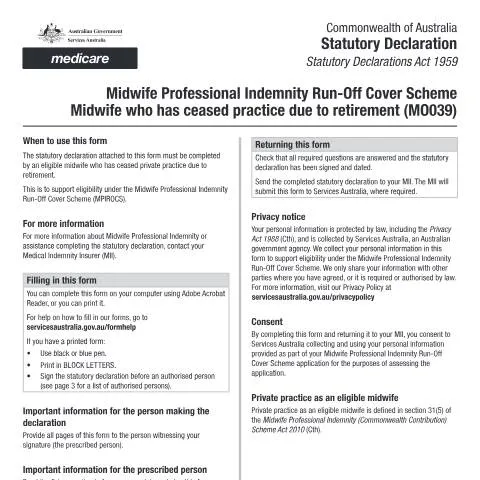
Understanding the Importance of the Statutory Declaration ROCS for Midwives
In the realm of Australian healthcare, midwives play a crucial role in providing essential maternal care. However, circumstances may arise where a midwife needs to cease practice. The Statutory Declaration ROCS - Midwife who has ceased practice form (MO039) serves as a vital document that ensures compliance with the necessary regulations and facilitates a smooth transition for midwives relinquishing their practice. This article delves into the nuances of this form, its purpose, and the procedural journey involved.
Who Needs to Submit MO039 and When?
The MO039 is specifically designed for midwives who are terminating their practice in Australia. This could be due to various reasons, such as personal circumstances, career changes, or retirement. It is essential for midwives in these situations to submit this form to remain compliant with the legal requirements set forth by Services Australia.
Midwives are advised to file the MO039 form as soon as they decide to cease their practice. Delaying the submission can lead to complications regarding their professional standing and legal obligations. Ideally, this process should be initiated as soon as the decision is made, ensuring that all necessary steps are taken before the cessation of practice becomes effective.
Key Steps in the Submission Process
- Gather Necessary Information: Before starting the form, midwives should collect all pertinent information, such as their registration details and the reasons for ceasing practice.
- Complete the Form: Accurately fill out the MO039 form, ensuring that all sections are completed thoroughly to prevent any delays in processing.
- Submit the Document: The completed form should be submitted directly to Services Australia, either online or through the designated channels as outlined on their website.
- Await Confirmation: Once submitted, midwives should wait for confirmation from Services Australia regarding the acceptance of their form and any further obligations they may have.
What Happens After Submission?
Upon submission of the MO039, midwives can expect a systematic follow-up process. Services Australia will review the information provided in the statutory declaration. If further clarification or additional information is needed, the agency will reach out to the midwife directly.
Once the form is accepted, the midwife will receive confirmation of their status change. It is critical for midwives to keep this documentation for their records as it may be needed for future professional reference or in case of inquiries regarding their practice history.
Potential Consequences of Not Submitting MO039
Failing to submit the MO039 form can result in serious repercussions for midwives. They may face legal penalties, including loss of registration, which can jeopardize their ability to practice in the future. Moreover, it could also lead to complications regarding professional indemnity insurance and other liabilities associated with their previous practice.
In essence, the statutory declaration not only formalizes the cessation of practice but also protects the midwife from potential legal complications that may arise from an unnotified cessation. Therefore, adhering to this process is not merely a formality; it’s a safeguard for both the midwife and the healthcare system.
Regulatory Framework Surrounding MO039
The necessity for the Statutory Declaration ROCS aligns with the broader framework established by the Administrative Decisions (Judicial Review) Act 1977 (Cth). This regulatory environment ensures that all health professionals maintain transparency and accountability in their practice.
Furthermore, this form is a direct reflection of the standards set by Services Australia, which oversees health professionals' regulations, including the responsibilities and rights of midwives across the country. Understanding this framework is crucial for midwives to navigate their professional journey effectively.
Legal Implications of the Statutory Declaration
Submitting the MO039 is a legal requirement that carries implications not just for the individual midwife but also for the healthcare system at large. By making a statutory declaration, midwives affirm their commitment to uphold the integrity of the profession. This document serves as a formal acknowledgment that they have ceased practice and are no longer providing services that could affect patients and the healthcare environment.
Additionally, this declaration can play a role in cases where a midwife might later seek to return to practice, as it provides an official record of their status and the reasons for their absence from the profession.
Completing the MO039: Tips and Considerations
Filling out the MO039 form may seem straightforward, but there are several key considerations midwives should keep in mind to ensure that their submission is smooth and efficient:
- Be Honest and Thorough: It is crucial to provide accurate and complete information in the declaration. Omitting details can lead to complications.
- Consult the Guidelines: Review any guidelines provided by Services Australia regarding the form to understand all requirements fully.
- Seek Professional Advice: If unsure about any aspect of the cessation process or the form, consider reaching out to a professional association or legal adviser for assistance.
Common Pitfalls in the Submission Process
While the intent behind the MO039 is clear, midwives often encounter challenges during the submission process. Here are some common pitfalls to avoid:
- Incomplete Forms: Skipping sections or failing to provide necessary documentation can delay the processing of the declaration.
- Misunderstanding the Timeline: Not adhering to the recommended timeline for submission can lead to unnecessary complications.
- Ignoring Communication From Services Australia: Failing to respond to requests for additional information can result in rejection of the submission.
Practical Implications of Ceasing Practice
Ceasing practice can have a profound impact on a midwife's career and future opportunities. Understanding these implications is crucial for midwives considering this step:
- Future Employment Opportunities: A formal cessation can affect how potential employers perceive a midwife’s professional history. Having the MO039 on file can provide clarity regarding the reason for the career change.
- Professional Relationships: Maintaining good standing with professional associations may depend on proper communication regarding one’s practice status.
- Insurance Considerations: Midwives must ensure that their professional indemnity insurance is addressed when ceasing practice to avoid any future liabilities.
Connecting with Professional Networks After Cessation
Even after ceasing practice, it’s important for midwives to remain connected with their professional networks. Engaging with peers and professional organizations can provide support and opportunities for re-entry into the workforce if desired in the future.
Furthermore, maintaining these connections allows midwives to stay updated on advancements in the field, continuing education opportunities, and legislative changes that may affect their practice should they return.
Conclusion: The Future After MO039
Filing the Statutory Declaration ROCS is a significant step for midwives transitioning out of their practice. This form not only fulfills legal requirements but also represents a turning point in a midwife's professional journey. With a clear understanding of the submission process, the implications of cessation, and the importance of formal documentation, midwives can navigate this change effectively. Moving forward, staying connected with the professional community will be invaluable, whether they choose to pursue other opportunities or decide to return to midwifery in the future.
Understanding the Statutory Declaration ROCS
A Statutory Declaration ROCS (Record of Clinical Supervision) is a vital document for midwives in Australia who have ceased practice. It serves as an official declaration of a midwife’s experiences, qualifications, and the circumstances surrounding their cessation of practice. Understanding the process of submitting this declaration is crucial for midwives aiming to return to practice or apply for re-registration.
The declaration must be truthful and should encapsulate the midwife's clinical experience, any professional development undertaken during the absence, and the reasons for ceasing practice. This document is submitted to the Australian Health Practitioner Regulation Agency (AHPRA) and is a key part of the re-registration process for midwives who have taken a break from their practice.
In preparing the ROCS form (MO039), midwives should pay careful attention to the details. It is essential to provide accurate information and be honest about the periods of inactivity. This not only reflects professional integrity but also ensures compliance with the legislative requirements set forth by AHPRA. If any gaps in practice have occurred, the midwife should reflect on how they have maintained their skills and knowledge during this time, either through education, volunteer work, or other related fields.
When completing the ROCS, midwives must be aware of the specific requirements outlined in the guidelines provided on the AHPRA website. This includes understanding the time frames in which the declaration must be submitted, as well as the format required. The document must be completed in a clear manner, ensuring that all sections are filled out adequately, and signed before a qualified witness such as a lawyer or a person eligible under the relevant Australian legislation.
Implications of Ceasing Practice
Ceasing practice as a midwife in Australia can have several implications on one’s career and licensing. Various reasons can lead to a decision to take a break from midwifery, including personal circumstances, health issues, or a desire for professional growth in a different area. It’s essential for midwives to understand how this decision may affect their registration status and future opportunities.
Midwives who cease practice for a significant period may find that their registration lapses, requiring them to complete additional training or clinical supervision before being eligible for renewal. Depending on the duration of the break, AHPRA may require evidence of Continuing Professional Development (CPD) or new assessments to demonstrate competence in their field. It is advisable for midwives to maintain a record of any CPD undertaken during their time away, as it can be beneficial for future applications.
Moreover, the socio-legal environment surrounding midwifery is ever-evolving. Changes in regulations, professional standards, and community expectations mean that a midwife who has been out of practice will need to be reacquainted with current practices and policies. This may involve attending workshops or refresher courses.
Networking can also play a crucial role when re-entering the workforce. Engaging with former colleagues and professional bodies can provide vital support and information about the status of the midwifery profession and potential employment opportunities. It is advisable to stay connected with professional associations and online communities, which can serve as a platform for mentorship and guidance during this transition.
Legal Considerations for Statutory Declarations in Australia
The legal framework guiding statutory declarations in Australia encompasses the Statutory Declarations Act 1959, which lays out the requirements for these declarations and the consequences of providing false information. Midwives completing the ROCS form must understand that a statutory declaration is a legally binding document, and any inaccuracies or dishonesty can lead to serious legal repercussions and loss of professional credibility.
When preparing the ROCS, midwives should ensure they are aware of the following legal considerations:
Witnessing Requirements: The declaration must be signed before an authorized witness. This may include a registered legal practitioner, a Commissioner for Declarations, or other specified professionals. It’s essential to consult the list of authorized witnesses to ensure compliance.
Content Accuracy: Every statement made in the ROCS must be accurate and truthful. Midwives should verify all details before submission to avoid legal challenges. If there are uncertainties about specific periods of practice or professional conduct, it may be beneficial to consult with a legal professional familiar with health practitioner regulations.
Privacy and Confidentiality: The ROCS may contain sensitive information about the midwife and their practice. It is crucial to handle this information with care, ensuring that any personal details are protected. Understanding the implications of the Privacy Act 1988 (Cth) when sharing your information is also important.
Consequences of Non-Compliance: Failure to adhere to the requirements of the statutory declaration may result in disciplinary action from AHPRA, including suspension or cancellation of registration. Understanding the ramifications of non-compliance can guide midwives in ensuring their ROCS is completed correctly.
In conclusion, the process of completing the Statutory Declaration ROCS is not only a procedural step but also an opportunity for midwives to reflect on their professional journey, reaffirm their commitment to the field, and prepare for a successful return to practice. It is imperative to engage with regulatory bodies, adhere to legal standards, and maintain a proactive approach to professional development during this transitional phase.