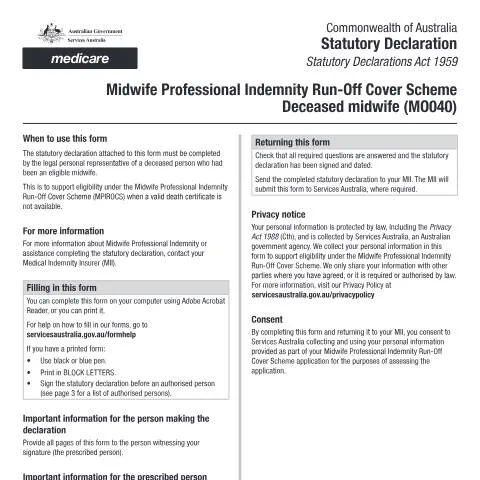
Navigating the Statutory Declaration ROCS - Deceased Midwife Form (MO040)
The Statutory Declaration ROCS - Deceased Midwife form (MO040) plays an essential role in the regulatory framework governing health professionals in Australia. It is particularly vital for the families of deceased midwives who need to formalize their status for various administrative processes.
Understanding the Context of the MO040 Form
In Australia, the health sector operates under strict regulations intended to uphold standards of care and professional conduct. The MO040 form is intricately linked to this framework, providing a mechanism for acknowledging the death of a midwife in a formal capacity. This declaration is not merely a procedural formality; it is pivotal for ensuring that families and relevant authorities can proceed with necessary arrangements, such as accessing entitlements related to the deceased's professional contributions.
The legal backdrop for this form can be traced to various acts and policies established by Services Australia, which oversees the administration of health-related matters for citizens and residents. This form aligns with the broader objectives of maintaining transparency and accountability in healthcare professions.
Who Needs to Submit the MO040 Form?
Typically, the family members or legal representatives of a deceased midwife will be responsible for submitting the MO040 form. This could include spouses, adult children, or executors of the estate. However, the circumstances can vary significantly based on individual situations:
- Spouses and Partners: Often, the spouse or partner is the primary individual tasked with submitting this form, particularly for urgent matters concerning estate administration.
- Adult Children: In cases where the deceased midwife has no surviving spouse, adult children may undertake the responsibility to complete and submit the form.
- Legal Representatives: In more complex scenarios, such as disputes among beneficiaries or where the deceased midwife had a will specifying a different executor, legal representatives may need to file the MO040 form.
Filling Out the MO040 Form: A Step-by-Step Guide
Completing the MO040 form accurately is crucial to ensure that the declaration is accepted without delays or complications. The form itself follows a structured layout, which makes it easier to fill out when you understand the required information. The key sections of the form typically include:
- Details of the Deceased Midwife: This section requires comprehensive information such as the full name, date of birth, and date of death.
- Details of the Declarant: The individual submitting the form must provide their details, including their relationship to the deceased and contact information.
- Declaration Statement: This is a formal statement that the information provided is true to the best of the declarant's knowledge.
- Signature and Witnessing: The form requires the signature of the declarant and must often be witnessed by an approved person. It's imperative to ensure that the witness is eligible, as outlined by Services Australia.
Once the form is filled out, it is recommended to review it thoroughly for any inaccuracies or missing details, as errors could lead to delays in processing.
Submission Process: Where and How to Lodge the Form
After completing the MO040 form, the next step involves its submission. It is important to follow the correct procedures to ensure that the form is processed efficiently. There are generally two ways to submit the form:
- In-person Submission: Declarants can visit their nearest Services Australia office to hand in the form directly. This option allows for immediate clarification on any queries that may arise during the submission process.
- Mail Submission: For those who prefer to submit the form by mail, it should be sent to the designated address provided by Services Australia. It's advisable to use a secure mailing method and keep a copy for personal records.
Regardless of the submission method, the declarant should ensure that all accompanying documents are included, particularly if additional evidence of the deceased’s identity and professional status is required.
What Happens After Submission? Understanding the Next Steps
Upon submission of the MO040 form, there are several outcomes that the declarant should be aware of. Services Australia will typically process the form and may reach out for further information or clarification if needed.
The timeframe for processing can vary, but it is vital to remain patient, as thorough checks are conducted to validate the information provided. Here’s what to expect:
| Step | Expected Outcome | Timeframe |
|---|---|---|
| Initial Processing | Form verified; may request additional details | 1-2 weeks |
| Approval Notification | Confirmation of declaration and next steps | 1-3 weeks |
| Final Outcomes | Access to entitlements or further actions as required | 2-4 weeks depending on complexity |
If the form encounters any issues, the declarant will receive notification detailing the specific concerns that need addressing before the application can proceed.
Addressing Complications: What If There’s a Refusal or Missing Information?
Challenges can arise during the submission or processing of the MO040 form. Common issues include refusals, missing information, or discrepancies in the provided details. Here’s how to navigate these situations effectively:
- Refusals: If the form is refused, the declarant will receive a written explanation outlining the reasons for the refusal. It is crucial to address these reasons explicitly, whether they relate to incomplete information or insufficient documentation.
- Missing Information: In cases where information is missing, the declarant may be invited to submit the additional details either through a follow-up form or a direct inquiry. Timely responses can expedite the resolution process.
- Discrepancies: If there are inconsistencies between the information provided and official records, the declarant should have supporting documents ready to substantiate their claims. This may include birth certificates, marriage certificates, or professional registrations.
In all instances of complication, staying in communication with Services Australia is paramount to resolving the issues efficiently.
Special Circumstances: What to Consider in Unique Situations
While the MO040 form is designed for general cases, specific situations may require additional considerations. Here are a few scenarios that could complicate the process:
- International Considerations: For expatriates or individuals living outside Australia, additional steps may be required to validate the deceased midwife's status. It may involve coordinating with relevant consulates or embassies.
- Minors and Guardians: If the deceased midwife is a parent or guardian, their children may require a legal guardian to submit the form on their behalf. This can add layers of complexity to the submission process.
- Urgent Situations: In cases where time is of the essence, such as when access to funds or resources is critical, declarants might consider expediting their submission through direct consultations with Services Australia.
Each unique situation warrants careful attention to detail and may require additional documentation or legal advice, depending on the complexity of the circumstances.
Resources and Support Available
Filling out the MO040 form and navigating the associated processes can be challenging. Fortunately, Services Australia offers various resources to assist individuals and families. Here are some avenues available for support:
- Services Australia Contact Centers: Direct contact can provide immediate guidance and clarification on completing the form, submission processes, and what to expect after submission.
- Online Resources: Services Australia's website typically contains up-to-date information, FAQs, and downloadable resources that can help in completing the form accurately.
- Community Support Groups: Various community organizations provide support for families dealing with similar situations, offering a network of assistance and shared experiences.
Taking advantage of these resources can significantly ease the stress associated with filling out the MO040 form and navigating the aftermath of a loved one's passing.
Understanding the Importance of Statutory Declarations in Australia
In the Australian legal framework, statutory declarations serve as a significant tool for individuals to formally declare the truthfulness of certain facts or circumstances. These declarations are utilized in various legal and administrative contexts, providing a simplified means of verifying information without the need for an affidavit. A statutory declaration in Australia must be made before an authorized witness, who can include professionals such as lawyers, police officers, or Justices of the Peace. This framework ensures that declarations are taken seriously, as they are legally binding documents that can attract penalties for providing false information.
The form MO040, specifically designed for deceased midwives, is a prime example of how statutory declarations are applied within specific professions and circumstances. It helps ensure that the legacy and contributions of midwives who have passed away are appropriately recognized and validated when required for administrative purposes. Understanding the mechanics and requirements of the statutory declaration process is crucial for those involved in such matters.
Completing the MO040 Form: Step-by-Step Guide
The MO040 form, also known as the Statutory Declaration ROCS - Deceased Midwife Form, requires careful completion. This is to ensure that the declaration accurately reflects the relevant details concerning the deceased midwife and adheres to legal standards. Below is a detailed step-by-step guide to assist individuals in successfully completing this form:
- Gather Required Information: Before filling out the MO040 form, collect essential details about the deceased midwife, including their full name, date of birth, and any relevant registration numbers or identifiers linked to their professional qualifications. Ensure you have documented evidence of their relevant work and any surviving family members or representatives.
- Access the Form: The MO040 form is available online through myGov and other relevant governmental resources. It is advisable to download the latest version to avoid any issues with outdated information.
- Fill Out the Form Accurately: Pay close attention to the instructions provided on the form. Include all required information, ensuring that it is complete and accurate. Double-check spelling and dates to prevent administrative delays. If any section does not apply, mark it appropriately as ‘N/A’.
- Indicate Relevant Context: Depending on the specific circumstances surrounding the deceased midwife, you may need to provide contextual information about their contributions, awards, or recognitions received during their professional career. This information is vital for validating the declaration.
- Signature and Witnessing: Once the form is completed, it must be signed in the presence of an authorized witness. Ensure that both parties understand the significance of the declaration being made. The witness must also sign the form, thereby confirming that they witnessed the signing.
- Submission: After the form is duly completed and witnessed, follow the submission guidelines provided by the relevant authority. This might involve submitting the form online through myGov or mailing it to the appropriate department. Always keep a copy of the submitted form for your records.
Completing the MO040 form accurately is essential for the timely processing of any claims or recognitions that may involve the deceased midwife. Attention to detail and adherence to the procedural requirements will ensure a smoother administrative experience.
Common Issues and Solutions Related to MO040 Form Submissions
When submitting the MO040 (Statutory Declaration ROCS - Deceased Midwife form), individuals may encounter various challenges that could delay the process or result in rejection of their application. Here are some common issues along with practical solutions:
- Incomplete Information: One of the most frequent reasons for delays is the submission of incomplete forms. To mitigate this, create a checklist of all required information before starting the process. Review the completed form thoroughly, and consider having a trusted colleague or legal advisor review it as well.
- Signature Issues: The validity of the statutory declaration hinges on proper witnessing. If the witness is not authorized or the signature is not clear, this could invalidate the form. To avoid this, ensure that the witness is on the list of recognized professionals, and encourage them to read through the form beforehand to understand its content.
- Submission Errors: Submitting through the wrong channel can cause considerable delays. Confirm which department or platform (e.g., myGov) is the appropriate one for submission. If mailing, ensure the address is correct and consider using registered mail for tracking purposes.
- Legality of the Declaration: If there are doubts regarding the legality of the declaration, such as questions of the witness's qualifications, it could lead to issues down the line. To address this, familiarize yourself with the list of authorized witnesses and consult legal resources or professionals if uncertain.
- Delayed Processing Times: If you experience long wait times for feedback or results, contact the relevant department’s customer service for inquiries. Keeping records of your submission and any reference numbers will facilitate quicker responses.
By understanding these common issues and their solutions, individuals can navigate the submission process of the MO040 form more effectively, ensuring that they are prepared to handle any complications that may arise.