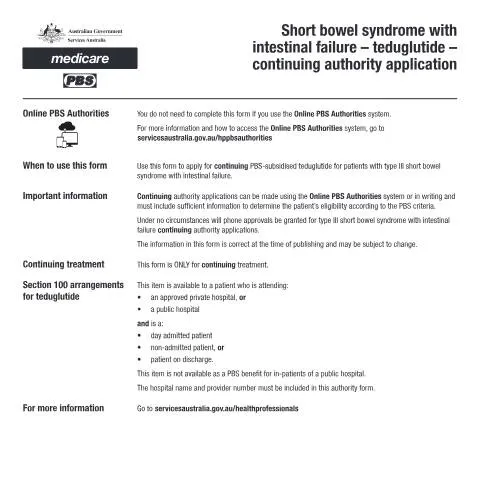
Navigating Complex Health Applications: The Role of Form PB276
For individuals grappling with short bowel syndrome and intestinal failure, accessing the right treatment can be a labyrinthine process, particularly when it comes to navigating the bureaucratic landscape of support services in Australia. Form PB276, the Continuing Authority Application Form for Teduglutide, stands as a crucial tool in this journey. But what does this form entail, who needs it, and how should it be effectively completed and submitted? Understanding these intricacies can significantly streamline the application process and ensure timely access to essential medications.
Understanding the Necessity of PB276: A Lifeline for Patients
Form PB276 is specifically designed for health professionals to apply for ongoing access to teduglutide for patients diagnosed with short bowel syndrome and intestinal failure. Teduglutide is a pivotal medication that can greatly enhance the quality of life for patients who require such treatment. The necessity for this form stems from the need for healthcare providers to demonstrate the medical justification for the use of this medication on an ongoing basis.
Defining “Short Bowel Syndrome” and its Treatment Journey
Short bowel syndrome occurs when a significant portion of the small intestine is absent due to surgical removal or a congenital condition. This condition necessitates specialized care and treatment, often including the use of teduglutide, which promotes intestinal absorption and reduces the need for parenteral nutrition.
The approval for teduglutide through PB276 provides a structured approach for health professionals to secure necessary prescriptions, making it an essential document in the continuum of care for these patients.
Who is Responsible for Submitting PB276?
While the form may primarily appear to target healthcare providers, understanding who must engage with it is vital for ensuring that the right individuals are included in the application process. The responsibility for submitting Form PB276 typically rests with a registered health professional—such as a specialist doctor—who is overseeing the patient’s treatment plan.
When Should the Form be Submitted?
This form is particularly relevant during the medication’s initiation phase and at points where continued therapy is required. The necessity to renew application submissions arises typically when:
- The initial treatment period has ended, and ongoing access is needed.
- The patient's health circumstances change, warranting a reassessment.
- There are changes in medication or dosage, prompting the need for updated approval.
Stepwise Breakdown: Completing Form PB276
Filling out Form PB276 requires meticulous attention to detail. Each section of the form has specific requirements that must be addressed to avoid delays in approval. Here’s a structured approach to successfully navigate the form's completion:
Section-by-Section Insights
- Patient Details: Ensure accurate information including full name, date of birth, and Medicare details. Any discrepancies can lead to delays.
- Diagnosis Information: Detailed information about the diagnosis of short bowel syndrome must be provided. Include pertinent medical history and current treatment protocols.
- Clinical Justification: This section requires comprehensive details on why teduglutide is necessary for the patient. Include relevant test results, treatment history, and the expected benefits of the medication.
- Health Professional Information: The submitting health professional must provide their credentials, including registration number and contact details. This information allows Services Australia to verify the legitimacy of the application.
- Consent and Signatures: The patient's consent is crucial. Ensure that the patient understands the implications of the application and that they have signed accordingly.
Gathering Supporting Documents: A Checklist for Efficiency
When submitting PB276, accompanying documents can enhance the application's credibility. Here's a checklist of potential supporting documents that should be prepared ahead of time:
Essential Accompanying Documentation
- Recent medical reports detailing the patient’s diagnosis.
- Test results relevant to the patient’s condition.
- Documentation of past treatments and responses to therapy.
- Any other supporting letters from health professionals advocating for the need for teduglutide.
Gathering these documents can markedly improve the chances of a swift approval process, as it provides comprehensive evidence supporting the need for continued treatment.
Submission Channels: Navigating Your Options
Form PB276 can be submitted via several channels, each with its nuances. Understanding these options can help streamline the process and ensure that submissions are made correctly.
Comparative Analysis of Submission Methods
| Submission Method | Advantages | Considerations |
|---|---|---|
| Online Submission via myGov | Fast processing; immediate confirmation of receipt. | Requires a myGov account; potential technical issues. |
| Mail Submission | Accessible for those less comfortable with technology. | Longer processing time; risk of postal delays. |
| In-Person Submission at Services Australia Offices | Opportunity for direct interaction; immediate clarity on queries. | May require an appointment; location accessibility issues. |
Deciphering the Processing Timeline and Monitoring Your Application
After submission, applicants often find themselves in a state of uncertainty regarding the status of their application. Understanding the typical processing timeline is crucial for managing expectations.
What to Expect after Submission
Upon receipt of Form PB276, Services Australia will review the application. The timeline for processing applications can vary based on several factors:
- The complexity of the medical case.
- Current workload and processing times at Services Australia.
In general, applicants can expect to receive a notification regarding the outcome within a few weeks, although this can vary.
Monitoring Your Submission
It's advisable for health professionals to actively monitor the status of their applications. This can typically be done through:
- myGov for online submissions.
- Contacting Services Australia directly if there are significant delays.
Following up can be critical, particularly if the medication is time-sensitive in nature.
Situations Requiring Special Attention: Complex Cases
While the standard process for submitting PB276 is straightforward, there are instances where additional considerations may apply. Certain patient circumstances can complicate the application process, necessitating particular attention. Here are some of these scenarios:
Examples of Complex Situations
- Patients with Co-morbidities: Those with additional health conditions may require a more elaborate justification for their medication needs.
- Pediatric Patients: Applications for minors may necessitate additional documentation, including parental consent and specialized medical assessments.
- Patients without Medicare: In cases where patients are not covered under Medicare, different regulations can apply, and alternative arrangements may be necessary.
Understanding the Role of Health Professionals in the PB276 Process
Health professionals are not merely facilitators of the PB276 form. Their role extends to advocacy and support for the patient throughout the application process. They must ensure that all medical justifications are accurately represented and compellingly articulated.
Advocacy for Patients
In the event of rejection or delays, health professionals can play a pivotal role in advocating for their patients by:
- Providing additional documentation as needed.
- Engaging with Services Australia to clarify any ambiguities within the application.
- Helping patients understand their rights and options for appeal.
These actions can significantly enhance the likelihood of a successful outcome for their patients.
Conclusion: Navigating the Path to Treatment with Confidence
Form PB276 is a critical document within the broader context of managing short bowel syndrome and accessing essential treatments like teduglutide. By understanding the nuances of the application process, health professionals and patients can work collaboratively to ensure timely access to necessary medications. Success in navigating this administrative landscape not only hinges on completing the form accurately but also on advocating for the patient's needs throughout the healthcare system.
Ultimately, the ability to navigate these complex processes reflects the importance of informed advocacy and thorough preparation in securing essential health services.
Understanding Short Bowel Syndrome and Its Impact on Daily Life
Short Bowel Syndrome (SBS) is a complex condition resulting from the surgical removal or congenital absence of a significant portion of the small intestine. This condition can lead to intestinal failure, where the intestines are unable to absorb enough nutrients and fluids to sustain a healthy life. Patients with SBS often face numerous challenges, including malnutrition, dehydration, and the need for parenteral nutrition (PN), which can significantly impact their daily activities and quality of life.
Individuals with SBS may experience symptoms such as diarrhea, abdominal pain, and excessive flatulence, which can hinder social interactions and physical activities. The need for frequent medical appointments, dietary restrictions, and the management of nutritional needs can create additional stress and anxiety. Furthermore, patients may also require psychological support to cope with the emotional toll of their condition. Engaging with support groups or counselling services can be beneficial for many, as it provides an opportunity to share experiences and strategies for managing life with SBS.
It is critical for healthcare professionals to take a holistic approach when treating patients with SBS, addressing not only the physical aspects of the condition but also the psychological and social components. Nutritional education and tailored dietary plans can help patients maximize nutrient absorption and improve their overall well-being. Collaboration between healthcare providers, dietitians, and patients is essential to develop effective management strategies that empower individuals to lead fulfilling lives despite the challenges posed by SBS.
The Role of Teduglutide in Managing Short Bowel Syndrome
Teduglutide is a glucagon-like peptide-2 (GLP-2) analog that has emerged as a significant therapeutic option for patients with Short Bowel Syndrome who are dependent on parenteral nutrition. By promoting intestinal growth and enhancing nutrient absorption, teduglutide can help reduce the reliance on PN, thus improving the quality of life for many individuals affected by SBS.
The mechanism of action of teduglutide involves the stimulation of intestinal epithelial cell proliferation, leading to increased villus height and crypt depth, which in turn enhances nutrient absorption. Clinical trials have demonstrated that patients using teduglutide experience a reduction in the number of days per week they require PN, along with improved hydration status and metabolic parameters.
However, as with any medication, the use of teduglutide comes with potential side effects that patients should be aware of. Common adverse reactions may include gastrointestinal issues such as nausea, abdominal pain, and, in some cases, the risk of developing intestinal obstruction. Patients should have an open dialogue with their healthcare providers about any side effects they experience and discuss the risks versus benefits of continuing the treatment. Regular monitoring and follow-up are crucial to ensuring optimal management and addressing any complications that may arise.
In Australia, patients wishing to access teduglutide may need to complete a Continuing Authority Application Form (PB276) to continue their treatment under the Pharmaceutical Benefits Scheme (PBS). This process ensures that patients remain eligible for subsidised medication while providing necessary information to health authorities regarding their ongoing treatment needs.
Applying for Teduglutide: The Continuing Authority Application Form (PB276)
The Continuing Authority Application Form (PB276) is a critical document for patients in Australia who are prescribed teduglutide and wish to continue receiving subsidised treatment. The form serves as the means by which healthcare providers communicate the clinical necessity of the ongoing use of this medication to the relevant authorities, ensuring patients maintain access to essential therapies.
To successfully complete the PB276 form, healthcare professionals must provide comprehensive information regarding the patient's diagnosis, treatment history, and current health status. This includes detailing the duration of teduglutide therapy, its effectiveness in managing the patient's condition, and any changes in the patient's clinical circumstances that could impact their treatment. It is vital for physicians to ensure that the application is thorough and accurate, as incomplete submissions may result in delays or denials of therapy continuation.
Patients should be prepared to engage actively in the application process. This may involve discussing their treatment progress with their healthcare provider and ensuring any necessary documentation is gathered to support the application. In some cases, it might be beneficial for patients to request a follow-up appointment with their healthcare team to address any concerns and ensure all information is accurately represented in the application.
Once the PB276 form is submitted, there may be a waiting period for approval. During this time, patients should maintain open communication with their healthcare provider to monitor their health status and manage any potential issues related to their SBS treatment. Understanding the application timeline and staying informed can help alleviate anxiety during this process.
In conclusion, navigating the complexities of Short Bowel Syndrome and its management with teduglutide requires a collaborative effort between patients and healthcare providers. The Continuing Authority Application Form (PB276) is just one aspect of this journey, but it underscores the importance of access to necessary treatments for improving the quality of life for individuals living with SBS.