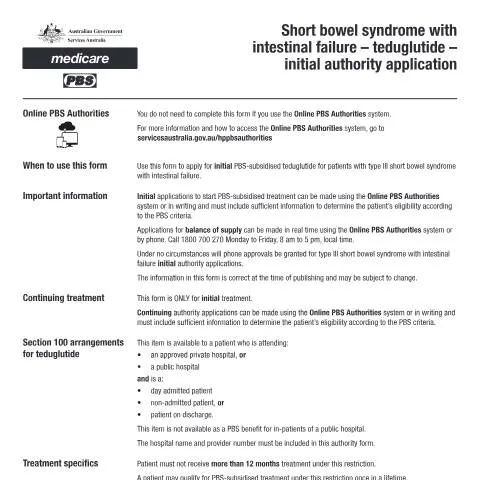
Understanding the PB275 Form: A Critical Step for Patients with Short Bowel Syndrome
Living with Short Bowel Syndrome (SBS) can significantly impact a patient’s quality of life, making effective treatment vital. The PB275 form, also known as the Short bowel syndrome with intestinal failure - teduglutide - initial authority application form, serves as a key document in accessing the medication teduglutide. This guide delves into the various aspects of the PB275 form, elucidating its role, the process of submission, and the steps following the application.
The Role of PB275 in Treatment Access
When a healthcare provider identifies a patient suffering from SBS and recognizes the need for teduglutide therapy, the PB275 becomes integral in initiating treatment. It is not merely a request for medication; it serves as a formal application to gain authority from Services Australia for the subsidization of this essential drug under the Pharmaceutical Benefits Scheme (PBS).
Importance for Healthcare Providers
Healthcare providers must understand the PB275's significance, as incorrect or incomplete submissions can delay treatment. The application provides essential clinical details that justify the need for teduglutide, including:
- Diagnosis Confirmation: Clear documentation of the SBS diagnosis, including any relevant medical history.
- Previous Treatments: Information on treatments attempted prior to this application.
- Current Health Status: Details about the patient's nutritional status and any related complications.
Completing the PB275 Form: Step-by-Step Guidance
Completing the PB275 form requires meticulous attention to detail. An accurate application can significantly affect the turnaround time for approval.
Gathering Necessary Information
Before filling out the form, it’s essential to gather all required information:
- Patient Information: Full name, date of birth, and Medicare number.
- Medical History: Detailed account of the patient’s condition and previous treatments.
- Prescriber Details: Information about the healthcare provider filling out the form.
Filling Out the PB275
The PB275 form is structured to ensure that all necessary details are captured:
- Section A: Patient’s demographic and contact details.
- Section B: Detailed clinical information, including test results and evaluations.
- Section C: Prescriber’s information, including their qualifications and experience.
It is crucial to check for accuracy, as errors can result in delays or denials.
Submitting Your PB275 Form: The Dos and Don'ts
Once the PB275 form is complete, the next step is submission. Providers may choose to submit the application via post or electronically, depending on patient circumstances.
Effective Submission Methods
It is recommended that healthcare providers:
- Retain a Copy: Always keep a copy of the submitted form for future reference.
- Follow Up: Contact Services Australia to confirm receipt, especially if submitted by mail.
Monitoring the Application
After submission, it’s important to track the status of the application. Providers can do this by:
- Utilizing the myGov platform to check status updates.
- Contacting Services Australia directly for more information.
Responding to Potential Issues: What Happens If Your Application Is Rejected?
Despite thorough preparation, there may be instances where the application for teduglutide is denied. Understanding how to respond is crucial for patients and their providers.
Common Reasons for Rejection
Applications can be rejected for various reasons, including:
- Insufficient Documentation: Lack of comprehensive medical history or test results.
- Ineligibility: Failure to meet established criteria for teduglutide use.
Steps to Take Following Rejection
Upon receiving a rejection notice, the following actions are advised:
- Review the Decision: Understand why the application was denied.
- Consult with a Specialist: Discuss potential adjustments to the application or alternative treatment plans.
- Reapply: If applicable, correct the identified issues and resubmit the PB275 form.
Navigating Complex Situations: Special Cases Involving PB275
The PB275 form may not apply uniformly to all situations. Special cases such as pediatric patients, those with previous treatment failures, or patients from overseas can present unique challenges.
Pediatric Considerations
For minors, the PB275 must include additional information regarding:
- Parental Consent: Documentation confirming that parents or guardians consent to the treatment.
- Growth Tracking: Height and weight measurements must be included to assess the impact of SBS on growth.
International Patients and the PB275
Patients who have moved to Australia from other countries may face additional hurdles:
- Residency Requirements: They must demonstrate eligibility for Medicare coverage.
- Documentation of Previous Treatment: Providing medical records from their country of origin can be crucial.
The Legislative Framework Supporting the PB275
The PB275 form is embedded within a broader legislative context aimed at ensuring patients have access to necessary medications. The importance of this form is underscored by the Administrative Decisions (Judicial Review) Act 1977 (Cth), which provides avenues for review of decisions made regarding applications.
Understanding the PBS and Its Implications
The Pharmaceutical Benefits Scheme (PBS) outlines eligibility criteria and the approval process for medications like teduglutide. Awareness of these criteria can help providers effectively prepare PB275 submissions.
Judicial Review Procedures
If an application is denied, patients and providers have the right to seek a judicial review through the Administrative Appeals Tribunal (AAT). This process allows for a more thorough examination of the decision, ensuring that patients can challenge unjust outcomes.
Preparing Your Supporting Documentation: Best Practices
To enhance the chances of approval for the PB275 application, it is crucial to include well-organized supporting documentation.
Types of Supporting Documents
Providers should consider including:
- Medical Records: Comprehensive details of the patient's condition and previous treatments.
- Specialist Reports: Letters or evaluations from specialists that endorse the need for teduglutide.
- Test Results: Up-to-date lab results that support the diagnosis of SBS.
Organizing Your Submission
Ensure that all documentation is clearly labeled and organized. A checklist can be beneficial:
- Complete PB275 form.
- Patient medical records.
- Prescriber’s credentials.
- Any additional documentation supporting the need for teduglutide.
The Future of Treatment for Short Bowel Syndrome
As the understanding of SBS and its treatment evolves, so too will the processes surrounding application forms like PB275. Ongoing research and advocacy in this field may lead to changes in eligibility criteria, leading to improved access to life-saving treatments.
Staying Informed on Treatment Developments
Healthcare providers and patients alike should remain aware of updates regarding teduglutide and the PB275 process. Regular communication with Services Australia and monitoring industry news can be beneficial. Engaging with professional networks may also help in sharing best practices and updates regarding any changes in application procedures.
Understanding Short Bowel Syndrome and Its Implications
Short bowel syndrome (SBS) is a condition that arises when a significant portion of the small intestine is missing or has been surgically removed. This can severely impact the body's ability to absorb nutrients, leading to intestinal failure. Patients with SBS often experience debilitating symptoms, including diarrhea, dehydration, and malnutrition. Understanding the specific causes of SBS—such as previous surgeries for conditions like Crohn’s disease or traumatic injuries—is crucial for healthcare providers to tailor the most effective management strategies.
In Australia, SBS can lead to a significant decrease in the quality of life for affected individuals, necessitating comprehensive care plans that might include dietary modifications, parenteral nutrition, and pharmacological interventions. As the management of SBS can be complex, it's essential for patients and caregivers to be well-informed about their condition and the available treatments, including new medications like teduglutide.
The Role of Teduglutide in Treating Intestinal Failure
Teduglutide, a GLP-2 analog, has emerged as a transformative therapy for patients with SBS who have intestinal failure. By enhancing intestinal absorption and promoting growth of the intestinal lining, teduglutide can significantly reduce the need for parenteral nutrition in eligible patients. The drug works by stimulating the existing intestinal tissue and improving the overall functionality of the remaining intestine, offering a level of independence that many patients with SBS have long desired.
Clinical trials have demonstrated that patients receiving teduglutide experience significant increases in fluid and calorie absorption, which can lead to improved nutritional status and reduced reliance on intravenous nutrition. However, it’s important to note that not all patients with SBS are suitable candidates for this therapy. Factors such as the extent of bowel remaining, underlying health conditions, and previous responses to treatment are taken into consideration when determining eligibility for teduglutide therapy.
Application Process for Initial Authority: PB275
The initial authority application for teduglutide, referenced as PB275, is a critical step for patients seeking access to this medication. As part of the process, healthcare professionals must complete the relevant sections of the application form, ensuring that all details are accurately provided to facilitate a smooth review. The form requires comprehensive patient information, including medical history and the specific reasons for requesting teduglutide therapy.
When completing the PB275 form, clinicians should pay particular attention to the clinical justification section. This is where they can outline the potential benefits of teduglutide for the patient, including anticipated improvements in quality of life and nutritional status. Additionally, any previous treatments and their outcomes should be documented thoroughly to support the case for this new therapy.
Once submitted, applications are typically reviewed by the Pharmaceutical Benefits Scheme (PBS), which assesses the clinical necessity of the medication based on the evidence provided and current treatment guidelines. Patients and their healthcare providers can track the status of their application through myGov, ensuring timely updates and communication throughout the process. Understanding the nuances of this application procedure helps streamline access to necessary treatments and supports better health outcomes for individuals with SBS.