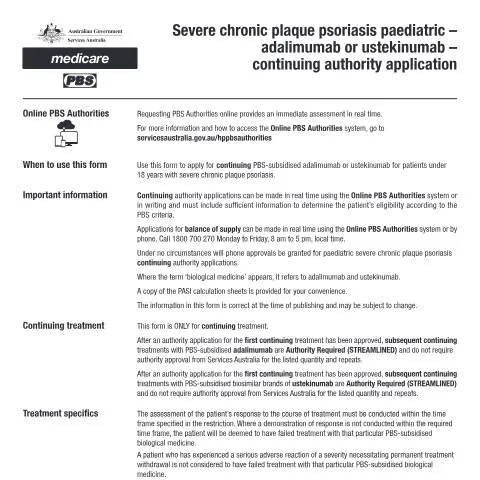
Understanding the Application Process for PB319
The application for the Severe chronic plaque psoriasis paediatric - adalimumab or ustekinumab - continuing authority application form (PB319) is a crucial step for parents or guardians seeking ongoing treatment for their children suffering from severe chronic plaque psoriasis. This form is administered by Services Australia, and understanding its nuances can significantly impact the treatment journey.
Who Needs to Submit PB319?
Typically, the PB319 form is lodged by health professionals on behalf of paediatric patients who are currently undergoing treatment with either adalimumab or ustekinumab. It is important for parents or guardians to ensure that their healthcare provider completes this application correctly to avoid any interruptions in treatment.
The following parties may find themselves involved in submitting this form:
- Healthcare Providers: Doctors who are managing the child's psoriasis treatment.
- Parents/Guardians: While they do not submit the form directly, their involvement is crucial in providing necessary information and signatures.
- Pharmacists: They may also play a role in the continuation of treatment and understanding approval timelines.
Step-by-Step Guide to Completing PB319
Completing the PB319 form requires careful attention to detail. Each section of the form is designed to gather specific information essential for the approval of continued medication use. Here’s a structured approach for filling it out:
- Personal Information: Begin by accurately filling out the details of the young patient. This includes their full name, date of birth, and Medicare number. Ensure that all information matches official documents.
- Medical History: Provide a detailed account of the child’s medical history related to psoriasis. This is crucial for assessing the severity of the condition and the necessity for ongoing treatment.
- Current Treatment Details: Indicate the specific treatment currently being administered, including dosage and frequency. This section often requires input from the prescribing doctor.
- Declaration: Both the healthcare professional and the guardian must sign the declaration section, confirming that the information provided is accurate to the best of their knowledge.
Channels for Submission: Navigating Your Options
The PB319 form can be submitted through various channels, each with its own advantages. The choice of submission method may depend on personal preference or specific circumstances:
- Online Submission: Through the myGov portal, this option provides a streamlined process with instant confirmation of receipt and the ability to track the application's progress. It is widely recommended due to its efficiency.
- Postal Submission: For those who prefer traditional methods, the form can be filled out and mailed to Services Australia. Ensure to send it via a secure method and keep a copy for your records.
- In-Person Submission: While less common, submitting the form at a local Services Australia office can provide immediate assistance and clarification if needed. It also allows for direct interaction with staff who can guide the process.
What Happens After Submission?
Once you have submitted the PB319 form, there are specific timelines and processes that come into play:
- Application Processing: Services Australia will review the application. This may involve contacting the healthcare provider for additional information if needed.
- Notification of Outcome: Applicants will receive notifications regarding the outcome of their submission. This may be through email, mail, or via the myGov portal, depending on how the application was made.
- Next Steps Following Approval or Denial: If approved, the treatment can continue without interruption. In case of denial, you will be informed of the reasons, and you may have the option to appeal or provide further evidence.
Implications of Delays or Errors
Timeliness in submitting the PB319 form is vital. Any delays or errors can have significant implications on the child’s treatment:
- Interruption of Medication: Delays in processing the form may lead to interruptions in the administration of crucial medications, potentially worsening the child's condition.
- Correcting Mistakes: If an error is identified post-submission, it is essential to contact Services Australia promptly to rectify the information. This could involve re-filing the form with the correct details.
- Understanding Rights: Parents and guardians should be aware of their rights regarding the application process, including the right to appeal decisions made by Services Australia.
Special Circumstances: Handling Unique Situations
There are several scenarios where the PB319 form may require special attention:
- Non-Residents: If the child is not an Australian resident, additional documentation may be required to determine eligibility for treatment under the Australian healthcare system.
- Complex Medical Histories: In cases where the child has co-morbid conditions or a complicated medical history, more detailed supporting documentation from healthcare providers may be necessary.
- Urgent Situations: If there is an urgent need for treatment, clearly indicating this on the form can sometimes expedite the review process. Ensure to include any supporting letters from specialists.
Legal Framework and Historical Context
The PB319 form is not just a bureaucratic checkpoint; it is embedded within a larger legal framework that governs the provision of health services in Australia. The Administrative Decisions (Judicial Review) Act 1977 (Cth) provides the basis for how decisions regarding healthcare applications can be reviewed and appealed. Understanding this context can empower users to navigate the system more effectively.
The rationale behind forms like PB319 stems from the necessity to ensure that treatments are both effective and essential for patients, particularly vulnerable populations like children. Legislative bodies and health authorities continuously evaluate guidelines to improve patient outcomes.
After a Refusal: Navigating the Appeal Process
In the unfortunate event that an application for PB319 is refused, all is not lost. There are established procedures to contest or seek clarification on decisions:
- Review the Decision: Take time to thoroughly review the letter or notification outlining the reasons for refusal. Understanding these reasons is crucial for any subsequent steps.
- Gather Further Evidence: If applicable, collect any additional medical documentation or testimonials that can support a resubmission or an appeal.
- Submit an Appeal: An appeal can be lodged through Services Australia. This typically requires a formal letter outlining reasons for the appeal and including supportive documentation.
Engaging with healthcare providers during this process can be beneficial, as they may assist in articulating the medical necessity of the treatment in question.
The Bigger Picture: Positioning PB319 within Broader Health Initiatives
The PB319 application is a part of a larger health initiative aimed at providing accessible and appropriate medical treatments to children suffering from severe chronic conditions. Understanding how this form fits into the overarching health service framework can help applicants appreciate its significance:
- Integration with Medicare: Successful completion of the PB319 form often leads to financial assistance through Medicare, facilitating access to expensive medications.
- Collaboration with Healthcare Providers: The application process fosters communication between families and healthcare providers, ensuring that treatment plans are tailored to the patient's needs.
- Policy Development: Insights gained from applications, including reasons for approvals or refusals, can lead to policy reforms aimed at improving treatment accessibility and outcomes.
In summary, the PB319 form plays a fundamental role in facilitating ongoing treatment for paediatric patients with severe chronic plaque psoriasis. By understanding the intricacies of the application process, the involved parties can significantly enhance the likelihood of a successful outcome, ensuring continuity of care for these young patients.
Understanding the Application Process for PB319: The Continuing Authority Application Form
The Continuing Authority Application Form (PB319) is a critical document in the management of severe chronic plaque psoriasis in paediatric patients in Australia. This form is essential for securing ongoing access to biological therapies like adalimumab or ustekinumab through the Pharmaceutical Benefits Scheme (PBS). Understanding the process and the specific requirements can significantly affect the patient’s treatment journey.
When applying for PB319, it is important to gather comprehensive clinical information about the patient’s condition. This includes detailed treatment history, response to previous therapies, and any adverse effects experienced. Healthcare providers must meticulously complete the form, ensuring that all required documentation is attached, such as recent medical reports and evidence of past treatments. This not only strengthens the application but also ensures compliance with PBS criteria.
Additionally, it’s crucial to stay informed about any updates to the form or guidelines from Services Australia, as these can impact the approval process. Regular consultations with a dermatologist experienced in treating paediatric psoriasis can provide valuable insights and help in tailoring the application to meet PBS requirements effectively.
Financial Considerations and Support for Families
Managing severe chronic plaque psoriasis in children can be both medically and financially challenging. The PBS offers subsidised access to medications like adalimumab and ustekinumab, but families should be aware of the financial implications that accompany these treatments. While medications are subsidised, there may still be out-of-pocket costs for consultations, assessments, and adjunctive therapies that are not covered by the PBS.
Parents can seek financial assistance through various avenues. Services Australia provides financial support in the form of the Chronic Disease Management program, which may include rebates for certain allied health services. Additionally, families should explore potential private health insurance options that may cover some of the costs associated with ongoing treatment.
Advocacy groups and support networks play a vital role in providing resources and information on navigating the financial landscape of paediatric psoriasis care. They can connect families with local and national financial assistance programs, helping them manage the costs associated with long-term treatment. Understanding the full scope of available support can alleviate some of the financial burdens faced by families dealing with severe chronic plaque psoriasis.
The Role of Education and Awareness in Managing Paediatric Psoriasis
Education and awareness are critical components in the management of severe chronic plaque psoriasis in children. Both healthcare professionals and families must stay informed about the latest treatments, potential side effects, and lifestyle modifications that can enhance the quality of life for young patients. This involves not only understanding the pharmacological aspects of treatments like adalimumab and ustekinumab but also integrating holistic approaches into patient care.
Healthcare providers should engage in ongoing education about the psychological and social impacts of psoriasis on children, as the condition can significantly affect their self-esteem and daily functioning. Workshops, webinars, and informational resources can empower families with knowledge about the condition and effective coping strategies. Schools and community groups also play an essential role in fostering an environment of understanding and support for affected children.
Creating a dialogue between healthcare professionals, families, and educational institutions can enhance patient outcomes. By promoting awareness around the challenges faced by children with psoriasis, society can help diminish stigma and improve the overall well-being of these young patients. A collaborative approach that involves education, support, and advocacy is integral to effectively managing severe chronic plaque psoriasis in the paediatric population.