Understanding the Role of the PB362 Form in Severe Aplastic Anaemia Treatment
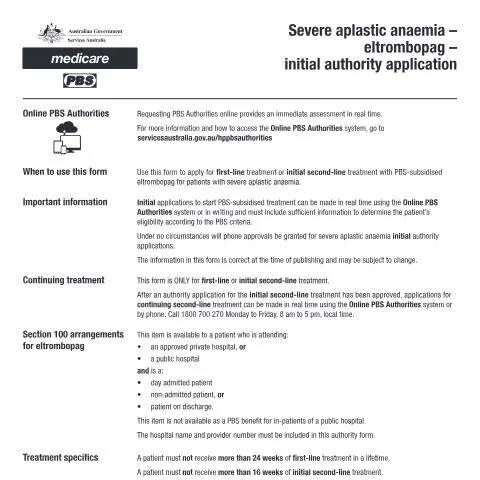
The PB362 form is an essential component in securing access to eltrombopag for patients diagnosed with severe aplastic anaemia. This form, officially titled "Severe aplastic anaemia - eltrombopag - initial authority application form," is designed for use by healthcare professionals when seeking initial authority from Services Australia, enabling eligible patients to receive this critical medication. Eltrombopag plays a significant role in managing severe aplastic anaemia, which is a life-threatening condition characterized by the body’s failure to produce adequate blood cells.
Regulatory Framework Behind the PB362 Form
Understanding the legislative foundation that governs the PB362 form is crucial. The Therapeutic Goods Administration (TGA) in Australia oversees the approval and regulation of medications, including eltrombopag. The application of the PB362 form is guided by specific criteria that ensure only eligible patients receive this treatment. It falls under the broader scope of the Pharmaceutical Benefits Scheme (PBS), which aims to provide essential medicines at a subsidized cost to the Australian population.
The Role of the Pharmaceutical Benefits Scheme
The PBS ensures that essential medications are accessible to those who need them most, addressing both health outcomes and financial challenges faced by patients. In the context of severe aplastic anaemia, the PB362 form acts as a gateway for patients to access eltrombopag when they meet the necessary medical criteria laid out by the PBS.
Who Submits the PB362 Form and When
The responsibility of completing and submitting the PB362 form primarily lies with health professionals, typically haematologists or general practitioners, who are looking after the patient’s treatment plan. This form should be submitted once a diagnosis of severe aplastic anaemia has been confirmed and when conventional therapies have failed or are deemed unsuitable. Timely submission is crucial, as accessing eltrombopag can significantly impact the patient’s quality of life and prognosis.
Completing the PB362 Form: Key Considerations
Filling out the PB362 form accurately is paramount. This document requires comprehensive details regarding the patient’s medical history, current treatment regimen, and the rationale for requesting eltrombopag. Here are several critical sections of the form to pay attention to:
- Patient Identification: Ensure all personal details such as name, age, and Medicare number are correctly filled out.
- Medical History: Provide detailed information on the patient’s diagnosis, previous treatments, and their outcomes.
- Clinical Justification: Elaborate on the rationale for prescribing eltrombopag and how it aligns with PBS criteria.
Tips for Accurate Completion
To enhance the chances of approval, health professionals should ensure that clinical justifications are well-supported by relevant medical findings. Incorporating copies of laboratory results and treatment history can strengthen the application. It is also essential to keep the language clear and concise, avoiding jargon that may confuse reviewers.
Submitting the PB362 Form: The Process
Once the PB362 form has been duly completed, it needs to be submitted to Services Australia. This can typically be done electronically through myGov, a centralised online service that connects Australians with government services. Following submission, it’s vital to keep track of the application’s status.
Monitoring Application Status
After submission, healthcare providers can monitor their application’s progress through the myGov portal. This allows for tracking responses from Services Australia and facilitates any necessary follow-up. If the application is delayed or additional information is requested, prompt action is required to prevent disruption in the patient’s treatment.
What Happens After Submission?
Once the PB362 form is submitted, the application undergoes a review process by Services Australia. The timeframe for this review can vary, as it depends on their current workload and the completeness of the submitted information. The healthcare provider will receive a notification regarding the outcome of the application, which could be an approval or a request for further information.
Understanding Approval and Rejection Outcomes
An approved application means that the patient can access eltrombopag under the PBS, significantly reducing the financial burden. It also aligns the patient with necessary ongoing monitoring and support to manage their health condition effectively. Conversely, if the application is rejected, the healthcare provider will receive feedback detailing the reasons for the decision, allowing for possible re-application with additional supporting evidence.
Consequences of Missing Information or Deadlines
Failure to submit the PB362 form accurately or on time can have serious ramifications for patients with severe aplastic anaemia. Delays in access to eltrombopag can lead to worsening health conditions and potential complications. Therefore, healthcare professionals must be diligent in reviewing all information before submission and adhering to any deadlines specified by Services Australia.
Obligations of Healthcare Providers
Healthcare providers have a duty to ensure that all information provided is truthful and comprehensive. Misrepresentation or incomplete submissions can lead to immediate rejection of the application and may also affect the relationship with Services Australia. Establishing a thorough checklist prior to submission can help mitigate these risks.
Supporting Documentation: Gathering Evidence
In addition to the PB362 form, healthcare professionals may need to provide supplemental documents to support their application. This could include diagnostic reports, treatment history, and any relevant test results. Here's a suggested list of documents to consider:
| Document Type | Description |
|---|---|
| Diagnostic Reports | Laboratory findings that confirm the diagnosis of severe aplastic anaemia. |
| Previous Treatments | Documentation of past treatments and their outcomes to justify the need for eltrombopag. |
| Clinical Notes | Any notes from consultations that outline the patient’s condition and treatment rationale. |
| Medications List | A list of current medications the patient is taking, indicating any contraindications or interactions. |
Organizing Documentation
Organising supporting documentation in a logical order can greatly enhance the clarity of the application. It is advisable to use tabs or digital folders to keep everything accessible and well-presented. This facilitates not only a smoother submission process but also aids in quicker reviews by Services Australia.
Final Thoughts on the PB362 Form Process
Completing and submitting the PB362 form for eltrombopag involves a detailed understanding of both the medical and administrative landscapes surrounding severe aplastic anaemia treatment. By ensuring a thorough, accurate, and timely submission, healthcare professionals can play a crucial role in facilitating access to this vital medication. It not only impacts the immediate health of the patient but also contributes to their overall well-being and quality of life.
The management of severe aplastic anaemia is a complex process requiring collaboration between healthcare professionals and administrative bodies. Understanding the nuances of the PB362 form and its implications allows for a more effective treatment pathway for patients, ultimately leading to better health outcomes.
Understanding Severe Aplastic Anaemia: Symptoms and Diagnosis
Severe aplastic anaemia (SAA) is a serious bone marrow disorder characterized by the failure of the bone marrow to produce adequate amounts of blood cells, leading to severe consequences for the patient's health. The condition can present with a variety of symptoms, including fatigue, increased susceptibility to infections due to low white blood cell counts, and an increased risk of bleeding owing to reduced platelet production. This triad of symptoms is crucial for diagnosis.
Diagnosis typically begins with a thorough medical history and physical examination. Blood tests are crucial for evaluating blood counts, while a bone marrow biopsy is often performed to assess the amount and activity of the bone marrow cells. It’s important to note that specific diagnostic criteria established by the International Working Group for Aplastic Anemia need to be met to confirm SAA. These criteria include a peripheral blood count showing less than 20% of normal blood cell production and a high degree of cellularity variation in the bone marrow. Given the complexities involved in the diagnosis, individuals presenting with symptoms are encouraged to seek specialist hematological assessment as early as possible.
Understanding Eltrombopag: Mechanism and Administration
Eltrombopag is a thrombopoietin receptor agonist that plays an essential role in the treatment of severe aplastic anaemia. The drug works by stimulating megakaryocyte production in the bone marrow, thereby increasing the number of platelets. It is crucial for patients, particularly those resistant to other forms of treatment, including immunosuppressive therapy or those who have experienced relapses.
The administration of eltrombopag is generally oral, which is beneficial for patient compliance compared to intravenous options. It is important to take the medication on an empty stomach, either one hour before or two hours after a meal, as certain foods can interfere with its absorption. Furthermore, the dosing regimen can vary based on clinical response, and regular monitoring of blood counts is necessary to avoid complications such as thrombosis, which can arise from elevated platelet counts.
Patients should also be aware of potential side effects, which can include liver enzyme elevations and skin reactions. Regular monitoring of liver function tests is recommended, particularly in the early treatment phases. This proactive approach allows for timely interventions should any adverse effects materialize.
Initial Authority Application for Eltrombopag: Completing PB362
To access eltrombopag under the Pharmaceutical Benefits Scheme (PBS) in Australia, patients must complete the Initial Authority Application Form (PB362), which is a critical step for obtaining subsidized access. The form requires detailed information about the patient's medical history, including prior treatments for severe aplastic anaemia and the current clinical condition.
When filling out PB362, it is essential to provide comprehensive and accurate information regarding previous medications, treatment outcomes, and any adverse reactions experienced. Inclusion of supporting documentation, such as pathology reports and notes from specialist consultations, can significantly strengthen the application. The form also requires information about the prescribing physician, including their credentials and experience in treating SAA, which is essential for establishing the necessity of eltrombopag as a treatment option.
Once submitted, the application will go through a clinical review process by Services Australia, which assesses the medical justification for the use of eltrombopag in the patient’s treatment plan. It is vital for patients and their healthcare providers to be prepared for potential follow-up inquiries, as additional information may be requested to facilitate the approval process.
Funding Considerations and the Role of Private Health Insurance
While eltrombopag is partially covered under the PBS for eligible patients, understanding the funding landscape is crucial for effective treatment management. Many patients may have private health insurance that could cover additional costs associated with their treatment, including consultations with specialists and non-PBS medications that may be prescribed alongside eltrombopag.
Patients are strongly encouraged to review their private health insurance policy to understand their coverage details, including what aspects of their treatment might be claimable. If uncertainties arise, contacting the insurance provider for clarification can help set clear expectations regarding out-of-pocket expenses. Additionally, exploring supplementary funds or grants offered by local health organizations can provide further financial assistance for those undergoing treatment for SAA.
It's also worth noting that certain states or territories may have additional resources for patients experiencing severe health challenges, so reaching out to local health services can reveal options that might not be widely advertised. This holistic approach towards funding and financial support can alleviate some of the burdens associated with long-term treatment for severe aplastic anaemia.
Patient Support Networks and Resources
Dealing with severe aplastic anaemia can be overwhelming, not just for the patient but also for their families. Therefore, engaging with patient support networks can be incredibly beneficial. Numerous organizations in Australia focus on blood disorders, providing resources, emotional support, and a platform for shared experiences among patients and families.
These networks often offer educational materials, webinars, and support groups, which can be instrumental in helping patients navigate their treatment journey. Participating in these communities allows individuals to share practical advice regarding managing side effects, coping strategies, and even the intricacies of the healthcare system when dealing with authorities like Services Australia or the ATO.
Furthermore, accessing these networks can connect patients with advocacy initiatives aimed at improving healthcare policies for individuals with blood disorders. Engaging with these organizations not only enhances patients' understanding of their condition but also empowers them to advocate for their healthcare needs more effectively.