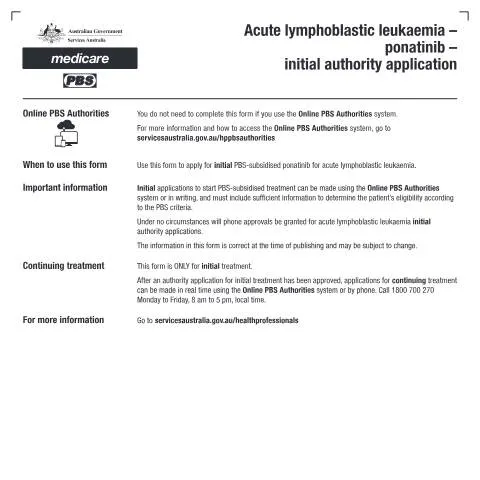
Understanding the Significance of the PB169 Form in Acute Lymphoblastic Leukaemia Treatment
When navigating the complexities of healthcare in Australia, particularly in relation to critical conditions like Acute Lymphoblastic Leukaemia (ALL), understanding the documentation required for treatment access is paramount. One such critical document is the Acute lymphoblastic leukaemia - ponatinib - initial authority application form (PB169) from Services Australia. This form plays a pivotal role in ensuring that eligible patients receive the necessary medication and treatment without unnecessary delays.
Who Needs to Complete the PB169 Form?
The PB169 form is primarily intended for healthcare professionals who are managing the treatment of patients diagnosed with Acute Lymphoblastic Leukaemia. This includes, but is not limited to:
- Oncologists and Hematologists who are directly involved in the patient's care.
- General practitioners (GPs) who might refer patients for specialized treatment.
- Healthcare institutions providing comprehensive cancer care services.
Each of these professionals must have a thorough understanding of the patient's medical history and current treatment plan, as specifics must be detailed on the form to warrant the application for ponatinib.
Deciphering the PB169 Form: Key Sections and Requirements
Completing the PB169 form requires meticulous attention to detail, as each section correlates with essential aspects of the patient's diagnosis and treatment history. Here, we break down the form into its critical components:
Patient Details
This section captures essential identifying information about the patient, including:
- Name: Ensure this matches the official documents.
- Date of birth: Important for eligibility verification.
- Contact information: Current and accurate details must be provided for follow-up.
Clinical Information
Here, healthcare providers are required to provide detailed clinical information regarding the patient’s diagnosis. This includes:
- Diagnosis confirmation: Evidence of Acute Lymphoblastic Leukaemia, including pathology reports.
- Previous treatments: A comprehensive list of treatments the patient has undergone, including any adverse reactions.
- Current health status: An overview of the patient's current condition, treatment progress, and any relevant test results.
It is crucial to provide complete and accurate medical histories as this directly impacts the approval of the application.
Reason for Treatment with Ponatinib
The healthcare practitioner must justify the need for ponatinib as the treatment of choice. This section should clearly outline:
- The rationale for selecting ponatinib over alternative treatments.
- Any clinical guidelines or evidence-based studies that support this choice.
- Expected outcomes and treatment goals.
Providing thorough justification is essential for demonstrating the necessity of this medication to Services Australia.
Filing the PB169 Form: Channels and Methods
Once the PB169 form is completed, it must be submitted correctly to ensure processing. Services Australia offers several channels through which the form may be lodged:
Online Submission via myGov
The most efficient and recommended method for submitting the PB169 form is through the myGov portal. This process allows for:
- Immediate confirmation of submission.
- Access to track the status of the application.
- Secure handling of sensitive patient information.
Paper Submission
For those who may not have access to myGov or prefer traditional means, the form can also be submitted via post. When choosing this method, it's vital to:
- Ensure all sections are filled out correctly to avoid delays.
- Send the form to the correct address designated by Services Australia for health-related applications.
- Consider using a tracking service to confirm delivery and receipt.
In-Person Submission
While less common, submitting the form in person at a Services Australia branch is an option. This can be beneficial for those requiring immediate assistance or clarification on the application process. When visiting a branch:
- Bring all necessary documentation.
- Be prepared for potential wait times.
- Have a clear understanding of the information provided in the form to answer any queries from staff.
Timeline from Submission to Treatment Decision
The journey from submitting the PB169 form to receiving the treatment approval can be intricate. Here’s a chronological overview of the typical process:
- Submission of PB169 Form: The healthcare provider submits the completed form through the chosen channel.
- Initial Assessment: Services Australia reviews the submission for completeness and adherence to guidelines.
- Clinical Review: A clinical review is conducted, where healthcare professionals assess the medical justification provided.
- Decision Outcome: The applicant receives notification regarding the approval or denial of the request.
- Treatment Commencement: If approved, the patient can commence treatment with ponatinib.
Each step may vary in duration, depending on the complexity of the case and the volume of applications being processed.
Profiling Patients: Who Benefits from Ponatinib?
The PB169 form is tailored specifically for patients with Acute Lymphoblastic Leukaemia who meet certain clinical criteria. However, it’s essential to understand the nuances that may affect eligibility:
- Age Factors: Certain age groups may respond differently to ponatinib, and healthcare providers must consider this when recommending treatment.
- Previous Treatment History: Patients who have undergone multiple treatments or who have had adverse reactions to conventional therapies may be prioritized.
- Overall Health Status: Considerations around the patient's general health and any coexisting conditions will influence the decision-making process.
Exceptions and Special Cases
There may also be exceptions to standard procedures, such as:
- Patients showing resistance to first-line therapies may be fast-tracked for ponatinib.
- Special cases involving pediatric patients may have tailored guidelines.
- Patients with specific genetic markers that respond positively to treatment with ponatinib.
Interacting with Services Australia: Keeping Track of Your Application
After submission, maintaining communication with Services Australia is essential. Here are practical methods to follow up:
- Online Tracking: If submitted via myGov, users can check the status of their application in real-time.
- Phone Inquiries: Patients or their representatives can call Services Australia to inquire about the progress.
- Email Communication: For any specific queries or clarifications, contacting Services Australia through their designated email may yield quicker responses.
It is advisable to keep notes of all communications for reference and clarity.
What’s at Stake: Implications for Patients and Healthcare Providers
Understanding the implications of the PB169 application process is crucial not only for patients but also for the healthcare providers assisting them. Here are key points to consider:
- Rights to Access Treatment: Patients have the right to timely access treatments deemed necessary for their health, provided applications are submitted correctly.
- Obligations of Healthcare Providers: It is the duty of healthcare professionals to ensure that applications are complete and accurate; failure to do so can result in delays or denial of treatment.
- Consequences of Delays: Delays in processing the PB169 form can significantly impact a patient’s health, especially in critical conditions like ALL.
Preparing Supporting Documents
Alongside the PB169 form, preparing supporting documents is critical. These may include:
- Pathology Reports: These provide concrete evidence of diagnosis.
- Historical Treatment Records: Documentation of previous treatments and their effectiveness.
- Letters of Support: Written endorsements from specialists can add weight to the application.
Organizing these documents in advance can facilitate a smoother submission process and reduce the likelihood of delays.
The Future of Treatment Access for Acute Lymphoblastic Leukaemia
The PB169 form stands at the intersection of patient care and administrative diligence. As healthcare continues to evolve, the processes surrounding the approval of medications like ponatinib will likely undergo adjustments aimed at improving efficiency and effectiveness. Continuous feedback from healthcare providers and patients is essential in refining these processes to serve the community better.
In conclusion, the PB169 form is not merely a document; it is a critical tool in the fight against Acute Lymphoblastic Leukaemia, ensuring that those who need treatment the most can access it promptly and with the necessary support from healthcare professionals.
Understanding the Initial Authority Application Form (PB169) for Ponatinib
When it comes to accessing medications like ponatinib for the treatment of acute lymphoblastic leukaemia (ALL), understanding the Initial Authority Application Form (PB169) is crucial. This application form is a key component of the Pharmaceutical Benefits Scheme (PBS) in Australia, which provides subsidised prescription medications to residents. The PB169 form is specifically designed for healthcare providers to apply for authority approvals to prescribe ponatinib, ensuring patients have access to this critical medication while adhering to PBS regulations.
The PB169 form requires detailed information about the patient's medical history, including previous treatments, the specifics of their ALL diagnosis, and any other relevant clinical details. It's vital for healthcare professionals to provide thorough documentation to justify the need for ponatinib as part of the treatment regimen. This might include information such as the patient's response to prior therapies, any adverse effects experienced, and the rationale behind choosing ponatinib as the next line of treatment.
Moreover, healthcare providers should be aware of the timelines involved in the application process. Once the PB169 form is submitted to Services Australia, the approval can take several business days. While many applications are processed quickly, it's recommended to submit the application as early as possible to avoid delays in accessing the medication.
Application Process: Step-by-Step Guide
Navigating the application process for the PB169 form can seem overwhelming, but breaking it down into manageable steps can help healthcare providers and patients alike. Here is a step-by-step guide to streamline the process:
Get Familiar with the Requirements: Before starting the application, it is essential to review the PBS criteria for ponatinib. This includes understanding the indications for use and the clinical guidelines that govern the prescription of this medication.
Complete the PB169 Form: The form can be accessed through the myGov portal, where healthcare providers can log in and submit the application electronically. Ensure that all sections of the form are filled out completely and accurately.
Gather Supporting Documentation: In addition to the form, gather all necessary supporting documentation that outlines the patient’s medical history and previous treatments. This may include pathology reports, treatment summaries, and letters from specialists.
Submit the Application: After thoroughly reviewing the completed form and supporting documents, submit the application through the myGov portal. Retain a copy of the submission for your records.
Await Approval: After submission, the healthcare provider will receive a notification regarding the approval status. If approved, the patient will receive instructions on how to fill their prescription, including pharmacy details.
Handle Potential Requests for Further Information: Sometimes, Services Australia may require additional information before granting approval. Being prompt and thorough in responding to these requests can expedite the process.
Stay Informed: Keep abreast of any changes to PBS requirements or the application process, as these can evolve. Continuous communication with healthcare networks can provide updates and support.
By following these steps, healthcare providers can facilitate a more efficient application process, ensuring patients have timely access to ponatinib as part of their treatment plan for acute lymphoblastic leukaemia.
Potential Challenges and How to Overcome Them
While the PB169 application process is designed to be straightforward, applicants may encounter several challenges along the way. Understanding these common obstacles and knowing how to address them can significantly improve the experience for both healthcare providers and patients.
Incomplete Applications: One of the most frequent reasons for delays or denials is the submission of incomplete information. To combat this, providers should create a checklist of required information before submitting the PB169 form. Reviewing the application with colleagues or using available resources can help ensure completeness.
Complexity of Medical Information: Translating complex clinical data into the language of the PB169 form can be challenging. Healthcare providers should strive to present information clearly and concisely, avoiding jargon that might confuse the reviewers. Using structured templates or guidelines from professional associations can aid in this process.
Time Constraints: Healthcare providers, especially in busy clinics or hospitals, often face time constraints that can lead to rushed applications. Allocating dedicated time for the application process can help alleviate this pressure. Setting reminders for follow-ups can also ensure timely submission and response.
Communication Issues with Patients: Patients may feel anxious or confused about why they need to wait for an approval before starting treatment. Effective communication about the process, including expected timelines and the reasons for the authority application, can help set appropriate expectations and alleviate concerns.
Handling Denials or Rejections: In the event that an application is denied, it’s essential to review the reasons for rejection carefully. Providers can appeal the decision by submitting additional information or clarifying previous submissions. Understanding the appeals process under the Administrative Decisions (Judicial Review) Act 1977 (Cth) is critical in these situations.
By proactively addressing these challenges, healthcare providers can enhance the patient experience and ensure that those needing ponatinib for acute lymphoblastic leukaemia receive it without unnecessary delays.