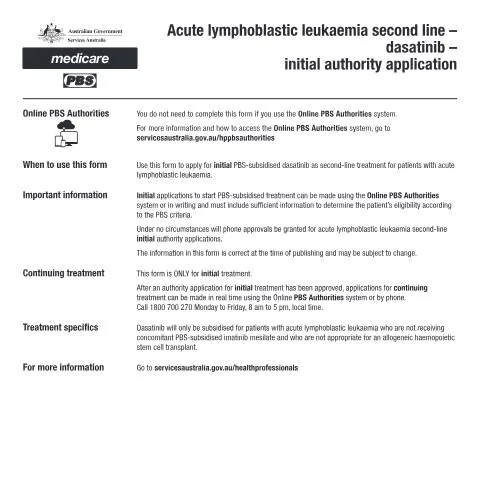
Understanding the Importance of Form PB077 in Patient Care
When dealing with the complexities of healthcare, especially in the context of serious conditions such as Acute Lymphoblastic Leukaemia (ALL), timely access to treatment is crucial. The Acute lymphoblastic leukaemia second line - dasatinib - initial authority application form (PB077) plays a pivotal role in facilitating the necessary medical interventions for patients requiring this specific therapy. This application is not merely a bureaucratic form; it represents a gateway to essential treatment, guiding healthcare professionals and patients through the intricate process of obtaining authority for dasatinib use.
Who Engages with the PB077 Application Process?
The PB077 form is primarily designed for healthcare professionals such as oncologists and paediatric haematologists who are responsible for prescribing dasatinib. It also involves various stakeholders, including:
- Patients: Individuals diagnosed with Acute Lymphoblastic Leukaemia who require second-line treatment.
- Caregivers: Family members or guardians assisting minors or individuals with cognitive impairments.
- Health Administrators: Staff involved in the approval and processing of authority requests.
It’s essential for each party to understand their role in the process to ensure that the application is completed accurately and submitted in a timely manner.
Navigating the Application: Channels and Methods
Submitting Your Application
Healthcare professionals have multiple channels available for submitting the PB077 form. Understanding these options can streamline the process:
- Online Submission: The most efficient method, allowing for direct uploads to a secure portal. This option often leads to faster processing times.
- Paper Submission: While still available, this method can introduce delays due to postal service times. It requires careful attention to ensure all parts of the form are printed and signed.
- In-Person Submission: Some facilities may allow healthcare professionals to submit the form directly at designated offices. This can be beneficial for urgent cases.
Choosing the right submission method can significantly impact the speed at which treatment is authorized, especially in urgent situations.
The Chronology of the Application Process
Understanding the entire journey of the PB077 application from inception to final decision is vital for effective patient management. Here’s a step-by-step overview:
- Diagnosis: The patient is diagnosed with Acute Lymphoblastic Leukaemia and requires dasatinib as a second-line treatment.
- Prescribing Doctor Consultation: The healthcare professional reviews treatment options and determines the necessity of dasatinib.
- Form Completion: The PB077 form is filled out, ensuring that all required information is included to avoid delays.
- Submission: The completed form is submitted through the chosen channel.
- Review by Services Australia: The application is reviewed for completeness and medical necessity.
- Approval or Denial Notification: The healthcare provider receives a notification regarding the outcome.
- Commencement of Treatment: Upon approval, the patient can start treatment with dasatinib as per the prescribed regimen.
This structured approach underscores the importance of timely action and clear communication among all parties involved.
Diving into the Details of the PB077 Form
The PB077 form contains several critical sections that require thorough understanding and careful completion. Here’s a breakdown of some of the most important components:
Patient Information Section
Gathering accurate patient information is crucial. Ensure that the following details are precise:
- Full Name: As per official documentation.
- Date of Birth: This assists in verifying patient identity.
- Medicare Number: Important for billing and insurance purposes.
Clinical Details
In this section, healthcare professionals must provide the patient's clinical history and treatment justification:
- Diagnosis Confirmation: A detailed explanation of the diagnosis is necessary, including any supporting pathology reports.
- Previous Treatments: Outline what treatments have been attempted previously and their outcomes.
Prescribing Information
Healthcare providers must include information regarding the recommended dosage and treatment plan:
- Dosage: Specify the prescribed dose of dasatinib and its administration schedule.
- Rationale for Treatment: Clearly articulate why this treatment is necessary as opposed to alternatives.
Unique Circumstances and Special Cases
Not all applications will fit a standard mold. Specific situations may require additional considerations:
- Minor Patients: For children, consent from a parent or guardian is mandatory. Ensure all necessary signatures are obtained.
- Patients with Complex Medical Histories: Additional documentation may be needed to substantiate the request.
- Urgent Circumstances: If there is a need for accelerated processing due to rapidly deteriorating health, it’s vital to communicate this clearly in the application.
Post-Submission: Monitoring the Application
Once the PB077 form has been submitted, it is crucial to stay informed about the application’s status. Here’s how to effectively monitor progress:
- Tracking Online: If submitted online, use the tracking features available through the services portal.
- Follow-Up Calls: For paper submissions, contacting Services Australia can provide clarity on the application status.
- Documentation Ready: Keep all original documents and any communication organized in case of requests for more information.
Engaging proactively can help address any potential delays or issues that may arise during the review process.
Understanding the Administrative Review Process
In some cases, applications may be denied or require additional information. Understanding the avenues for administrative review is essential:
- Appeal Procedures: Familiarize yourself with the process to challenge a denial, including timelines and necessary forms.
- Merits Review by AAT: Should an appeal be necessary, the Administrative Appeals Tribunal (AAT) offers further review options.
Being informed about these processes ensures that patients can continue to advocate for their health needs effectively.
Conclusion: The Role of PB077 in Healthcare Navigation
Form PB077 is a crucial document that facilitates access to life-saving treatment for patients battling Acute Lymphoblastic Leukaemia. By understanding the nuances of this application, healthcare professionals and patients alike can navigate the complexities of obtaining necessary medical approvals. The effective completion and submission of this form lay the foundation for timely treatment, which is vital in the fight against cancer.
Understanding Acute Lymphoblastic Leukaemia and Treatment Options
Acute Lymphoblastic Leukaemia (ALL) is a type of cancer that affects the blood and bone marrow, characterized by the rapid overproduction of immature white blood cells. The age of onset varies, with the disease being most prevalent in children and young adults. Understanding the condition's pathology is vital for patients and their families as they navigate treatment options.
While the first-line treatments often include chemotherapy regimens and may involve a combination of agents tailored to individual patient profiles, second-line treatments are critical for those who experience relapsed disease or do not respond adequately to initial therapies. Dasatinib, a tyrosine kinase inhibitor, is often utilized in these situations, especially for patients with Philadelphia chromosome-positive ALL. Its role in targeting specific genetic mutations places it at the forefront of targeted cancer therapy.
Patients must engage with healthcare professionals to assess the appropriateness of dasatinib in their treatment plan, considering factors such as prior therapies, overall health status, and potential side effects, which could include pleural effusion, myelosuppression, and metabolic changes. An informed dialogue is essential, facilitating shared decision-making regarding treatment paths.
Completing the Initial Authority Application Form (PB077)
The Initial Authority Application Form (PB077) plays a crucial role in accessing dasatinib as a subsidized medication within the Australian healthcare system. Submitting this form accurately is paramount to expedite the approval process, ensuring timely access to essential treatments. Here are some detailed steps and considerations for completing the PB077 form effectively:
- Personal Information: Begin by providing your full name, contact details, and your Medicare number. Ensure that all the information entered matches what is recorded in the Medicare system to avoid administrative delays.
- Clinical Details: This section requires comprehensive medical information, including the diagnosis of ALL, previous treatments, and the specifics of your current health status. It’s important to include any pathology reports, genetic testing results, and previous treatment outcomes. Clear documentation that supports the necessity for dasatinib can significantly enhance the chances of approval.
- Prescriber Details: The form must be signed by a medical practitioner who is authorized to prescribe dasatinib. Include their provider number and practice address. Doctors should also provide a brief justification for the usage of dasatinib over other treatment options, citing evidence-based guidelines where applicable.
- Signature and Declaration: Both the patient (or their legal guardian) and the prescriber need to sign the form. This section is critical as it confirms that all provided information is accurate and that the patient understands the implications of treatment with dasatinib.
After completing the form, it can be submitted via mail to the relevant health authority for processing. Keep a copy of the submitted form for personal records. Remember that variations in state and territory regulations may apply, so it's advisable to contact local health services if you encounter any uncertainties during the completion process.
Accessing Support Services and Resources
For individuals diagnosed with acute lymphoblastic leukaemia, navigating the complexities of treatment options, including dasatinib, can be overwhelming. Thankfully, numerous support services exist within Australia that are tailored to assist patients and their families through this difficult journey.
Patient Advocacy Groups: Organizations such as Leukaemia Foundation Australia provide valuable resources, including educational materials, emotional support, and practical assistance with navigating healthcare systems. Engaging with such groups can help you connect with others undergoing similar experiences, offering both information and emotional solace.
Financial Assistance: Understanding the financial implications of cancer treatment is crucial. Explore options through government programs and private insurance plans that may cover the costs associated with dasatinib therapy. Services Australia can provide information on eligibility for various assistance programs available to patients undergoing cancer treatment, including any relevant subsidies or financial aid services.
Counselling and Psychological Support: It’s common for patients to experience stress, anxiety, or depression following a cancer diagnosis. Accessing psychological support through counseling services can be beneficial for both the patient and their families. Many hospitals offer free or low-cost mental health support, and local community health services can provide additional resources.
Clinical Trials: Patients might also consider participating in clinical trials exploring new treatment modalities, including novel uses of dasatinib. The Australian New Zealand Clinical Trials Registry provides a comprehensive database of ongoing clinical trials, allowing patients to assess eligibility and understand the potential benefits and risks involved.
Remember, seeking assistance from professionals and peer support networks can significantly enhance your journey through treatment, providing not only medical guidance but also emotional resilience.