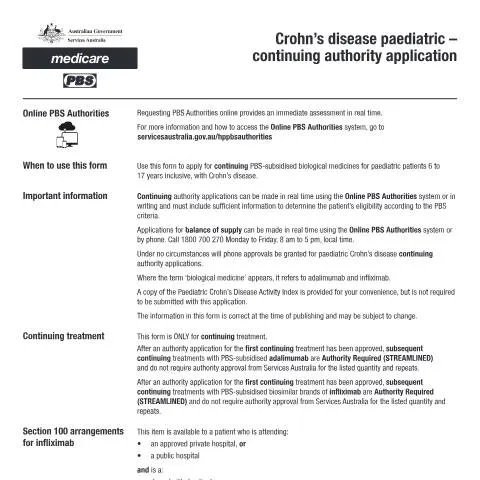
Understanding the Crohn's Disease Paediatric Authority Application
In the realm of healthcare, particularly for young patients dealing with chronic conditions like Crohn's disease, navigating the administrative landscape can often feel overwhelming. The Crohn's disease paediatric - continuing authority application form (PB161) serves as a crucial tool for families seeking ongoing support from Services Australia. This document is integral for ensuring that children with Crohn's disease receive the appropriate treatment and financial assistance they need throughout their management journey.
Who Needs to Submit the PB161 Form?
The PB161 form is specifically designed for healthcare professionals who are advocating on behalf of paediatric patients diagnosed with Crohn's disease. Primarily, this includes:
- Children under 18 years old: The primary demographic affected by this form, whose ongoing treatment needs must be adequately documented.
- Parents or Guardians: Responsible for submitting the form on behalf of the child, ensuring all necessary documentation is provided.
- Healthcare Providers: Specialists such as paediatric gastroenterologists who are responsible for the child's care and can validate the necessity for ongoing treatment.
Understanding the nuances of who can submit this form is essential, as each case may present unique complexities. For instance, guardians of children who are not permanent residents may face additional regulations and requirements that differ from those with Australian citizenship.
A Step-by-Step Guide to Completing the PB161
Filling out the PB161 effectively demands attention to detail and a thorough understanding of the requirements. Here's a structured approach to ensure completeness:
- Gather Necessary Documentation: Collect relevant medical records, treatment history, and any previous applications or approvals.
- Personal Information: Ensure that the child's details, including their full name, date of birth, and Medicare number, are accurately entered.
- Medical Necessity Section: This is where the healthcare professional must clearly articulate the need for ongoing treatment. Specific details about the child’s diagnosis, treatment plan, and why continuity of care is critical are required.
- Signature and Declaration: Both the guardian and the healthcare provider must sign the form, validating the information provided.
Completing the form meticulously helps prevent delays in processing and ensures that the child's case is reviewed promptly.
Documentation Insights: What to Prepare
The effectiveness of the PB161 form relies heavily on the documentation accompanying it. Here’s a breakdown of the types of documents that may be required:
| Document Type | Purpose |
|---|---|
| Medical Reports | To provide evidence of the diagnosis and severity of Crohn's disease. |
| Treatment Plans | To outline the prescribed care and the necessity for ongoing authority. |
| Previous Authority Notices | To reference any past approvals and continuity in treatment. |
Each document should be up-to-date and clearly indicate the child’s medical history. In cases where specialists have changed, a comprehensive history from the new provider can be invaluable.
Unique Cases: Navigating Complexities
While many applications will follow a standard process, there are unique cases that may require additional consideration. Notably:
- Non-Australian Residents: Families who are on temporary visas may need to demonstrate their eligibility for support, which can complicate the submission process.
- Minors with Legal Guardianship Issues: In cases where legal guardianship is contested, documentation proving guardianship may be required.
- Emergency Situations: If a child requires immediate medical assistance, expedited submission procedures may need to be considered.
Understanding these scenarios in advance can help mitigate potential roadblocks in the application process.
Key Dates and Timeframes: Planning Ahead
Awareness of important dates can significantly influence the application process. The PB161 has specific timelines associated with it:
- Application Submission: Ideally, submit the application at least 4-6 weeks prior to the end of the current authority to ensure no lapse in treatment.
- Processing Times: Typically, it can take several weeks for Services Australia to process the application, depending on their caseload and the complexity of the submission.
- Renewal Periods: Ongoing submissions may be required annually or biannually, based on the child's treatment plan and the medical advice provided.
By being proactive with these timelines, families can help ensure that their child’s treatment is continuous and uninterrupted.
Dissecting the PB161 Form: A Detailed Examination
Diving deeper into the specifics of the PB161 form, let’s analyze its sections to identify common pitfalls and highlight critical components:
Section 1: Patient Information
This section requires accurate personal details. Mistakes here can lead to processing delays, so double-check names and Medicare numbers against official documents.
Section 2: Medical Background
Here, concise and clear explanations are vital. Healthcare providers should avoid jargon and instead use plain language that directly addresses the child’s health challenges.
Section 3: Treatment Details
Specifying medications and treatment regimens is crucial. Include dosage and frequency to give a clear picture of ongoing needs.
Section 4: Consent Declaration
Bearing in mind that both guardian and healthcare provider signatures are needed, it is important to ensure that all parties are informed and their consent documented.
Common Missteps
- Insufficient detail in the medical necessity section can lead to additional requests for information.
- Missing signatures or incomplete consent declarations can result in automatic rejection.
The Role of PB161 in Broader Health Management Strategies
The PB161 form does not operate in isolation. It is part of a larger framework designed to support children with chronic health conditions. Understanding its role can facilitate better access to necessary services.
- Integration with Medicare: Successful applications can lead to increased Medicare funding for treatments, which is essential for long-term management.
- Coordination with Healthcare Teams: Having this authority can streamline communication between different healthcare providers, ensuring a cohesive treatment strategy.
- Support Services Access: Families may also access counselling and educational support services that can aid in managing the child’s health condition.
Recognising how the PB161 fits within this broader health management context can empower families to advocate effectively for their children.
Final Thoughts on Navigating the PB161 Application
Understanding the intricacies of the Crohn's disease paediatric continuing authority application form (PB161) is paramount for families seeking to ensure uninterrupted access to critical treatment. By familiarising themselves with the specific requirements, timelines, and supplementary documentation needed, families can enhance their chances of a successful outcome.
As healthcare continues to evolve, staying informed about the latest processes and requirements through official channels like Services Australia is essential. For tailored assistance, healthcare professionals and support networks can provide invaluable resources and guidance.
Understanding the PB161 Form: Detailed Breakdown
The PB161 form, known as the Continuing Authority Application Form, is an essential document for parents and guardians of children diagnosed with Crohn's disease in Australia. This form is pivotal for ensuring that affected children receive the necessary treatment and medications without interruption. It allows for the continuation of authority for specific medications that are often critical for managing symptoms and maintaining a good quality of life.
To successfully navigate the application process, it’s important to understand the specific components of the PB161 form. The first section requires detailed information about the child, including their full name, date of birth, and Medicare number. This information is essential for verifying eligibility and ensuring that the treatments covered align with the child’s specific health needs.
Next, the form asks for details regarding the prescribed medication. Parents must provide the name of the medication, dosage, frequency, and the prescribing doctor’s details. This information is crucial not only for ensuring that the child receives their medication but also for keeping records up to date within the health system.
An additional key component of the PB161 form is the requirement for supporting medical evidence. This includes letters or reports from healthcare professionals that outline the child’s condition, the necessity for ongoing treatment, and any changes in treatment plans. Parents should ensure that these documents are clear, up-to-date, and directly related to the application to prevent delays in processing.
Finally, applicants must provide their contact information and consent for the Department of Health to access their child's medical records as needed. Understanding these elements will facilitate a smoother application process and increase the likelihood of a quick and favourable outcome.
Important Considerations for Parents: Common Challenges and How to Address Them
Applying for the PB161 form can be a daunting task, especially for parents who may already be overwhelmed by the demands of managing a chronic illness like Crohn's disease. Here are some common challenges parents face during the application process and tips on how to effectively address them:
- Gathering Medical Documentation: One of the most significant hurdles is collecting the necessary medical documents. To streamline this process, maintain an organised medical file that includes all relevant reports, prescriptions, and correspondence with healthcare providers. Regular check-ins with your child's medical team can also ensure that you have all the necessary documentation ready when it’s time to apply.
- Understanding Medical Terminology: The medical jargon included in the application can often be confusing. If there are terms or sections that are unclear, don't hesitate to seek clarification from your child's doctor or a healthcare professional. They can help explain the necessary details in layman’s terms, making it easier to complete the form accurately.
- Timeliness of Application: It is crucial to submit the PB161 form in a timely manner, particularly to avoid lapses in medication. Set a reminder for when to start the application process, ideally well before the current authority expires. This will allow ample time to gather documents and address any unexpected issues that may arise.
- Follow-up Procedures: After submitting the application, stay proactive by following up with the relevant department. Keep a record of your application submission and any correspondence, including dates and names of individuals spoken to. This not only helps track the status of your application but also demonstrates your commitment to ensuring that your child receives their necessary medications.
By understanding these challenges and preparing accordingly, parents can navigate the PB161 application process more effectively, ultimately ensuring that their children receive timely and uninterrupted access to essential treatments for Crohn's disease.
Additional Resources for Families Dealing with Crohn's Disease
Managing Crohn's disease in children requires not just medical treatment but also emotional and educational support. Various resources are available to assist families as they navigate the complexities of this condition. Here are some key resources that can provide valuable assistance:
- Support Groups: Local and online support groups can provide a sense of community for both children and parents. These groups often share valuable experiences, coping strategies, and information regarding the latest treatments and research. Websites and organisations dedicated to inflammatory bowel disease (IBD) frequently offer forums and chats where families can connect.
- Educational Resources from Health Departments: The Australian government and various health organisations provide comprehensive resources about Crohn's disease. Educational pamphlets, guides, and online resources can help families understand the disease, management options, and treatment avenues available. Websites such as the Department of Health often have sections specifically aimed at IBD, providing tailored information for affected families.
- Financial Assistance Programs: Navigating medical expenses can be particularly challenging for families with children suffering from chronic conditions. There are various financial assistance programs available in Australia, including those offered by Services Australia. Families are encouraged to explore available supports and grants that may help alleviate some financial burden while accessing necessary medications.
- Consulting Health Professionals: Regular consultations with a paediatric gastroenterologist who understands Crohn's disease are vital. These specialists can provide tailored advice, treatment plans, and ongoing education for families about managing the condition effectively.
By leveraging these resources, families can not only better manage their child’s health but also ensure they have the support and knowledge needed to thrive despite the challenges posed by Crohn's disease.