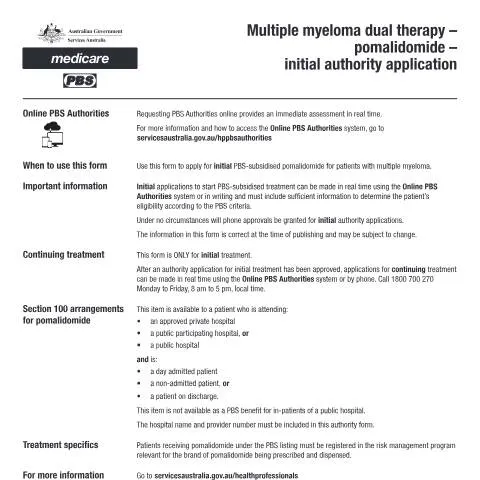
Understanding the PB214 Form: An Essential Step in Multiple Myeloma Treatment
When navigating the complexities of healthcare in Australia, particularly concerning serious conditions like multiple myeloma, understanding the right protocols and forms is crucial. The Multiple myeloma dual therapy - pomalidomide - initial authority application form (PB214) issued by Services Australia plays a pivotal role in ensuring that patients receive the necessary medications and support they need. This article delves into the essential aspects of the PB214 form, providing insights into its purpose, completion, submission, and subsequent processes.
Decoding the Structure of the PB214 Form
The PB214 form is meticulously structured to guide healthcare professionals through the application process for dual therapy with pomalidomide. Each section of the form serves a unique purpose and demands careful attention. Here’s a closer look at its components:
Section 1: Patient Identification
- Patient Name: Ensure correct spelling to avoid delays.
- Date of Birth: Always enter in the format dd/mm/yyyy.
- Medicare Number: Required for verification of coverage.
Accurate details in this section are crucial as they tie the application to the specific patient. Mistakes here can lead to significant administrative hurdles.
Section 2: Treatment Details
- Diagnosis: Clearly state the diagnosis of multiple myeloma.
- Proposed Treatment: Specify that the treatment involves pomalidomide.
- Previous Treatments: List any other therapies undertaken.
Providing comprehensive and detailed information in this section will support the justification for the requested medication, as funders require an understanding of the patient's treatment history.
Key Differences: PB214 and Other Forms
While there are various forms associated with medications and treatments for cancer, the PB214 is distinct in its focus on dual therapy involving pomalidomide. Here’s how it stands out:
| Form | Focus Area | Key Differences |
|---|---|---|
| PB214 | Pomalidomide dual therapy | Specific to multiple myeloma; requires detailed treatment history. |
| Other Oncology Forms | Various cancer treatments | Generalized; not exclusive to pomalidomide or dual therapy. |
This distinction is vital for healthcare providers to understand when determining the appropriate documentation for a patient’s treatment plan.
Timeline of Application and Treatment Commencement
Understanding the timeline associated with the PB214 form is critical for both healthcare providers and patients. Here’s how the process typically unfolds:
- Initial Submission: The form should be completed and submitted as soon as the decision is made to pursue dual therapy.
- Processing Time: After submission, Services Australia will review the application. This can take several weeks, dependent on the complexity of the case.
- Notification of Outcome: Applicants will receive notification regarding the approval or denial of the application.
- Treatment Commencement: Upon approval, the treatment can commence as per the prescribed schedule.
It’s essential for healthcare professionals to communicate these timelines to patients, as they can impact the overall treatment journey.
Submitting the PB214 Form: Channels and Procedures
There are various channels through which the PB214 form can be submitted, each with its own set of advantages and procedural requirements:
Online Submission
Utilizing the myGov system for online submission is often the most efficient method. It allows for:
- Immediate processing.
- Secure documentation storage.
- Real-time updates on the application status.
Paper Submission
For those who prefer traditional methods, the paper version of the PB214 can be mailed to the appropriate Services Australia office. While this method may be slower, it is a necessary option for individuals without online access.
In-Person Submission
Submitting the form in person at a local Services Australia office can facilitate immediate clarification of doubts, though waiting times may vary significantly.
Whatever the chosen method, ensure that all sections are adequately filled out to avoid unnecessary delays.
Dealing with Challenges: What If Your Application Is Denied?
Receiving a denial notification can be disheartening, but it is important to stay proactive. Here’s what to do next:
Review the Denial
Carefully read the reasons provided for the denial. Common reasons include insufficient evidence of the need for dual therapy or errors in completed sections of the form.
Reapplication Process
If the denial is due to incomplete information, correct the errors and resubmit the form swiftly. In cases where the denial seems unwarranted, consider the following steps:
- Contact Services Australia: Clarify any points of confusion regarding the denial.
- Request a Review: Under the Administrative Decisions (Judicial Review) Act 1977, you have the right to ask for a review of the decision.
Engaging with the process promptly can expedite getting back on track with necessary treatments.
Common Pitfalls in Completing the PB214 Form
Even minor errors in the PB214 form can lead to significant delays or outright denials. Below are common pitfalls to avoid when completing the application:
- Incorrect Patient Information: Double-check all personal details to ensure they are accurate and match Medicare records.
- Insufficient Treatment History: Provide a thorough account of previous treatments, as this is crucial for the assessment.
- Missing Signatures: Ensure that both the healthcare provider’s and patient’s signatures are present where required.
By being vigilant about these aspects, applicants can streamline their submission process and reduce the likelihood of complications.
Final Reminders: Navigating the PB214 Pathway
Successfully navigating the PB214 application process requires careful attention to detail and understanding of the healthcare landscape. Here are some final reminders:
- Stay informed about your rights and entitlements under the Australian healthcare system.
- Maintain open communication with healthcare providers and Services Australia for updates and clarifications.
- Keep records of all submitted forms and correspondence regarding your application.
By equipping yourself with this knowledge and approaching the PB214 process methodically, you enhance your chances of receiving the treatment necessary for managing multiple myeloma effectively.