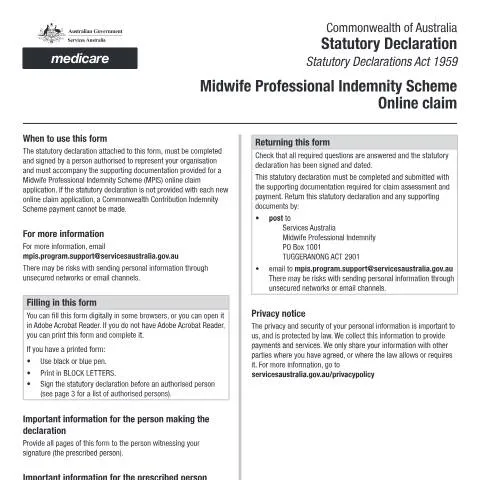
Understanding the Midwife Professional Indemnity Scheme and its Significance
The Midwife Professional Indemnity Scheme is an essential component of Australia's healthcare framework, ensuring that midwives can operate with confidence, knowing they are protected against potential claims of negligence or malpractice. This scheme is especially critical given the complexities and responsibilities involved in midwifery, where decisions made can significantly impact the health and wellbeing of mothers and infants.
Within this context, the Statutory Declaration - Midwife Professional Indemnity Scheme - Online Claim Form (MO042) plays a pivotal role. It serves as a formal request for the benefits provided under the scheme, allowing midwives to claim for indemnity in the event of claims against them.
Who Should Submit the MO042 Form?
The MO042 form is designed specifically for registered midwives practicing in Australia who are part of the Midwife Professional Indemnity Scheme. To be eligible, midwives must demonstrate that they are acting within their scope of practice as defined by the relevant regulatory authorities.
- Registered Midwives: Must hold a current registration with the Australian Health Practitioner Regulation Agency (AHPRA).
- Midwives in Private Practice: Those working independently, often requiring indemnity coverage for their services.
- Midwives Employed in Hospitals: Can also submit claims if they have incurred costs due to claims against them while performing their duties.
Navigating the Form: Step-by-Step Guidance
Completing the MO042 form requires careful attention to detail. Each section is designed to capture specific information relevant to the claim. Here’s a breakdown of critical areas to focus on during the completion process:
- Personal Details: Ensure that your contact information and professional details are current and accurately reflect your registration status.
- Claim Details: Provide comprehensive information regarding the nature of the claim, including dates and details of the incident that led to the claim.
- Supporting Documents: Attach relevant documentation such as incident reports, correspondence related to the claim, and any legal notices received.
It’s advisable to provide a clear and detailed account of events, as this can significantly impact the assessment of your claim.
Critical Documentation: What You Need to Prepare
When submitting the MO042 form, the accuracy and completeness of your supporting documentation are paramount. Depending on the specifics of your claim, you may need to prepare various documents:
| Document Type | Description | Relevance |
|---|---|---|
| Incident Report | A detailed account of the incident prompting the claim. | Establishes context for the claim. |
| Legal Correspondence | Any letters or notices from legal representatives or claimants. | Clarifies the nature and status of the claim. |
| Professional Indemnity Insurance | Proof of current insurance coverage. | Demonstrates eligibility under the scheme. |
The Procedure: Where to Submit and What to Expect
The submission process for the MO042 form is streamlined through Services Australia. Here's a concise overview of the steps involved:
- Online Submission: The preferred method is through the myGov platform, where midwives can log in and access the form directly. This method facilitates efficient processing.
- Paper Submission: If required, a paper version can be filled out and mailed, although this may lead to longer processing times.
- Follow-Up: After submission, it’s important to keep track of the claim status via the myGov portal or by contacting Services Australia directly.
Timely submission and thorough documentation will aid in a smoother process and reduce the risk of delays.
Unique Scenarios: Considerations for Special Cases
The MO042 form accommodates various unique circumstances that midwives might encounter. Understanding these nuances is crucial for accurate claims:
- International Practitioners: Midwives practicing in Australia but registered overseas may face additional hurdles in demonstrating their eligibility for the scheme.
- Minors or Vulnerable Populations: Special considerations may apply when claims involve minors or individuals unable to consent, requiring additional documentation.
- Complex Claims: In cases involving multiple parties or intricate legal issues, it is advisable to seek legal advice prior to submission to ensure all aspects are properly covered.
The Broader Context: The Role of the Indemnity Scheme
The Midwife Professional Indemnity Scheme is part of a larger regulatory framework designed to protect healthcare professionals and the patients they serve. This scheme not only provides financial protection but also works to maintain high standards of practice within the profession.
Moreover, the existence of this indemnity scheme reinforces the importance of ongoing professional development and compliance with the Australian health regulations. Midwives are encouraged to remain informed about their legal responsibilities and the implications of their practice on patient safety.
Future Developments: Keeping Up with Changes
As the healthcare landscape evolves, so too might the policies surrounding the Midwife Professional Indemnity Scheme. Midwives should stay connected with Services Australia and professional bodies to ensure they are up-to-date with any changes that may affect their indemnity coverage or responsibilities under the scheme.
Continuous education and professional development are essential for midwives to navigate these changes effectively. Engaging with professional networks and resources can provide valuable insights and support.
Final Insights: Enhancing Your Claim Submission Experience
Completing the MO042 form is a crucial step for midwives seeking cover under the Midwife Professional Indemnity Scheme. Attention to detail and understanding the regulations surrounding your profession will enhance your experience and improve your chances of a successful claim.
For further guidance or assistance, midwives are encouraged to consult directly with Services Australia or seek advice from professional associations. By being proactive and informed, midwives can ensure they are well-prepared to manage claims and protect their practice.