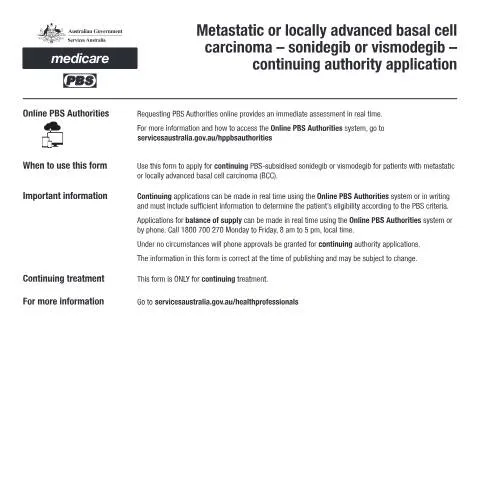
Understanding the Metastatic or Locally Advanced Basal Cell Carcinoma Application Process
The journey of managing a health condition such as metastatic or locally advanced basal cell carcinoma can be overwhelming. Particularly when it involves the need for specific treatments like sonidegib or vismodegib, patients and healthcare providers must navigate the administrative landscape to access necessary medications. The PB207 form, officially titled "Metastatic or locally advanced basal cell carcinoma - sonidegib or vismodegib - continuing authority application form," serves as a vital document in this process. Understanding its role, completion, and submission can significantly ease this journey.
Who Needs to Submit PB207?
This form is designed for health professionals who are treating patients diagnosed with metastatic or locally advanced basal cell carcinoma and who require ongoing authority for medications like sonidegib or vismodegib. Generally, the application must be submitted by the prescribing doctor on behalf of the patient, ensuring that all relevant medical information is accurately represented.
Eligibility Criteria
- Patients must have a confirmed diagnosis of metastatic or locally advanced basal cell carcinoma.
- Previous treatment protocols must be documented, illustrating the necessity for the proposed medication.
- Regulatory conditions stipulated by Services Australia need to be met, which may vary based on the individual case.
A Step-by-Step Guide to Completion
Filling out the PB207 form can initially seem daunting, but approaching it systematically can streamline the process. Here’s a step-by-step breakdown:
Identifying the Required Information
Before starting the completion of the form, gather all necessary documentation, including:
- Medical History: Detailed reports on the patient’s medical history, including previous treatments and responses.
- Prescribing Information: Details regarding the prescribed medication, including dosage and duration.
- Supporting Documents: Any additional reports, imaging studies, or test results that substantiate the ongoing treatment need.
Completing the Form
When filling out the PB207, ensure that:
- Patient Information: Clearly state the patient’s demographic details, including name, contact information, and Medicare number.
- Medical Details: Outline the specifics of the cancer diagnosis, treatment history, and the rationale for ongoing medication.
- Signature and Declaration: The prescribing physician must sign the form, certifying the accuracy of the information provided.
Submission Channels: Paper vs Online
The PB207 form can be submitted via different channels, each having unique advantages and considerations.
Online Submission through myGov
Utilizing online channels through myGov can expedite the processing time. However, it’s essential to have:
- A valid myGov account linked to Services Australia.
- Digital copies of all required documents ready for upload.
Paper Submission
For those who prefer traditional methods, the paper form can be submitted via post. In this case, ensure:
- The form is printed clearly and legibly.
- All relevant documents are securely attached.
- A reliable mailing method is used to avoid delays.
Timelines and Follow-Up Actions
After submission, understanding the timeline for processing can help in planning the patient's ongoing treatment.
Expected Processing Times
While processing times can vary, generally speaking:
- Online submissions might be processed faster due to automated systems.
- Paper submissions may take longer, often requiring up to several weeks for review.
What Happens Next?
Once processed, Services Australia will notify the prescribing physician regarding the outcome:
- Approval: If approved, a notification will outline the terms and duration of the continued authority.
- Request for Further Information: In some cases, additional information may be requested to support the application.
- Denial: If denied, the physician will receive an explanation that typically includes guidance on how to appeal the decision.
Handling Denials and Missing Information
Receiving a denial can be disheartening, but there are structured ways to address such situations. Here’s what to do:
Reviewing the Denial Reasons
Upon receiving a denial, carefully review the reasons provided by Services Australia. Common issues may include:
- Insufficient medical documentation.
- Failure to meet specific eligibility criteria.
- Inaccuracies in the submitted information.
Submitting an Appeal
If you believe the decision warrants reconsideration, the following steps can be taken:
- Gather Additional Evidence: Compile supporting documents that address the reasons for the denial.
- Complete an Appeal Form: Use the appropriate forms available from Services Australia for appeals.
- Submit within Timeline: Ensure that the appeal is lodged within the stipulated timeframe following the denial notification.
Preparing Supporting Documents: A Comprehensive Approach
In any application involving medical treatment, the strength of the supporting documentation can significantly impact the outcome. Here’s how to prepare effectively.
Types of Supporting Documents
| Document Type | Description | Importance |
|---|---|---|
| Medical Reports | Detailed summaries from specialists regarding the patient’s diagnosis and treatment plan. | Essential for establishing the medical necessity of the treatment. |
| Imaging Results | X-rays, MRIs, or CT scans that support the clinical findings. | Provides visual evidence of the patient’s condition. |
| Previous Treatment Outcomes | Documentation of past treatments and responses, including side effects. | Highlights the necessity for ongoing treatment. |
Regulatory Framework Governing PB207
The PB207 form exists within a broader regulatory context set forth by Services Australia. Understanding the legal framework that underpins this document is crucial for its proper use.
Legislative Background
The framework for the PB207 form is influenced by various health policies and regulations aimed at ensuring patients have access to necessary medications. The Administrative Decisions (Judicial Review) Act 1977 (Cth) provides a mechanism for review in case of disputes arising from administrative decisions, emphasizing the importance of fairness and transparency in the process.
Ongoing Developments
Regulations can evolve, and staying informed about changes that may affect the PB207 application process is vital. Regularly reviewing updates from Services Australia can help healthcare professionals remain compliant and ensure patients receive timely treatment.
The Importance of Record-Keeping
Maintaining detailed records throughout the application process can facilitate smoother interactions with Services Australia and ensure all necessary information is readily available if issues arise.
Best Practices in Documentation
- Keep Copies: Always retain copies of submitted forms and supporting documents.
- Document Communication: Note any correspondence with Services Australia, including dates and content of discussions.
- Track Submission Dates: Maintain a timeline of when forms were submitted and any follow-up actions taken.
Final Insights for Health Professionals
Completing the PB207 form is a critical step in ensuring patients can access necessary cancer treatments. By understanding the intricacies of the application process, health professionals can advocate effectively for their patients. Proactive preparation, awareness of regulatory changes, and diligent record-keeping are essential for success in navigating this important healthcare journey.
Understanding the Application Process for Continuing Authority: Key Steps
The application process for a Continuing Authority for medications such as sonidegib or vismodegib in the context of metastatic or locally advanced basal cell carcinoma can feel complex. However, familiarizing yourself with the specific steps involved can facilitate a smoother experience. Start by ensuring you have the necessary documentation and support from your healthcare provider, who must complete the initial sections of the PB207 form.
First, confirm that you are eligible for the Continuing Authority. This means that you must have already been prescribed the medication and have demonstrated a clinical need. The healthcare provider is tasked with outlining the clinical rationale for continuing treatment, which must be clearly substantiated in the application. They must provide comprehensive details regarding your condition, treatment history, and any relevant scans or reports that support the need for ongoing therapy.
Once the initial form is filled out, review the details for accuracy, as any discrepancies or missing information can delay the approval process. It’s advisable to keep copies of the application and all supporting documents for your records. After submission, monitor your application status through the myGov portal, where you can also find additional support resources if you encounter issues.
Financial Considerations for Patients: Navigating Costs and Subsidies
When dealing with metastatic or locally advanced basal cell carcinoma, financial considerations are paramount. The medications sonidegib and vismodegib can carry significant costs, particularly when not fully subsidized under the Pharmaceutical Benefits Scheme (PBS). Understanding how subsidies work can alleviate some of the financial burden. If you qualify for a Continuing Authority, you may be eligible for reduced out-of-pocket expenses.
Furthermore, consider consulting with a healthcare financial advisor or a social worker who can assist in navigating available financial support programs. They can provide insights into private health insurance options, potential government benefits, and any local charity programs that could contribute to medication costs.
It's also wise to explore supplementary funding options such as grants or assistance from cancer support organizations. Many patients are unaware of these resources, which can provide valuable financial relief during treatment. Staying informed about your rights and entitlements is crucial, as each state's health services may offer different financial assistance structures.
The Role of Multidisciplinary Care in Managing Basal Cell Carcinoma
Managing metastatic or locally advanced basal cell carcinoma often requires a collaborative approach involving a multidisciplinary care team. This team generally includes dermatologists, oncologists, radiologists, and palliative care specialists. Each member plays a critical role in ensuring a comprehensive treatment strategy tailored to your unique needs.
Close collaboration among these specialists enhances the quality of care through shared insights and coordinated treatment plans. For instance, dermatologists focus on the direct treatment of cancerous lesions, whereas oncologists will oversee systemic therapies like sonidegib or vismodegib. Radiologists may contribute by providing necessary imaging studies that help evaluate treatment response.
It’s essential for patients to communicate openly with their care team regarding treatment options, potential side effects, and any concerns they might have. This dialogue fosters a supportive environment where your treatment plan can be adjusted based on your experiences and medical response. Moreover, having a patient advocate or a family member involved in these discussions can provide additional support and help ensure that your voice is heard in this collaborative care model.