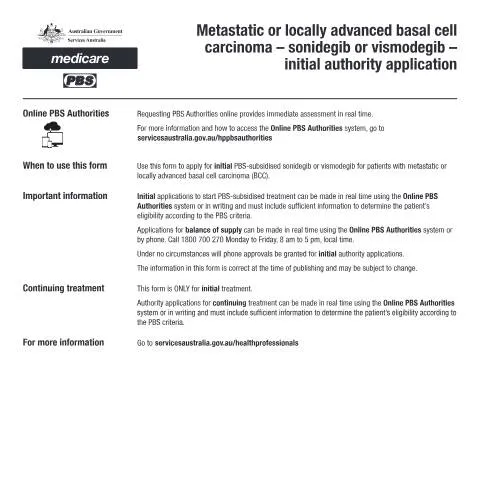
Understanding the PB206 Authority Application Process: Navigating the Path for Metastatic or Locally Advanced Basal Cell Carcinoma Treatment
When faced with a diagnosis of metastatic or locally advanced basal cell carcinoma, timely access to appropriate treatment medications, such as sonidegib or vismodegib, becomes critical. The PB206 application process, managed by Services Australia, is a vital step in securing the necessary authority for these treatments. This guide will provide a comprehensive understanding of the PB206 form, detailing its importance, the step-by-step process for submission, and what to expect afterwards.
The Role of the PB206 Application in Treatment Accessibility
The PB206 form is designed specifically for health professionals to apply for initial authority to prescribe sonidegib or vismodegib for patients diagnosed with specific forms of skin cancer. By filling out this application, health practitioners can advocate for their patients’ access to these essential medications, enhancing their treatment options. Failure to submit this form can lead to delays in receiving treatment, so understanding the intricacies of the application is crucial.
Who Files the PB206 Application?
Only registered medical practitioners or specialists can file the PB206 application. This requirement ensures that the prescribing authority is held by qualified professionals who understand the nuances of the patient’s condition. Practitioners must provide comprehensive medical information to justify the request, including:
- The patient’s diagnosis and medical history
- Details of prior treatments
- Clinical evidence supporting the need for either sonidegib or vismodegib
Key Information Required in the PB206 Form
Completing the PB206 form accurately is crucial to avoid unnecessary delays. Essential sections include:
- Patient Information: Full details of the patient including name, date of birth, and Medicare details.
- Diagnosis Information: A clear description of the diagnosis, including any relevant histopathology results.
- Previous Treatment Details: A thorough record of any prior therapies and outcomes.
- Proposed Treatment Plan: Justification for the treatment approach, including dosage and expected duration.
Step-by-Step Guide to Submitting the PB206 Form
The process of submitting the PB206 application can be succinctly broken down into several key steps:
- Gather Necessary Documentation: Collect all relevant patient medical records and treatment history.
- Complete the PB206 Form: Carefully fill out each section, ensuring clarity and accuracy in the patient’s medical details.
- Review for Completeness: Before submission, double-check that all sections are filled and all required documentation is attached.
- Choose the Submission Method: Decide whether to submit online through myGov or via traditional mail.
- Submit and Await Response: After submission, monitor for any communications from Services Australia regarding the application status.
Exploring Submission Channels: Online vs. Paper
Submitting the PB206 can be done through two primary channels: online via myGov or through traditional postal service. Each method has its distinct advantages:
| Method | Advantages | Considerations |
|---|---|---|
| Online (myGov) | Faster processing times; immediate confirmation of receipt. | Requires a myGov account; may face technical issues. |
| Paper Submission | Traditional method; no tech required. | Longer processing times; risk of postal delays. |
What Happens After Submission? Anticipating the Response
Once the PB206 application is submitted, the health professional can expect a confirmation of receipt from Services Australia. Following this, a review process begins wherein the application will be assessed against established criteria. The timeline for this review can vary depending on several factors:
- Completeness of the application.
- Current workload of Services Australia.
- The complexity of the case.
Patients should be advised that any issues or queries from Services Australia will be communicated directly to the submitting practitioner. Therefore, maintaining open lines of communication is vital during this waiting period.
What to Do in Case of Application Refusal
In the unfortunate event of a refusal, practitioners have several options. Firstly, a detailed explanation will be provided by Services Australia, which can help identify any shortcomings in the initial application. Prerequisites for resubmission include:
- Addressing the reasons for refusal by providing additional documentation or clarification.
- Consulting with specialists or other practitioners to obtain supportive evidence.
Appeals can also be made to the Administrative Appeals Tribunal (AAT) if the refusal is deemed unjustified, allowing for further review of the decisions made by Services Australia.
Understanding Rights and Responsibilities: The Patient’s Perspective
Patients have specific rights when it comes to treatment access through the PB206 application. They are entitled to:
- Timely updates regarding the status of their application.
- Clear communication about the criteria used in the decision-making process.
However, it is equally important for patients to understand their responsibilities, which include:
- Providing accurate and comprehensive information to their healthcare provider.
- Being proactive in following up on their application status.
Common Pitfalls and How to Avoid Them: A Closer Look at the PB206 Form
Completing the PB206 form can be straightforward if approached with attention to detail. However, there are common pitfalls that can lead to application delays or denials:
- Incomplete Documentation: Missing relevant medical records or prior treatment details can hinder the application.
- Vague Justification: Insufficient explanations of the medical necessity for the requested treatment may result in refusal.
- Incorrect Patient Information: Double-check that all patient details are accurate, including Medicare numbers and birth dates.
Health practitioners are encouraged to make use of the resources available through Services Australia to familiarize themselves with the expectations and requirements of the PB206 application.
Special Cases and Considerations: Navigating Unique Circumstances
There are instances where unique circumstances may arise during the PB206 application process, such as:
International Patients
For patients not enrolled in the Australian health system, additional challenges may present themselves. Practitioners should consult Services Australia for guidance on navigating these complexities.
Minors and Guardianship Issues
When the patient is under legal age, it’s essential for guardians to be involved in the application process. This may require additional documentation to establish guardianship and consent.
Urgent Cases
In emergency situations, practitioners should indicate the urgency of the application on the form, providing clear justification as to why expedited processing is necessary.
By thoroughly understanding the PB206 application process and recognizing the opportunities and responsibilities it presents, healthcare providers can effectively advocate for their patients' access to vital cancer treatments. The journey may be complex, but with careful navigation, patients can receive the care they need in a timely manner.