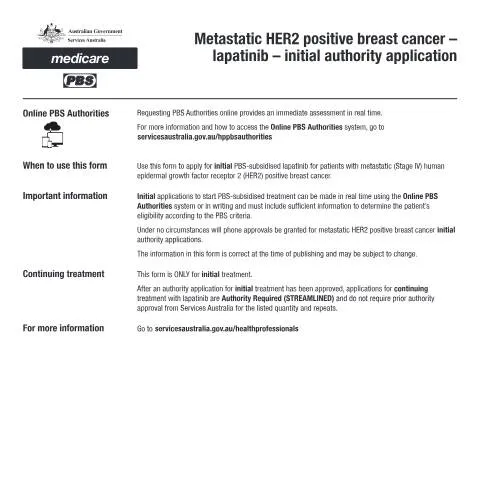
Navigating the Initial Authority Application Process for PB099
For health professionals dealing with patients diagnosed with metastatic HER2 positive breast cancer, understanding the application process for medication access is crucial. The PB099 – Metastatic HER2 positive breast cancer - lapatinib - initial authority application form serves as a key document in securing treatment for eligible patients. This article will guide you through the intricacies of the process, providing practical insights for successful application and management of potential hurdles.
Understanding the Application Trigger
The necessity to submit the PB099 arises when a healthcare professional determines that a patient needs lapatinib for their treatment plan. This typically occurs after assessing the patient’s condition and confirming that traditional therapies are insufficient. Before filling out the form, consider the following:
- Confirm the patient's eligibility for lapatinib based on their medical history and treatment outcomes.
- Gather all necessary medical documentation that supports the request for treatment.
- Ensure the patient understands the implications of this therapy, including potential side effects and treatment expectations.
Essential Components of the PB099 Form
Upon deciding to proceed with the PB099 application, the next step is to complete the form accurately. Below are critical sections of the form that require particular attention:
- Patient Information: This includes identification details such as the patient's name, date of birth, and Medicare number.
- Clinical Information: Document the cancer diagnosis, staging, and previous treatments administered, along with their outcomes.
- Treatment Details: Clearly specify the proposed treatment with lapatinib, including dosage and frequency.
- Supporting Evidence: Attach relevant medical reports, imaging results, and previous treatment records that substantiate the need for this medication.
Submission Process: From Completion to Acceptance
Once the PB099 form is completed, submission is the next critical step. Here’s how to navigate through this:
- Review for Accuracy: Before submitting, ensure all information is complete and accurate to prevent delays.
- Submit the Application: Applications can typically be submitted electronically through the myGov platform or through your local Services Australia office. Ensure you follow local guidelines for submission.
- Await Response: After submission, it may take several weeks to receive a decision. During this time, keep the lines of communication open with your patient regarding their treatment options.
What Happens After Submission?
After submitting the PB099 form, the next steps are contingent on the decision made by Services Australia. Here’s what to anticipate:
- Approval: If the application is approved, the patient will be eligible for funded lapatinib therapy. Ensure the patient understands how to access the medication.
- Request for Further Information: If more information is needed, Services Australia may contact the healthcare provider. It’s important to respond promptly to these requests.
- Refusal: In cases of refusal, a detailed explanation will be provided. Patients have the right to appeal this decision which will involve a separate process.
Handling Refusals and Appeals
In the event that the PB099 application is denied, understanding the appeals process is vital. Here are the general steps that can be taken:
- Review the Reason for Refusal: Carefully read the refusal letter to understand the reasons behind the decision.
- Gather Additional Evidence: If possible, compile further clinical evidence or documentation that may strengthen the case for lapatinib treatment.
- Submit an Appeal: The appeal can be lodged through Services Australia, typically requiring a detailed explanation of why the decision should be reconsidered and any new evidence gathered.
It is advisable to keep the patient informed throughout this process, providing support and guidance as needed.
Preparation of Supporting Documents
Supporting documents play a critical role in the success of the PB099 application. Below is a breakdown of the most effective types of documentation to prepare:
| Document Type | Description | Purpose |
|---|---|---|
| Medical History Report | A comprehensive record of the patient’s previous treatments and outcomes. | To establish the need for lapatinib due to treatment failure. |
| Imaging Reports | Recent scans or tests confirming the current condition of the cancer. | To provide visual evidence of the disease progression. |
| Letters of Support | Statements from other healthcare providers involved in the patient's treatment. | To reinforce the necessity of lapatinib from multiple medical perspectives. |
Timeline Considerations: From Initial Submission to Treatment
Understanding the timeline associated with the PB099 application process can alleviate some of the anxiety for both healthcare providers and patients. Here’s a rough outline of what to expect:
- Initial Submission: Typically requires 1-2 weeks for proper documentation preparation.
- Review Period: Services Australia may take up to 4-6 weeks to process the application, depending on their current workload.
- Notification of Decision: Once a decision is made, you will be notified of the outcome via your preferred communication method.
- Dispensation of Medication: If approved, pharmacists can begin providing lapatinib based on the schedule established in the application.
It’s essential that healthcare professionals maintain open communication with patients throughout this timeline, reassuring them that their treatment needs are being prioritized.
The Broader Context of the PB099 Process
The PB099 form does not exist in isolation; it is a crucial part of the broader healthcare framework in Australia aimed at ensuring patients receive appropriate therapies. Here’s how it fits into the larger scheme:
- Integration with Medicare: Patients often rely on Medicare benefits to cover the costs associated with treatments like lapatinib, making the PB099 form a gateway to necessary financial support.
- Collaboration with Specialists: The application often requires input from various healthcare professionals, including oncologists and general practitioners, emphasizing the collaborative nature of patient care.
- Regulatory Compliance: Submitting the PB099 ensures that all treatments are in line with Australian health regulations, maintaining the integrity and safety of medication distribution.
Final Thoughts on the PB099 Journey
The process surrounding the PB099 application is not just about forms and submission; it’s a vital part of patient care for those facing metastatic HER2 positive breast cancer. By understanding the intricacies of the application process, healthcare providers can better navigate the system, ensuring their patients receive the support and treatment they desperately need. Continuous communication, thorough preparation of documentation, and proactive engagement with Services Australia can significantly streamline the journey from diagnosis to treatment.
Understanding Lapatinib: Mechanism and Indications
Lapatinib is an oral medication designed primarily for the treatment of metastatic breast cancer that overexpresses the HER2 protein. It functions as a dual tyrosine kinase inhibitor targeting both HER2 and epidermal growth factor receptor (EGFR). This mechanism of action is crucial for patients with metastatic HER2 positive breast cancer, as it disrupts the signaling pathways that promote cancer cell growth and proliferation. Lapatinib is often used in combination with other therapies, notably capecitabine, to enhance efficacy and improve patient outcomes. The combination therapy is particularly indicated for patients who have experienced disease progression after prior treatments, providing an essential option in the management of this aggressive cancer type.
Moreover, the therapeutic use of Lapatinib is not limited to initial treatments; it can also be part of a subsequent line of therapy for patients experiencing disease recurrence. Understanding the indications for Lapatinib is vital for healthcare providers in Australia, as it guides the clinical decision-making process concerning treatment regimens appropriate for the patient’s unique circumstances.
Initial Authority Application Form (PB099): Step-by-Step Instructions
The Initial Authority Application Form (PB099) is a critical component in securing access to Lapatinib for eligible patients with metastatic HER2 positive breast cancer. This form must be completed accurately to avoid delays in treatment. Below is a detailed step-by-step guide on how to fill out the PB099 form effectively:
- Patient Information: Start by ensuring that all personal details of the patient are filled out correctly. This includes the patient's full name, date of birth, and Medicare number. Inaccurate information may lead to processing delays.
- Diagnosis Details: Provide a clear and comprehensive account of the patient’s diagnosis. Include the histological type of breast cancer and confirm the HER2 positive status through applicable testing results. This section will likely require detailed medical documentation; therefore, attaching pathology reports and imaging studies is advisable.
- Previous Treatments: Detail all previous treatment regimens undertaken by the patient, including chemotherapy, targeted therapies, and the patient’s response to these treatments. This history is critical for the assessment of the application and helps justify the need for Lapatinib.
- Prescriber Information: The prescriber must also complete their details, including the prescriber’s name, contact information, and relevant qualifications. The qualifications ensure the prescriber is authorized and recognized to prescribe Lapatinib, which is vital for the application’s approval.
- Signature and Date: Finally, both the patient (or their guardian) and the prescriber must sign and date the form. This step is essential, as unsigned forms can lead to immediate rejection.
After completing the form, it should be submitted through the appropriate channels, ensuring to retain a copy for the patient’s records. Understanding each section's requirements will facilitate a smoother application process, ultimately expediting the patient’s access to necessary treatment.
Appeal Process for Denied Applications
In the unfortunate event that the Initial Authority Application for Lapatinib (PB099) is denied, it’s crucial to understand the appeal process available for patients and healthcare providers. The appeal route is governed by the Administrative Decisions (Judicial Review) Act 1977 (Cth), which allows applicants to seek a merits review through the Administrative Appeals Tribunal (AAT).
Here’s a breakdown of the appeal process:
- Review the Denial Letter: The first step is to carefully read the denial letter from the relevant authority. This letter should outline the reasons for the denial, which can provide insight into what information or documentation may be lacking.
- Gather Additional Evidence: If applicable, collecting further evidence to address the concerns raised in the denial is vital. This may include additional medical reports, expert opinions, or new results that support the patient’s need for Lapatinib.
- Prepare for the AAT Application: An AAT application requires a specific format. Ensure to include the patient’s details, the decision being appealed, and the grounds for appeal, along with any new evidence. Here, clarity and thoroughness are essential.
- Submission: Submit the appeal application to the AAT along with any supporting documents. It’s crucial to keep copies of everything submitted, as these may be needed for reference during the appeals process.
- AAT Hearing: In some cases, the AAT may schedule a hearing. During this hearing, the applicant (or their representative) can present their case. It’s important to be prepared to articulate why Lapatinib is essential for the patient’s treatment plan.
Understanding the appeal process can provide a pathway for patients who may initially be denied access to Lapatinib. It highlights the importance of persistence and the necessity of preparing a robust application supported by comprehensive medical documentation.