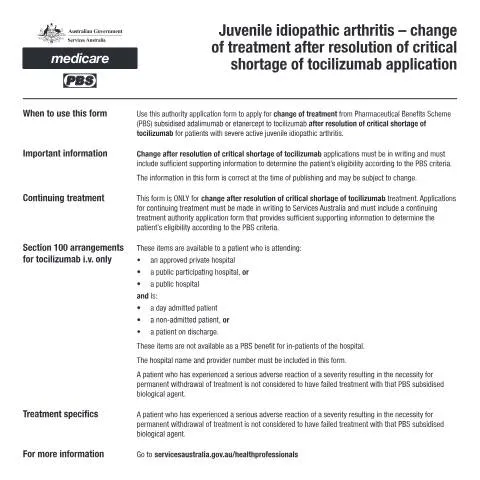
Understanding the PB323 Notice: Changes in Treatment Authorization for Juvenile Idiopathic Arthritis
This official notice from Services Australia, identified by the code PB323, provides important guidance for health professionals regarding the management of juvenile idiopathic arthritis (JIA) treatment in the context of a critical medication shortage. Specifically, it addresses the procedures for applying for a change of treatment authorization following the resolution of a shortage of tocilizumab, a medication used in managing certain cases of JIA.
Context and Purpose of the Notice
The notice is issued to inform healthcare providers and relevant authorities about the updated procedures for obtaining approval to modify treatment plans for young patients diagnosed with juvenile idiopathic arthritis. The change in treatment authorization process is prompted by the recent resolution of a critical shortage of tocilizumab, which had previously impacted the availability of this medication for eligible patients.
Services Australia, in collaboration with health professionals and relevant medical bodies, has established a clear protocol to ensure that patients continue to receive appropriate care while maintaining compliance with national health policies and funding arrangements. This document emphasizes the importance of a structured application process to facilitate timely approval of alternative treatment strategies, ensuring minimal disruption to patient health outcomes.
Who Should Be Affected by This Guidance?
This notice is primarily aimed at health professionals involved in the treatment and management of juvenile idiopathic arthritis, including paediatric rheumatologists, general practitioners, and other specialists authorized to prescribe and manage medications under Australia's healthcare framework. It also provides guidance for administrative staff responsible for processing treatment change applications through Services Australia.
Patients and their families are indirectly impacted, as the procedures outlined aim to streamline access to necessary medications following the medication shortage. Ensuring that treatment modifications are properly authorized helps safeguard the quality of care and adherence to clinical guidelines.
Key Points of the Procedure Change
Application Process for Treatment Change
Following the resolution of the tocilizumab shortage, health professionals must submit a specific application to obtain authorization for a change in the treatment plan for affected juvenile patients. This process involves providing detailed clinical justification and documentation supporting the need for an alternative medication or treatment approach.
The application must be submitted through the designated channels, which are accessible via the myGov platform linked to Services Australia. It is essential that all required information is complete and accurate to facilitate a smooth review process.
Criteria for Approval
The approval of a treatment change is contingent upon clinical assessment and the demonstration that the new treatment aligns with current medical guidelines and patient needs. The review process considers factors such as the patient's medical history, previous responses to treatments, and the availability of alternative therapies.
Implications for Prescribers and Administrators
Health professionals should ensure that all documentation is prepared in accordance with the guidelines set out in this notice. Administrative staff responsible for processing applications must verify that submissions are complete and comply with the specified requirements to avoid delays.
References and Contact Points
For further details on the application process, eligibility criteria, and supporting documentation, healthcare providers are advised to consult the official communications issued by Services Australia. These resources provide comprehensive guidance to facilitate the transition back to standard treatment protocols following the resolution of the medication shortage.
In case of questions or for assistance with the procedure, practitioners can contact Services Australia directly through their official channels. It is recommended to stay informed about any updates or changes to the process to ensure ongoing compliance and optimal patient care.
Conclusion
The PB323 notice exemplifies Australia's commitment to maintaining high standards of healthcare delivery, even during supply disruptions. By establishing a clear and accessible process for treatment modifications, Services Australia ensures that young patients with juvenile idiopathic arthritis continue to receive effective care, aligned with current medical practices and legal frameworks.