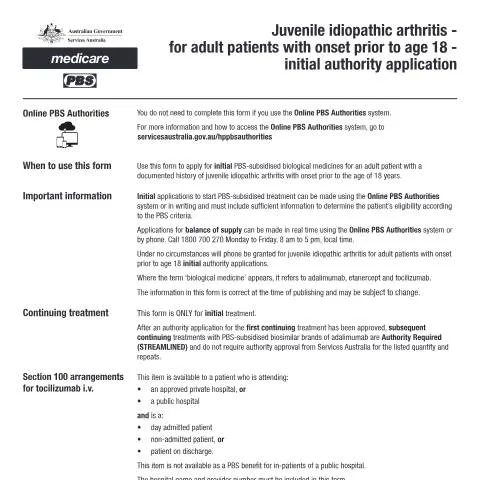
The Importance of the PB062 Form: A Lifeline for Young Adults with Juvenile Idiopathic Arthritis
For many young adults, the transition from paediatric to adult healthcare can be daunting, especially for those diagnosed with juvenile idiopathic arthritis (JIA) before the age of 18. The Juvenile idiopathic arthritis - for adult patients with onset prior to age 18 - initial authority application form (PB062) is crucial for accessing necessary treatments and supports. This form serves as a gateway to the healthcare services provided by Services Australia, ensuring that patients continue to receive appropriate care as they transition into adulthood.
Who Should Consider Submitting the PB062 Form?
Understanding who needs to complete the PB062 form is essential. Typically, this form is aimed at individuals who:
- Were diagnosed with juvenile idiopathic arthritis before reaching adulthood.
- Are currently between the ages of 18 and 25 and require ongoing medical assistance.
- Need to establish initial authority for specific treatments or medications not readily available without this application.
However, there are notable exceptions and specific cases where eligibility might be unclear, such as:
Unique Circumstances
- International Students: Those on a temporary visa may have specific criteria to meet before applying.
- Complex Medical Conditions: Patients with concurrent health issues may face different requirements.
- Legal Guardians: If under 18, a parent or legal guardian may need to file on behalf of the individual.
A Step-by-Step Guide to Completing the PB062 Form
Filling out the PB062 form requires careful attention to detail. Here's a breakdown of the steps involved:
1. Gather Necessary Information
Before you start, collect all relevant medical documentation, including:
- Your diagnosis report from a healthcare provider.
- Details of previous treatments.
- Any ongoing therapy plans.
2. Completing the Form
The PB062 form requires specific personal and medical information:
- Personal Identification: Include your full name, date of birth, and Tax File Number (TFN).
- Medical History: Provide detailed information about your diagnosis, treatment history, and current medications.
3. Submitting the Form
Once the form is completed, you must submit it electronically through myGov. Ensure that you:
- Double-check all entries for accuracy.
- Attach any necessary supporting documents.
If you encounter difficulties, don't hesitate to contact your healthcare provider for assistance or even reach out to Services Australia for guidance on the submission process.
What Happens After Submission?
After submitting the PB062 form, understanding the subsequent steps is crucial:
Processing the Application
Once your application is received, it will be processed by Services Australia. This involves:
- Reviewing your provided information.
- Consulting with medical professionals if further clarification is needed.
- Checking your eligibility against current healthcare policies.
Notification of Decision
You will receive a notification regarding the outcome of your application, typically via your myGov account or through email. This communication will detail:
- Approval status.
- Any conditions or additional requirements you must fulfil.
- Information on how to appeal or seek further assistance if your application is denied.
Understanding the Legal Framework Surrounding the PB062 Form
The PB062 form is governed by several legislative frameworks, notably the Administrative Decisions (Judicial Review) Act 1977 (Cth), which provides a basis for reviewing administrative decisions. This legislative backdrop ensures that:
- Applicants have the right to a fair consideration of their case.
- Decisions can be challenged through merits review via the Administrative Appeals Tribunal (AAT).
This legal structure is vital for protecting the rights of young adults with juvenile idiopathic arthritis, ensuring their access to necessary treatments and supports is not arbitrarily denied.
Tracking Your Application: Communication is Key
Effective communication with Services Australia is essential during the application process. Here are some best practices for following up on your application:
1. Keep Records
Maintain a record of your submission, including:
- The date you submitted your application.
- Any reference numbers provided.
- Copies of the completed form and supporting documents.
2. Follow Up Regularly
If you have not heard back within the expected timeline (which can vary), consider:
- Contacting the Services Australia helpline.
- Checking your myGov messages for any updates.
The Role of Health Professionals in the PB062 Process
Healthcare professionals play a vital role in guiding applicants through the PB062 process. Here’s how they contribute:
Support in Documentation
Medical practitioners can assist by:
- Providing accurate diagnosis documentation.
- Writing letters of support that outline the necessity of ongoing treatment.
Patient Advocacy
Healthcare professionals can also act as advocates for their patients, ensuring that:
- The application accurately represents the patient’s medical needs.
- Patients are informed of their rights regarding treatment access.
Real-Life Impact: Stories of Transition
Real-world cases exemplify the importance of the PB062 form for young adults with juvenile idiopathic arthritis.
Case Study: Emily’s Journey
Emily was diagnosed with JIA at the age of 10. Having managed her condition through childhood, she faced a significant challenge when she transitioned to adulthood. With the help of her doctor, Emily completed the PB062 form and successfully accessed the ongoing treatment she needed, which has greatly improved her quality of life.
Case Study: Jake’s Experience
Jake, on the other hand, struggled to navigate the application process on his own. After a few setbacks and a denied application, he sought help from a local health professional who guided him through the process and helped him resubmit the PB062 form. His persistence paid off, allowing him to secure necessary treatments.
Conclusion: Empowering Young Adults Through the PB062 Form
The PB062 form is more than just a piece of paperwork; it is a critical tool that empowers young adults with juvenile idiopathic arthritis to continue receiving the care they need as they transition into adulthood. By understanding the nuances of the application process, individuals can better navigate the challenges ahead and ensure they maintain access to essential treatments throughout their lives.
As the healthcare landscape evolves, the importance of forms like PB062 cannot be overstated. By facilitating access to necessary treatments, they play a vital role in the health and well-being of young adults living with chronic conditions.
Understanding the Initial Authority Application Process for Juvenile Idiopathic Arthritis (JIA)
Applying for the Initial Authority Application Form (PB062) when dealing with Juvenile Idiopathic Arthritis (JIA) can be a crucial step for patients seeking access to necessary treatments. This process is specifically designed for adult patients whose condition began before they turned 18. Understanding the nuances of the application process can help ensure that applicants submit a complete and accurate form, reducing the likelihood of delays or rejections.
The PB062 form is essential for obtaining authority to access medications that are not listed on the Pharmaceutical Benefits Scheme (PBS) for JIA. Applicants must provide comprehensive medical evidence and documentation supporting their diagnosis and the necessity of the requested treatment. This involves gathering detailed reports from healthcare providers, imaging tests, and any relevant history regarding previous treatments and their outcomes.
Moreover, applicants must carefully follow the guidelines outlined by Services Australia to ensure compliance with the standards required for the PB062 form. They should be aware of the specific medications they wish to request, how those medications relate to their condition, and the potential side effects or benefits. Consulting with a rheumatologist who specializes in JIA can significantly enhance the quality of the application.
Key Medical Evidence Required for PB062 Submission
When filling out the Initial Authority Application Form (PB062), the completeness and accuracy of the medical evidence submitted are paramount. Below are the critical types of documentation that patients should include to strengthen their application:
- Clinical History: A thorough clinical history that includes the onset of symptoms, the progression of the disease, and previous treatments should be detailed in the application. This history should come from a healthcare provider with expertise in rheumatology.
- Diagnostic Tests: Applicants are required to submit results from diagnostic tests such as blood tests, x-rays, or MRIs that confirm the diagnosis of JIA. These results should be current and relevant to the treatment being requested.
- Previous Treatments: Documenting any previous treatments—both successful and unsuccessful—is essential. This should include medications, physical therapy, and any alternative therapies attempted, along with their impact on the patient's condition.
- Physician's Letter: A comprehensive letter from the treating physician detailing the patient's current state of health, the rationale for requesting specific medication, and any relevant side effects observed from past treatments can be crucial in the decision-making process.
- Impact on Daily Life: Evidence of how JIA affects the patient's daily life and functionality can strengthen their case. Patient-reported outcomes regarding pain levels, mobility, and the impact on work or school should be conveyed clearly.
Collectively, these documents paint a fuller picture of the patient's journey with JIA and substantiate the necessity of the requested treatment under the PBS guidelines. It is advisable to keep copies of all submitted documents, as they may be needed for future reference or follow-up.
Addressing Common Challenges in the Application Process
While the Initial Authority Application Form (PB062) is a structured process, applicants often encounter common challenges. Understanding these challenges and knowing how to address them can make a significant difference in the outcome of the application.
One of the primary challenges is the requirement for comprehensive medical evidence. Patients may struggle to obtain timely documentation from healthcare providers, especially if they are transitioning from pediatric to adult care. To mitigate this, it is beneficial to establish a strong rapport with healthcare providers early in the process. Regular follow-ups can ensure that required documents are prepared promptly.
Another issue is the specificity of the medications requested. Often, patients may not be aware of the exact PBS criteria for certain treatments. Engaging with pharmacists or healthcare providers who are familiar with PBS applications can provide clarity on which medications have the highest chances of approval and align with the patient's medical needs.
Additionally, applicants might face delays due to incomplete forms or insufficient information. To prevent this, applicants should carefully review the PB062 instructions and check that all required sections are filled out thoroughly. It may be beneficial to have a healthcare professional review the application prior to submission for additional assurance.
In cases where the application is denied, understanding the reasons for rejection is crucial. Patients have the right to request a review of the decision through the Administrative Appeals Tribunal (AAT). Preparing for this process involves gathering additional evidence, potentially seeking legal advice, and clearly articulating why the medication is necessary for their condition.
Overall, navigating the Initial Authority Application Form (PB062) for Juvenile Idiopathic Arthritis involves attention to detail, comprehensive preparation, and proactive engagement with healthcare providers. By addressing common challenges and submitting thorough documentation, patients can enhance their chances of a successful application.