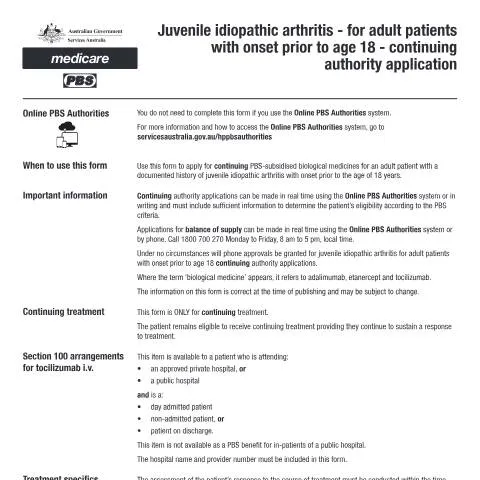
Navigating the PB063: Your Pathway to Continuing Authority for Juvenile Idiopathic Arthritis
Juvenile idiopathic arthritis (JIA) can significantly affect the lives of those diagnosed, especially when symptoms begin before age 18. Affected individuals often face numerous challenges related to their health and well-being as they transition into adulthood. The PB063 form, or Juvenile idiopathic arthritis - for adult patients with onset prior to age 18 - continuing authority application form, plays a critical role in allowing patients to maintain access to necessary health services and support. Understanding this form and the processes surrounding it can empower patients and caregivers alike in securing their health entitlements.
Understanding the Significance of the PB063 Form
This application form is designed specifically for individuals who were diagnosed with juvenile idiopathic arthritis before turning 18 and are now seeking to continue their access to services under the jurisdiction of Services Australia. The completion and submission of the PB063 form is essential for those who wish to keep receiving the necessary treatment and support that their condition requires.
The Chain of Care: How PB063 Fits into Your Treatment Journey
When a patient transitions from pediatric to adult care, health service eligibility often changes. The PB063 form helps bridge that gap. By formally applying for continuing authority, patients ensure that their ongoing health needs are recognized legally, which can involve treatment options, medication, and access to health services tailored to their condition.
- Initiation: The process may begin with a referral from a healthcare provider, often a specialist familiar with the patient’s medical history.
- Completion: Patients or their guardians must fill out the PB063 form with accurate and complete information.
- Submission: The form can be submitted via various channels, which will be detailed further.
- Review: Services Australia will assess the application to determine eligibility and service continuation.
Completing the PB063: A Step-by-Step Approach
Filling out the PB063 form is a detailed process that requires attention to accuracy and thoroughness. Here’s a breakdown of essential steps involved in completing the form:
Identifying Key Information
It is vital to collect and prepare the following information before starting the form:
- Personal Details: Full name, address, contact information, and Date of Birth.
- Health History: Details of the JIA diagnosis, including the date of onset and treatment history.
- Healthcare Provider Information: Names and contact details of doctors, specialists, and any other healthcare professionals involved in the patient’s care.
- Current Treatment Plan: A brief overview of ongoing treatments, medications, and any recommendations from healthcare providers.
Filling Out the Form
The PB063 form typically requires straightforward yet specific information:
- Section 1: Patient Information - Ensure this is filled out completely with no omissions.
- Section 2: Diagnosis Details - Be precise about the diagnosis and date of onset; inaccuracies can lead to delays or denials.
- Section 3: Treatment History - Document all past and current treatments comprehensively.
- Section 4: Signature and Declaration - The patient or guardian must sign to verify that the information is accurate.
Submission Methods: Navigating Your Options
Once the PB063 form is completed, the next step involves submission. Patients have several methods to submit the form, each with its unique considerations:
Online Submission via myGov
For those registered with myGov, online submission is often the most efficient method. This option allows for:
- Real-time tracking: Patients can monitor the status of their application through the myGov portal.
- Immediate confirmation: Upon submission, users receive an immediate confirmation that the application has been received.
- Protected Information: Online submissions are typically secure, protecting sensitive patient data.
Mailing the Form
If online submission is not an option, patients can opt for mail. Here are some points to consider:
- Ensure Accuracy: Double-check all entries before mailing to avoid delays.
- Use Secure Mailing: Consider using registered mail for tracking purposes.
- Time Consideration: Factor in additional time for postal delivery when planning submissions.
After Submission: What to Expect Next?
Once the form is submitted, the processing of the application begins. Understanding the timeline and the potential outcomes is crucial:
Processing Timeframes
While specific timelines can vary, here’s a general outline of what to expect:
| Stage | Expected Timeframe |
|---|---|
| Initial Processing | 2-4 weeks |
| Further Information Requests | Variable |
| Final Decision | 4-6 weeks after submission |
Possible Outcomes
After the review, applicants may receive different notifications:
- Approval: Patients will be notified of the decision and any relevant details regarding their ongoing entitlements.
- Request for Additional Information: If more details or documentation are needed, the applicant will be contacted.
- Refusal: In the case of denial, the applicant will receive a written explanation and possible next steps.
Handling Denials and Requests for Clarification
Receiving a denial or a request for further information can be concerning. Understanding your rights and the process to appeal is essential:
Responding to a Denial
In case of a denial:
- Review the Reasoning: Carefully read the decision letter to understand why the request was denied.
- Gather Supporting Evidence: Collect any additional documentation or information that may support your case.
- Contact Services Australia: It may be helpful to speak directly with a representative for clarification on the denial.
Submitting an Appeal
If you believe the denial was unjustified:
- Prepare a Written Appeal: Clearly outline your reasons for the appeal and provide supporting documents.
- Submit Before Deadline: Make sure to adhere to any deadlines indicated in the denial letter.
- Follow Up: After submission, keep track of the appeal’s status.
Special Considerations for Unique Circumstances
Each applicant's situation can present unique challenges, especially for those who might find themselves in exceptional circumstances:
For International Patients
Individuals who moved to Australia but had their JIA diagnosis prior to arriving may face different guidelines:
- Eligible Documentation: They must provide proof of prior diagnoses and treatments received abroad.
- Coordination with Local Providers: It may be beneficial to have a local healthcare provider assist in the application process.
Transitioning from Pediatric to Adult Care
For those who are approaching adulthood:
- Consultation with Pediatric Providers: Before turning 18, consult with your healthcare provider about transitioning care.
- Create a Care Plan: Ensure a detailed care plan is established to facilitate the transition.
Important Milestones and Timelines to Remember
Being aware of key dates and milestones helps ensure that applications are submitted on time and that entitlements remain uninterrupted:
Key Dates in the Application Process
- Application Submission Window: Aim to submit your application well before any deadlines imposed by healthcare plans or insurance providers.
- Follow-up Dates: Set reminders to check the status of your application after the expected processing time.
- Potential Renewal Dates: Be mindful of when your authority may need renewal to avoid gaps in coverage.
Ultimately, navigating the PB063 form is a crucial step for adult patients with juvenile idiopathic arthritis. Understanding its significance, preparation, submission, and follow-up procedures can make a substantial difference in ensuring continuity of care and support. This knowledge equips patients with the tools necessary to successfully advocate for their health and well-being, thus enhancing their quality of life.
Understanding Juvenile Idiopathic Arthritis (JIA) in Adult Patients
Juvenile Idiopathic Arthritis (JIA) is a chronic autoimmune condition that begins during childhood, specifically before the age of 18. This condition can persist into adulthood, presenting unique challenges as patients transition from pediatric to adult healthcare systems. Understanding the impact of JIA on adult life is crucial for both patients and healthcare providers. The symptoms of JIA can include persistent joint pain, swelling, and stiffness, which can affect various aspects of daily living, such as work, relationships, and overall quality of life.
For adult patients who were diagnosed with JIA during their childhood, the continuation of healthcare services and support mechanisms becomes paramount. Patients often navigate complexities such as changes in treatment protocols, the management of long-term health consequences, and the psychological impacts of chronic illness. It is essential for these individuals to maintain consistent communication with healthcare professionals who specialize in rheumatology and understand the nuances of JIA, even as they transition to adult care environments.
Navigating the Continuing Authority Application Form (PB063)
The Continuing Authority Application Form (PB063) is a critical document for individuals transitioning from pediatric to adult healthcare services when dealing with chronic conditions like JIA. This form facilitates the continuation of necessary medications under the Pharmaceutical Benefits Scheme (PBS), ensuring that patients do not face interruptions in their treatment regimen. The application process may seem daunting; however, understanding its components can simplify the experience.
Firstly, it's vital for applicants to gather all relevant medical documentation before initiating the PB063 form. This includes detailed medical history, treatment plans, and letters from healthcare providers confirming the diagnosis and ongoing treatment needs. When filling out the form, clear and comprehensive information regarding the current state of health, previous treatments, and any side effects experienced should be included. This thoroughness helps streamline the approval process and assures that healthcare providers are aware of the patient's specific needs.
Once the form is submitted, tracking its progress is essential. Patients can usually do this through their myGov account, where they can view updates on their application status and receive notifications regarding any required actions. If the application is denied, the patient has the right to seek a review under the Administrative Decisions (Judicial Review) Act 1977, which allows for merits review through the Administrative Appeals Tribunal (AAT). Understanding these rights can empower patients to advocate effectively for their healthcare needs.
Support Systems and Resources for Adult Patients with JIA
Managing a chronic illness like JIA requires not only medical treatment but also robust support systems. As adult patients navigate their healthcare journeys, various resources are available to assist them. Patient support groups, for instance, provide a platform for sharing experiences, coping strategies, and emotional support. These groups can be found through local health services or by connecting with national organizations dedicated to arthritis or chronic illness.
Moreover, educational resources such as workshops and webinars can help patients stay informed about the latest research, treatment options, and self-management techniques. Organizations often host events that bring together healthcare professionals and patients to discuss advancements in treatment and care strategies. Engaging in these educational opportunities can empower individuals to take an active role in managing their health.
Additionally, mental health support plays a crucial role in the overall well-being of adults living with JIA. Chronic illness can lead to feelings of isolation, anxiety, and depression. Seeking counseling or joining support groups focused on mental health can provide essential tools to cope with these emotional challenges. Many healthcare providers can refer patients to specialized mental health professionals experienced in dealing with chronic conditions.