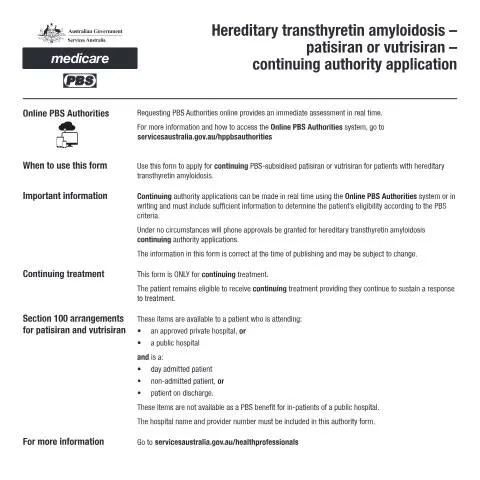
Navigating the PB368: A Critical Step for Patients with Hereditary Transthyretin Amyloidosis
For individuals diagnosed with hereditary transthyretin amyloidosis (hATTR), the PB368 form—officially titled the "Hereditary transthyretin amyloidosis - patisiran or vutrisiran - continuing authority application form"—serves as a vital document within the healthcare system of Australia. This form enables patients to continue receiving necessary treatments, specifically patisiran or vutrisiran, which are essential for managing their condition.
Understanding the Profile of Applicants
Individuals eligible to submit the PB368 application include those diagnosed with hATTR and currently being treated with patisiran or vutrisiran. However, the specifics surrounding each patient's situation can vary significantly:
- Previously Approved Patients: Those who have already received approval for these treatments may need to reapply using this form to ensure ongoing access.
- New Applicants: Patients starting treatment for the first time must also use this form to establish their eligibility for these medications.
- Special Circumstances: Some applicants may have unique medical histories or accompanying conditions that could affect their treatment needs, requiring additional documentation.
Understanding one’s position within these categories is crucial for accurately completing and submitting the application, ensuring that the right information is provided for the best outcome.
Preparation: Essential Documentation to Support Your Application
Completing the PB368 form is not merely about filling in personal information; it requires a comprehensive approach inclusive of supporting documentation. Here’s a structured way to approach the preparatory phase:
- Medical Evidence: Obtain recent medical records from healthcare providers that detail the diagnosis of hATTR and the necessity for ongoing treatment with patisiran or vutrisiran.
- Consent Forms: If applicable, include signed consent forms that allow healthcare professionals to share necessary information with Services Australia.
- Current Medication Prescriptions: Ensure prescriptions for patisiran or vutrisiran are included, alongside any other relevant medications that the applicant is taking.
Organizing these documents in advance can streamline the application process, reducing the chances of delays due to missing information.
The Distinct Role of the PB368 in the Healthcare System
While many may confuse the PB368 form with other healthcare-related applications, its purpose and process are uniquely defined within Services Australia. It’s pivotal to differentiate it from similar forms:
| Form | Purpose | Applicable Conditions |
|---|---|---|
| PB368 | Application for continuing treatment (patisiran or vutrisiran) | Hereditary transthyretin amyloidosis |
| Other Continuing Authority forms | Application for various medications | Variety of conditions as specified |
| Initial Application forms | Request for new treatment approval | Conditions not previously covered |
This table illustrates that while there are multiple application forms within the healthcare system, each has a precise focus critical for the treatment of specific medical conditions.
Submission Pathways: Where and How to Submit the PB368
Understanding the various channels available for submitting the PB368 application is essential for ensuring the form reaches the appropriate office without unnecessary delays:
- Online Submission: For those with access to myGov, submitting the PB368 online is the most efficient method. This process allows for immediate confirmation of receipt.
- Paper Submission: If you prefer a physical copy, you can complete the PB368 form and mail it to the designated Services Australia address. Ensure that you send it through a reliable postal service.
- In-Person Submission: Some patients may opt to deliver their form in person at a local Services Australia office. This can be a good option if you have questions or need additional support during the submission.
Each submission method has its benefits and potential drawbacks, and it’s advisable to choose according to personal comfort and situation.
Addressing Potential Hurdles: What if Your Application Faces Challenges?
Upon submission, applicants may encounter various challenges, such as rejections or requests for further information. Here’s how to navigate these situations effectively:
- Refusal of Application: If the PB368 is denied, applicants have the right to request a review of the decision through the Administrative Appeals Tribunal (AAT). This tribunal provides an avenue to contest decisions that applicants believe are unjustified.
- Misinformation or Errors: If you find mistakes on your application post-submission, contact Services Australia immediately to rectify the errors. Prompt action is crucial to avoid delays in processing.
- Missing Documentation: If the agency requests additional information, respond swiftly by supplying the necessary documents. Maintain clear communication with the agency to ensure that you understand what is required.
Staying proactive and informed throughout this process can significantly enhance the likelihood of a successful outcome.
The Broader Context: PB368 Within the Healthcare Application Framework
The PB368 form does not exist in isolation; it plays a critical role in a larger network of healthcare processes that aim to provide patients with the medications and treatments they need. This form is part of the continuing authority applications that ensure patients maintain uninterrupted access to necessary therapies.
Furthermore, applicants should consider their overall healthcare strategy, which might also include:
- Regular consultations with healthcare providers to monitor treatment effectiveness.
- Engagement with support groups to share experiences and strategies related to managing hATTR.
- Staying informed about new research or treatment options that may become available in the future.
Being part of a broader patient community can provide support and valuable insights into accessing therapies and managing the condition effectively.
Final Insights: Enhancing Your Application Experience
As you prepare to submit the PB368 form, it's essential to approach the process with careful consideration and attention to detail. Engaging with healthcare professionals to gather necessary documentation, understanding the specific requirements of the application, and knowing your rights as an applicant are all critical elements for enhancing the application experience.
Moreover, remaining connected with patient support networks and staying abreast of any changes in treatment protocols or medication access policies can provide additional layers of support and information.
Ultimately, navigating the complexities surrounding the PB368 can empower individuals living with hATTR to secure the ongoing treatments they need for their health and well-being.
Understanding Hereditary Transthyretin Amyloidosis (hATTR)
Hereditary transthyretin amyloidosis (hATTR) is a progressive and life-threatening condition caused by the accumulation of amyloid proteins in various tissues and organs, leading to a range of debilitating symptoms. The transthyretin (TTR) protein is normally produced by the liver, and mutations in the TTR gene can result in misfolded proteins that form amyloid fibrils. These deposits can affect the heart, nerves, kidneys, and other organs, manifesting in symptoms such as peripheral neuropathy, cardiomyopathy, and gastrointestinal issues. Understanding the clinical progression of hATTR and the importance of early diagnosis is crucial for effective management.
Patients diagnosed with hATTR often experience a decline in their quality of life due to the complex nature of the disease. Early symptoms may be nonspecific, such as numbness or tingling in the extremities, which can lead to delays in diagnosis. Health professionals utilize various diagnostic tools, including genetic testing and imaging studies, to confirm the presence of amyloid deposits. Patients must also be informed about the hereditary nature of the disease, as family members may be at risk.
Eligibility Criteria for Patisiran and Vutrisiran under the Continuing Authority Application
When applying for the Continuing Authority Application Form (PB368) for medications such as patisiran or vutrisiran, patients must meet specific eligibility criteria set by the Therapeutic Goods Administration (TGA) and the Pharmaceutical Benefits Scheme (PBS). These criteria are in place to ensure that patients receive appropriate treatment tailored to their health needs.
Candidates should have a confirmed diagnosis of hATTR confirmed through genetic testing. In addition, the severity of symptoms plays a significant role in determining eligibility. Patients should exhibit clinical manifestations of the disease, which could include significant peripheral neuropathy, heart involvement, or other debilitating symptoms directly attributable to amyloid deposits. The treating physician must provide comprehensive documentation of the patient's medical history, including previous treatments, disease progression, and response to any alternative therapies.
Additionally, it is important to note that the TGA requires ongoing monitoring of patients receiving patisiran or vutrisiran. This may involve regular assessments of organ function and neurological status to evaluate treatment efficacy and safety. Patients should be well-informed about the potential side effects and the importance of adherence to treatment protocols, including regular follow-ups with their healthcare providers.
The Application Process and Required Documentation for PB368
Completing the Continuing Authority Application Form (PB368) involves a systematic approach to ensure all necessary information and documentation are provided. Patients and healthcare providers should be aware of the components required for a successful application. The form, which can be accessed through myGov or directly from Services Australia, requires detailed patient information, including their Tax File Number (TFN) and Medicare details.
Additionally, healthcare professionals must document the clinical rationale for prescribing patisiran or vutrisiran. This includes detailing the patient's diagnosis, symptom severity, and previous treatment history. Supporting evidence such as pathology results, imaging studies, and specialist reports must be included to substantiate the need for the therapy. It is advisable for practitioners to check the latest guidelines on the PBS website to ensure compliance with any updates or changes in the requirements.
Once the application is submitted, patients may expect to receive feedback from Services Australia regarding the status of their application. In some cases, additional information may be requested to support the claim. It's essential for patients to remain engaged with their healthcare team throughout this process and respond promptly to any inquiries to avoid delays in treatment.