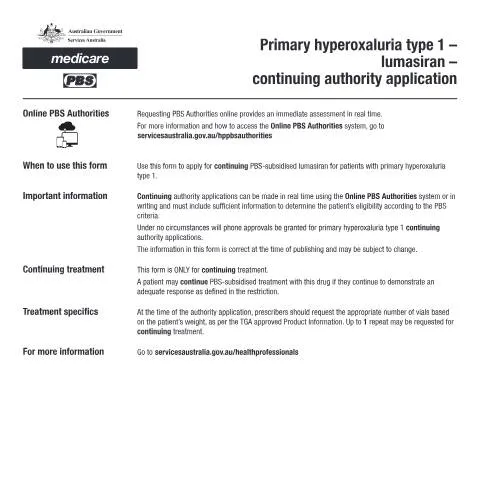
Navigating the PB390 Application: A Vital Resource for Patients with Primary Hyperoxaluria Type 1
When dealing with complex health conditions such as Primary Hyperoxaluria Type 1 (PH1), ensuring that patients have access to the appropriate medications and support is crucial. The PB390 form, officially known as the Primary hyperoxaluria type 1 - lumasiran - continuing authority application form, plays an essential role in this process, particularly for those seeking ongoing treatment with lumasiran. Understanding the intricacies of this document can significantly impact the care patients receive.
Understanding the Context: Primary Hyperoxaluria Type 1 and Lumasiran
Primary Hyperoxaluria Type 1 is a rare genetic disorder that leads to excessive production of oxalate, which can cause kidney stones and ultimately kidney damage. Lumasiran is a targeted therapy that helps reduce oxalate production, making it vital for patients managing this condition.
Due to the severity of PH1 and the specific nature of lumasiran, the Australian healthcare system, through Services Australia, has established protocols requiring healthcare professionals to submit the PB390 application for patients who need continuing authority approval for this treatment. This ensures that patients receive the medication they need without interruption.
Who Needs to Engage with the PB390 Form?
The PB390 form is intended for healthcare providers, specifically medical practitioners, who are overseeing the treatment of patients diagnosed with PH1. It is essential for doctors to understand the patients that qualify for the treatment, as well as the circumstances under which the application must be lodged. Here’s a closer look at the profiles of those involved:
Eligible Patients
- Patients with a confirmed diagnosis of Primary Hyperoxaluria Type 1.
- Individuals who are already receiving treatment with lumasiran and require continued access to the medication.
- Patients who have undergone an assessment by a specialist who confirms the ongoing need for therapy.
Exemptions and Special Cases
There may be instances where patients are ineligible or where exceptions apply. These can include:
- Patients who have experienced intolerable side effects from lumasiran.
- Individuals whose medical status has changed significantly, affecting the use of the medication.
The Application Process: Step by Step
Understanding the process of completing and submitting the PB390 is vital for both healthcare providers and patients. Below is a chronological breakdown of the steps involved:
Step 1: Initial Assessment
The healthcare provider must first assess the patient to confirm the ongoing need for lumasiran. This step ensures that the medication remains appropriate based on the patient’s health status.
Step 2: Completing the PB390 Form
The next step involves filling out the PB390 form, which includes several critical sections that require careful attention to detail. Mistakes or omissions can delay treatment approval.
Step 3: Submission of the Form
Once completed, the form must be submitted to Services Australia. This can typically be done through the online myGov platform, ensuring that the submission is tracked and processed efficiently.
Step 4: Awaiting the Decision
After submission, healthcare providers will need to monitor for the decision from Services Australia. This can take time, and it’s important for providers to keep the patient informed throughout this waiting period.
Diving Deep: Unpacking the PB390 Form Sections
The PB390 form comprises various sections that collect crucial information about the patient and their treatment plan. A thorough understanding of these sections can help avoid common pitfalls:
Patient Information Section
This section requires basic details about the patient, including:
- Name
- Date of birth
- Contact information
It is vital to ensure that all information is current and correctly spelled to avoid delays in processing.
Medical History and Current Treatment
Healthcare providers must detail the patient's medical history, focusing on:
- Previous treatments and responses
- Current health status
- Any contraindications for lumasiran
Being comprehensive in this section can bolster the application’s chances of approval.
Treatment Justification
A critical section that requires healthcare professionals to justify why lumasiran is necessary for the patient’s ongoing treatment. This could involve:
- Details of the patient’s condition and progression
- Evidence of how lumasiran has positively impacted the patient's health
This justification is often scrutinized, making it essential to present a compelling case.
Declaration and Signature
The healthcare provider must sign the form, confirming that all provided information is accurate and complete. It is crucial to double-check this section to avoid rejection based on minor clerical errors.
Potential Consequences of Non-compliance
Failure to properly complete or submit the PB390 form can have significant consequences for patients. These may include:
- Delays in receiving treatment, leading to potential deterioration of the patient's condition.
- Increased stress for both the patient and healthcare provider, resulting from the need for re-submissions or clarifications.
- Potential financial implications if the medication is not approved through the necessary channels.
Helpful Tips for Healthcare Providers
To enhance the efficiency of the application process and avoid common mistakes, healthcare providers may consider the following practical tips:
- Review Before Submission: Always double-check all sections of the PB390 form to ensure completeness and accuracy.
- Stay Informed: Keep up-to-date with any changes in the requirements set forth by Services Australia to ensure compliance.
- Communicate with Patients: Ensure that patients are aware of the process and timelines, helping to manage their expectations regarding the treatment.
Additional Resources and Support systems
While the PB390 form is central to facilitating ongoing access to lumasiran, various resources and support systems exist to aid both patients and healthcare providers throughout this process:
- Services Australia: They provide comprehensive guidance on the submission processes and help clarify any changes to regulations.
- Medical Associations: Many associations offer specific guidance on management protocols for rare diseases, including PH1.
- Patient Advocacy Groups: These groups can provide invaluable support, sharing experiences and strategies for navigating complex healthcare systems.
Completing the PB390 form is undoubtedly a critical task that can significantly affect the quality of care for patients with Primary Hyperoxaluria Type 1. By understanding its role, the process of filling it out, and the potential implications of non-compliance, both healthcare providers and patients can ensure a smoother journey towards receiving necessary medical interventions.
Understanding Primary Hyperoxaluria Type 1
Primary Hyperoxaluria Type 1 (PH1) is a rare genetic disorder characterized by the excessive accumulation of oxalate in the body, primarily due to a deficiency in the enzyme alanine-glyoxylate aminotransferase (AGT). This accumulation can lead to severe kidney damage and complications such as kidney stones and kidney failure. Early diagnosis and management are crucial for improving patient outcomes. PH1 often manifests in childhood, although adult-onset cases have been reported.
Patients diagnosed with PH1 typically experience recurrent kidney stones, renal impairment, and other related complications. It is essential for healthcare providers to monitor kidney function regularly and manage the patient's condition through dietary restrictions, hydration strategies, and, in some cases, surgical interventions. Currently, lumasiran, an RNA interference therapeutic agent, offers a new treatment option, targeting the underlying cause of the disorder by silencing the gene responsible for oxalate overproduction, ultimately reducing oxalate levels in the body.
Eligibility Criteria for Lumasiran and the Continuing Authority Application
To qualify for lumasiran therapy under the Australian Pharmaceutical Benefits Scheme (PBS), patients must meet specific eligibility criteria outlined in the continuing authority application form (PB390). These criteria are designed to ensure that lumasiran is prescribed to those who are most likely to benefit from it.
Firstly, patients must have a confirmed diagnosis of Primary Hyperoxaluria Type 1, which can be established through genetic testing or biochemical analysis showing elevated oxalate levels in urine. Additionally, evidence of significant kidney impairment or recurrent kidney stones related to PH1 is required to demonstrate the clinical necessity for treatment.
Secondly, patients must be aged 1 year or older, as lumasiran is indicated for pediatric and adult populations. It is important to document the patient's medical history, including previous treatments and responses to therapeutic interventions, as this information will support the application process.
Moreover, the form requires evidence that the patient has been informed about the potential benefits and risks of lumasiran therapy, ensuring they are actively involved in their treatment plan. This collaboration is vital not only for compliance with PBS requirements but also for enhancing patient outcomes through informed decision-making.
Submitting the Continuing Authority Application Form (PB390)
Submitting the PB390 form for lumasiran requires careful attention to detail to ensure a smooth approval process. The form can be obtained online through myGov or directly from the Services Australia website. Follow the steps outlined below for a successful submission.
First, fill out the patient’s personal details accurately, including the Tax File Number (TFN) for identification purposes, and include the relevant clinical details pertaining to the diagnosis of Primary Hyperoxaluria Type 1.
Next, ensure that all sections of the form are completed, particularly those requesting information on the patient's kidney function and history of oxalate-related complications. Comprehensive medical documentation, including test results and letters from specialists, should be attached to support the application.
After compiling the necessary documentation, submit the completed form via the electronic submission process on the myGov platform or send a hard copy directly to Services Australia. Keep in mind that a follow-up with the treating healthcare professional may be necessary to clarify any queries from the reviewing officer.
It’s important to track the status of your application through the myGov account, ensuring that any additional information requested by Services Australia is provided promptly to avoid delays in the decision-making process.