Navigating the PB326 Form: Your Journey Starts Here
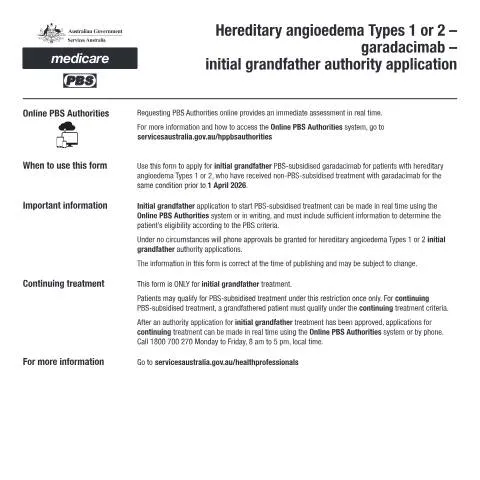
When dealing with hereditary angioedema, particularly types 1 and 2, health professionals must navigate a specific pathway to obtain funding for treatment with garadacimab. The PB326 – Hereditary angioedema Types 1 or 2 - garadacimab - initial grandfather authority application form is a pivotal document in this journey, setting the stage for necessary authorizations from Services Australia.
Understanding the Context: Hereditary Angioedema and Treatment Access
Hereditary angioedema (HAE) is a rare genetic disorder characterized by recurrent episodes of severe swelling. Patients with type 1 or 2 HAE often require specific treatments, such as garadacimab, to manage their condition effectively. However, securing funding for such treatments is not straightforward. The PB326 form is designed to streamline the process of requesting initial grandfather authority for these therapies, thereby playing a crucial role in patient care.
Why the PB326 Form is Essential
The PB326 form is specifically tailored for health professionals seeking to initiate funding requests for garadacimab. This particular authorization is a step above a standard prescription and is necessary to reflect the unique nature of treatments prescribed for HAE patients. In essence, it serves as a protective measure for both patients and medical practitioners by ensuring that therapeutic options are properly reviewed and authorized.
Who is Eligible to Submit the PB326 Form?
The PB326 form is intended for use by registered health professionals involved in the treatment of patients diagnosed with hereditary angioedema types 1 or 2. This includes, but is not limited to, specialists in immunology, allergy, or other relevant fields. It is vital that the individual submitting this form is authorized to prescribe medications and has a comprehensive understanding of the patient’s medical history and treatment plan.
Key Considerations for Health Professionals
- Ensure that the patient has a confirmed diagnosis of HAE type 1 or 2.
- Confirm that the treatment plan includes garadacimab.
- Gather all relevant medical records and treatment history before completing the form.
Completing the PB326 Form: A Step-by-Step Guide
Filling out the PB326 form requires careful attention to detail. Each section must be completed thoroughly to avoid delays in processing. Here’s how to approach the task:
Section Breakdown
- Patient Information: Collect accurate details including the patient's name, date of birth, and Medicare number.
- Diagnosis Details: Clearly state the HAE diagnosis, including supporting evidence from clinical evaluations or tests.
- Treatment History: Provide a summary of previous treatments and responses, highlighting why garadacimab is being recommended.
- Medical Practitioner Details: Ensure that your qualifications and registration details are current and clearly stated.
- Signatures: Both the practitioner and the patient (or their legal representative) must sign the document where indicated.
Submission Process: Where and How to Submit the PB326 Form
Once completed, the PB326 form must be submitted to Services Australia. The submission options typically include:
Submission Channels
| Method | Details |
|---|---|
| Online via myGov | This is the fastest method, allowing for immediate submission and tracking. Ensure you have a linked account with Services Australia. |
| Forms can be printed and mailed to Services Australia. This method may take longer for processing. | |
| In-person | While less common, some health professionals may choose to submit the form directly at a Services Australia office. |
What Happens Next? Understanding the Review Process
After submission, Services Australia will review the PB326 form along with any accompanying documentation. The processing time can vary based on the volume of applications and the completeness of the submitted information.
Outcomes of the Review
- Approval: If the application is approved, the patient will receive notification, allowing them to proceed with treatment.
- Request for Further Information: If additional details are needed, Services Australia will contact the submitting health professional to gather the necessary information.
- Denial: If the application is denied, the health professional will receive an explanation, and options for appeal or resubmission will be provided.
Common Challenges in Submitting the PB326 Form
While the PB326 form is designed to be user-friendly, there are common pitfalls that can lead to delays or denials:
Challenges to Anticipate
- Incomplete Information: Ensure all sections are filled out completely to avoid processing delays.
- Lack of Supporting Documentation: Include all relevant medical records and treatment histories as needed.
- Incorrect Submission Method: Double-check the intended submission method to ensure timely processing.
Impact on Patients: What to Expect After Submission
For patients, the submission of the PB326 form represents a critical step in accessing necessary treatment. Understanding the timeline and what follows can alleviate anxiety during this process.
Patient Rights and Responsibilities
- Patients have the right to receive clear communication regarding the status of their application.
- Engagement with their healthcare provider is crucial for providing any additional information required by Services Australia.
- It is the patient's responsibility to stay informed about the treatment options available, based on the outcomes of the PB326 process.
FAQs Surrounding the PB326 Form: Addressing Concerns
Even with a clear understanding of the PB326 form, health professionals and patients may have lingering questions about the specifics of the application process. Below are some common concerns and clarifications:
Clarifications for Health Professionals
- Can I submit multiple forms for different patients? Yes, each form must be filled out individually based on each patient's unique case.
- What if the patient’s condition changes after submission? Any changes should be communicated to Services Australia as they may affect treatment eligibility.
Patient Inquiries
- How will I be informed about the decision? Typically, communication will be sent directly to the health professional who submitted the form.
- What if my application is denied? Patients are encouraged to work closely with their healthcare provider to understand the reason for denial and discuss potential next steps.
Keeping Track: Monitoring the Application Process
Once the PB326 form is submitted, keeping track of its status is crucial. The myGov platform provides tools for health professionals to monitor their applications efficiently.
Utilizing myGov for Application Tracking
By logging into their myGov account, practitioners can:
- Check the status of the application in real-time.
- Receive notifications regarding any updates or additional requirements.
- Access relevant historical data on previous applications, enhancing future submissions.
Conclusion: The Significance of the PB326 Form in Patient Care
The PB326 form serves a crucial role in the healthcare landscape for patients suffering from hereditary angioedema types 1 and 2. By understanding its purpose, nuances, and the submission process, health professionals can effectively advocate for their patients, ensuring access to essential treatments. As the healthcare system continues to evolve, such forms remain integral to bridging gaps in care and facilitating timely interventions for those in need.
Understanding Hereditary Angioedema (HAE): The Basics and Types
Hereditary Angioedema (HAE) is a rare genetic disorder characterized by recurrent episodes of severe swelling (angioedema) in various parts of the body, including the extremities, gastrointestinal tract, and airway. HAE is classified into several types, with Types 1 and 2 being the most common. These types are primarily differentiated by their underlying genetic causes and the levels of the C1 inhibitor protein in the blood.
Type 1 HAE is associated with a deficiency of the C1 inhibitor, leading to low levels of this protein. In contrast, Type 2 HAE features normal or elevated levels of C1 inhibitor but with dysfunctional activity. Both types are inherited in an autosomal dominant manner, which means only one copy of the mutated gene from an affected parent can cause the disorder in the offspring.
Individuals suffering from HAE often experience sudden and spontaneous swelling episodes, which can be life-threatening if they occur in the throat or larynx. Diagnosis typically involves a combination of clinical evaluation and laboratory tests, including measurement of C1 inhibitor levels and function. Early recognition and treatment are critical to managing symptoms and preventing complications.
Application Process for Garadacimab - Initial Grandfather Authority Application Form (PB326)
The initial application for Grandfather Authority for garadacimab, a treatment for Hereditary Angioedema, is a crucial step for patients seeking reimbursement through the Pharmaceutical Benefits Scheme (PBS) in Australia. The PB326 form is specifically designed for healthcare providers to request a Grandfather Authority for patients who have been on the medication prior to its listing on the PBS. This ensures continuity of care without financial burden to the patient.
To successfully complete the PB326 form, medical practitioners must gather detailed information about the patient's clinical history, including previous treatments, symptom frequency, and any relevant laboratory results. The form requires that healthcare providers provide comprehensive documentation to justify the need for garadacimab, including adherence to previous treatments and any adverse effects experienced. Additionally, practitioners should ensure that the patient's current treatment plan aligns with PBS guidelines for eligibility.
It's essential to submit the PB326 application promptly to avoid any gaps in treatment. The form can be accessed and submitted online through the Services Australia portal, which facilitates a streamlined process. Furthermore, patients and providers should remain aware of any updates or changes to PBS guidelines or coverage criteria to maintain eligibility for reimbursement.
Patient Support and Resources for HAE Management
Managing Hereditary Angioedema goes beyond medical treatment; it involves a comprehensive support system for patients and their families. Numerous resources are available in Australia for patients diagnosed with HAE, including support groups, educational programs, and access to specialized healthcare professionals. Organizations such as the Australian HAE Association provide valuable information about the disorder, treatment options, and community support.
Support groups offer a platform for individuals to share their experiences and coping strategies, facilitating emotional support and practical advice. Patients can learn from others facing similar challenges, which can be particularly beneficial in navigating the complexities of living with HAE.
Moreover, educational materials tailored to both patients and healthcare providers are essential for increasing awareness and understanding of HAE. These resources include information on recognizing symptoms, managing acute attacks, and understanding long-term treatment strategies. Many hospitals and clinics also have HAE specialists trained in the latest management protocols, ensuring that patients receive the most current and effective care.
In addition, online platforms and social media groups can serve as informal spaces to seek advice and share resources. Patients are encouraged to stay informed and collaborate with their healthcare providers to develop personalized management plans that align with their lifestyle and treatment preferences.