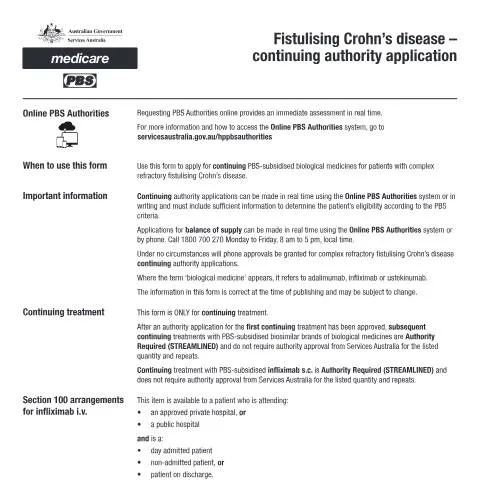
Navigating the PB093 Application: A Critical Step for Patients with Fistulising Crohn's Disease
For individuals diagnosed with fistulising Crohn's disease, the journey toward managing their health often requires navigating complex administrative processes. One significant document within this realm is the Fistulising Crohn's disease - continuing authority application form (PB093), administered by Services Australia. This form is not just a piece of paper but a gateway to essential health services that can ease the burden of this challenging condition. Understanding the nuances of this application can make a substantial difference in the quality of care received.
Distinguishing PB093 from Similar Forms
The PB093 form serves a unique purpose compared to other applications related to health support. While many might conflate it with standard health-related forms, its specific focus on fistulising Crohn’s disease and associated treatment protocols sets it apart. This document is specifically designed for ongoing authority approval for medications and services pertinent to patients experiencing the complexities of this form of Crohn's disease.
Understanding the Unique Aspects of PB093
- Targeted Treatment: Unlike general health forms, PB093 addresses the specific needs of fistulising Crohn’s disease, ensuring that patients receive tailored support.
- Ongoing Authority: This application is crucial for securing continued access to necessary medications, which may include costly treatments that require special approval.
- Time-sensitive Nature: Given the chronic nature of the condition, timely submission of this form is essential to avoid treatment interruptions that could negatively impact health outcomes.
The Application Process: Who Needs to Submit PB093?
Understanding who should complete this application is vital. The PB093 form is intended for health care providers acting on behalf of eligible patients. However, there are specific criteria that must be met:
Eligibility Criteria for PB093 Submission
- Diagnosis Confirmation: A confirmed diagnosis of fistulising Crohn's disease is a prerequisite.
- Current Treatments: Patients must be currently receiving treatment to manage their condition, underscoring the need for the continuation of authority.
- Health Professional Endorsement: Only registered health professionals can submit this application on behalf of the patient, ensuring that professional medical judgement guides the process.
Completing the PB093 Form: Essential Steps
Filling out the PB093 form accurately is critical to ensure that there are no delays in processing. While it may seem straightforward, attention to detail is paramount. Below are key elements to focus on:
Key Sections and Required Information
- Patient Information: Accurate personal details such as name, address, and Date of Birth. This section must precisely align with the patient's health records.
- Medical History: Comprehensive details regarding the patient’s medical history, including previous treatments for Crohn's disease and any complications.
- Current Medications: A detailed list of medications currently being taken, including dosages and any changes in prescription that have occurred.
- Supportive Documentation: Any relevant medical reports or evidence that can support the authority request should be included to strengthen the application.
Preparing Supporting Documents: What is Necessary?
Alongside the PB093 form, additional documentation is often required to substantiate the application. The following elements should be carefully compiled:
Types of Supporting Documents
| Document Type | Description | Purpose |
|---|---|---|
| Medical Reports | Recent evaluations from treating physicians detailing the patient's condition. | To confirm the ongoing need for treatment. |
| Current Medication List | A comprehensive list of medications currently prescribed. | To ensure continuity of care. |
| Treatment History | Documentation of past treatments, responses, and any adverse effects. | To provide context for the current application. |
Submitting the PB093 Application: Channels and Follow-Up
After ensuring the form is complete and all necessary documents are attached, the next step is submission. The submission must be done through the appropriate channels established by Services Australia. This usually involves electronic submission via myGov or through direct postal services.
Tracking the Application Progress
Once submitted, staying updated on the status of the application is essential. Patients or their medical practitioners can monitor the progress through the following methods:
- myGov Account: Using the myGov portal allows users to check their application status efficiently.
- Direct Contact: If there are concerns regarding the processing time, contacting Services Australia for an update is advised. Keeping a record of communications can be beneficial.
Implications of the Application: Rights and Responsibilities
Completing and submitting the PB093 application comes with both rights and responsibilities for patients. Understanding these aspects can empower patients during their healthcare journey.
Patient Rights Following Submission
- Access to Medications: Approval of the application typically grants access to necessary medications for managing fistulising Crohn's disease.
- Transparency: Patients have the right to receive clear information regarding the status and outcomes of their applications.
Obligations of the Patient and Healthcare Provider
- Providing Accurate Information: Both parties must ensure that all submitted information is truthful and complete to avoid delays or rejections.
- Timeliness in Communication: Responding promptly to any requests for additional information from Services Australia is crucial.
Unique Considerations for Special Cases
While the PB093 form is relatively clear in terms of general requirements, certain unique situations can complicate the process. Understanding these nuances is essential for effective management of the application process.
Special Considerations for Unique Situations
- Minor Applicants: If the patient is a minor, specific guidelines regarding parental consent must be followed, along with additional documentation.
- Patients with Complex Cases: Those with co-existing health issues might need to provide more extensive medical records and justification for the need for additional treatments.
- Urgent Requests: For patients requiring urgent medical intervention, it is advisable to highlight this need during the application submission.
Understanding the Outcome: Next Steps After Approval or Rejection
Receiving a decision on the PB093 application can significantly affect a patient's treatment plan. Understanding what to expect post-decision is crucial for ongoing care.
Post-Submission Outcomes
- Approval: If approved, patients should receive clear instructions on how to proceed with their treatments and any further steps required.
- Rejection: In cases of rejection, it is important to review the reasons provided. Patients have the right to appeal the decision, and they may need to gather additional documentation for this process.
In conclusion, navigating the PB093 application process for fistulising Crohn's disease is a vital effort in securing necessary health services. By understanding the specific requirements, preparing appropriate documentation, and following through with the submission and tracking of the application, patients can significantly improve their healthcare outcomes. It's not merely about filling out a form; it’s about advocating for your health and ensuring you receive the treatment necessary for managing a chronic condition.
Understanding the Continuing Authority Application Form (PB093)
The Continuing Authority Application Form (PB093) is a crucial document for individuals suffering from fistulising Crohn's disease in Australia. It enables patients to access ongoing treatment and medications under the Pharmaceutical Benefits Scheme (PBS). Understanding the specifics of this form is essential for patients and their healthcare providers. Typically, the PB093 is utilized by individuals who have already established a diagnosis and are seeking to have their treatment continued without interruptions. This application must be filled out with precise medical details, including previous treatments and responses to therapies. Additionally, a healthcare professional, usually the treating specialist or general practitioner, must endorse this application to affirm the ongoing need for medication.
Eligibility Criteria and Evidence Requirements
When applying for a Continuing Authority through the PB093 form, it is paramount to meet specific eligibility criteria. Patients must provide substantial evidence to support their claim, demonstrating that they are indeed experiencing the complications associated with fistulising Crohn's disease. This typically includes medical reports or letters from specialists that detail the diagnosis, the severity of the disease, and treatment history.
The evidence required often involves documenting previous treatments, medications used, and the outcomes of those treatments. Furthermore, any recent diagnostic tests—such as imaging studies or laboratory results—should be submitted alongside the application to substantiate the ongoing need for PBS-subsidized medications. It can be beneficial for applicants to keep detailed records of their medical journey, as this facilitates the completion of the PB093 form and strengthens their case for approval.
Common Challenges and How to Overcome Them
Many patients encounter challenges when submitting the Continuing Authority Application Form (PB093). One of the most frequent issues is incomplete or insufficient documentation, which can lead to delays or even refusal of the application. It’s crucial to ensure that all required sections of the form are filled accurately and that all necessary supporting documents are attached.
Another challenge is understanding the timeline for processing applications. Patients may become anxious about the wait time for approvals, which can vary based on the complexity of their case and the current workload of the relevant health authorities. To mitigate anxiety, it is advisable for patients to maintain open communication with their healthcare providers and to check on the status of their application regularly.
Lastly, if an application is denied, understanding the appeals process is vital. Patients should familiarize themselves with the options available for a merits review under the Administrative Decisions (Judicial Review) Act 1977 (Cth) and consider consulting with a legal expert or advocacy group specializing in healthcare rights to navigate the appeal effectively.