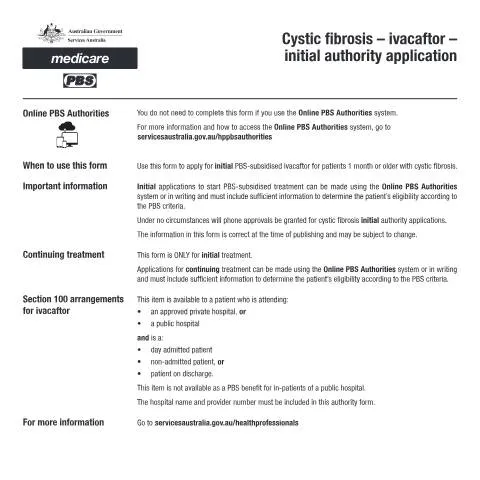
Navigating the PB120: Understanding Its Role in Accessing Ivacaftor for Cystic Fibrosis Treatment
For individuals diagnosed with cystic fibrosis (CF), obtaining necessary medications such as ivacaftor can be a crucial part of managing their health. The PB120 form, officially titled the "Cystic fibrosis - ivacaftor - initial authority application form," plays a pivotal role in this process, serving as a gateway to reimbursement under the Pharmaceutical Benefits Scheme (PBS). This document is not merely a formality; it represents a critical step for health professionals to help their patients access vital treatments.
Who Is Responsible for Submitting the PB120?
The PB120 form is specifically designed to be filled out by registered healthcare professionals—typically, the treating physician or specialist of the patient. This requirement underscores the importance of medical expertise in the application process, as the physician must provide detailed information about the patient's condition and treatment plan.
The Role of Healthcare Professionals
- Assessment of Eligibility: Clinicians must assess whether the patient meets the clinical criteria for ivacaftor treatment.
- Medical Documentation: They are responsible for documenting the patient's medical history and the rationale for prescribing ivacaftor.
- Patient Consent: The healthcare provider must ensure that the patient has consented to the information being shared for the application.
Without the submission of this application by a qualified professional, the patient may face significant delays in accessing their treatment, highlighting the integral role that clinicians play in this process.
Completing the PB120: A Step-by-Step Approach
Filling out the PB120 form requires careful attention to detail. Each section of the form is designed to gather specific information that will determine the patient's eligibility for government-funded ivacaftor treatment. Below is a breakdown of critical components to focus on:
Key Sections of the Form
- Patient Information: This section captures essential details such as the patient's name, date of birth, and contact information.
- Clinical Information: Health professionals must provide a comprehensive account of the patient's cystic fibrosis diagnosis, including severity and related complications.
- Treatment Justification: Detailed explanations are necessary to clarify why ivacaftor is the most suitable treatment option for the patient.
- Additional Medical History: Any other relevant medical data that may influence the decision-making process should be included here.
It is critical that all sections are filled out thoroughly and accurately. Incomplete forms can lead to delays or possible rejection of the application.
Submission Channels: Paper vs. Online Applications
Understanding the available options for submitting the PB120 form is essential for ensuring a smooth process. The submission can generally be made through two primary channels:
Paper Submission
For those preferring traditional methods, the paper form can be printed, completed, and mailed to the appropriate Services Australia office. This method allows for physical documentation to be sent but may involve longer processing times due to postal delays.
Online Submission via myGov
Alternatively, health professionals may opt to submit the PB120 through myGov, a digital platform that offers a streamlined process. This method typically results in faster processing times and allows users to track the application status online. However, an active myGov account is necessary to access this service, requiring prior registration and linking with Services Australia.
The Implications of Submission: What to Expect
Once the PB120 form is submitted, the next steps are crucial for both patients and healthcare providers. Understanding the implications that follow submission can help manage expectations throughout the process.
Processing Timeframes
The processing time for PB120 applications can vary widely based on several factors, including the completeness of the application and the volume of submissions being processed. It's essential to keep in mind that:
- Initial reviews are typically conducted within a set timeframe, but additional information requests can extend this period.
- Healthcare providers should remain proactive in following up with Services Australia if no communication is received within the expected timeframe.
Outcome of the Application
Successful applications will result in the patient receiving a letter of approval, indicating their eligibility for subsidized ivacaftor treatment. Conversely, if the application is denied, the letter will outline the reasons for the refusal and may provide information on how to appeal the decision.
Understanding Your Rights and Obligations
Submitting the PB120 form not only opens the door to potential treatment access but also comes with specific rights and obligations for both the healthcare provider and the patient.
Patient Rights
- Access to Treatment: Patients have the right to access necessary treatments if they meet the PBS criteria.
- Appeal Rights: If an application is refused, patients can appeal the decision through the appropriate channels.
Healthcare Provider Obligations
- Accuracy: Providers must ensure that all information submitted is accurate and reflective of the patient's situation.
- Timeliness: Submissions should be made in a timely manner to avoid delays in patient care.
Awareness of these rights and obligations helps to foster a transparent and efficient application process, emphasizing the collaborative nature of the healthcare system.
Historical Context and Regulatory Framework
The PB120 form exists within a well-defined regulatory framework, shaped by policies aimed at providing equitable access to essential medications for Australians living with cystic fibrosis. This background is essential for understanding how and why the form was created.
Regulatory Background
Over the years, various legislative measures have been implemented to ensure that patients receive timely access to necessary treatments. Under the Pharmaceutical Benefits Scheme (PBS), ivacaftor is available for subsidization for patients who meet specific eligibility criteria. The PB120 form was designed to facilitate the streamlined assessment of these criteria.
The Evolution of Cystic Fibrosis Treatment Access
As treatment options for cystic fibrosis have evolved, so too have the policies governing access to these treatments. The introduction of ivacaftor marked a significant advancement in the management of certain genetic mutations of cystic fibrosis, and the PB120 form is a direct response to the need for clear and efficient pathways to treatment.
A Chronological Walkthrough: From Application to Approval
Understanding the complete journey of the PB120 application can empower healthcare providers and patients to navigate the system more effectively. Here’s a detailed look at the chronological steps involved:
- Step 1: Patient Diagnosis - The patient is diagnosed with cystic fibrosis and is assessed for eligibility for ivacaftor treatment.
- Step 2: Form Completion - The healthcare provider completes the PB120 form, ensuring all required information is included.
- Step 3: Submission - The completed form is submitted via the chosen channel: online through myGov or through postal mail.
- Step 4: Application Review - Services Australia reviews the application, which may involve contacting the healthcare provider for additional information.
- Step 5: Decision Communication - The healthcare provider and patient receive notification of the decision regarding treatment access.
- Step 6: Treatment Initiation - Upon approval, the patient can begin receiving ivacaftor treatment with the benefits of government subsidization.
This systematic approach highlights the structured nature of the application process, emphasizing the importance of each step in ensuring timely access to treatment.
Tracking Your Application: Staying Informed and Engaged
After submitting the PB120 form, it is vital for healthcare providers and patients to remain engaged in the process to ensure timely access to treatment. Here are strategies for effectively tracking the application:
Follow-Up Communications
After submission, it is advisable for healthcare providers to maintain open lines of communication with Services Australia. This involves:
- Checking in after a reasonable waiting period to inquire about the status of the application.
- Promptly responding to any requests for additional documentation or information.
Utilizing Digital Tools
If submitted online through myGov, providers can leverage the platform to monitor the progress of the application. Regularly logging in can provide updates on processing status, which aids in proactive follow-up.
Overall, staying informed and engaged throughout the application process is crucial for minimizing delays and ensuring patients receive the necessary treatments without unnecessary barriers.
Eligibility Criteria for Initial Authority Application Form PB120
The Initial Authority Application Form PB120 is pivotal for patients seeking access to ivacaftor, especially considering its high cost and specific use case related to cystic fibrosis (CF). Understanding the eligibility criteria is crucial to ensure a smooth application process.
To qualify, applicants must demonstrate a confirmed diagnosis of cystic fibrosis due to a specific mutation in the CFTR gene that ivacaftor is designed to target. The most common mutations that meet this requirement are the G551D, G1244E, and S1251N mutations. Applicants need to provide relevant medical documentation, including mutation testing results, which should be conducted at a laboratory accredited by the National Association of Testing Authorities (NATA).
Additionally, it is essential for applicants to be currently receiving treatment under a comprehensive care plan for cystic fibrosis, which typically includes regular consultations with a specialist CF team. This documentation should outline ongoing treatments and their effectiveness, providing evidence that ivacaftor is a necessary component of their therapeutic regimen.
The PB120 form requires healthcare professionals to detail any previously used therapies and their outcomes. The Australian Government also stipulates that applicants must not be participating in any clinical trials that would affect their eligibility for ivacaftor through this subsidy process.
It is advisable for applicants to work closely with their healthcare providers to ensure all necessary documentation is prepared meticulously, as incomplete applications can lead to delays or denials.
Completing the PB120 Form: Best Practices
Completing the Initial Authority Application Form PB120 requires attention to detail and a thorough understanding of the requirements. The form seeks specific information, which must be accurately filled out to avoid delays in processing.
Firstly, ensure you have your Tax File Number (TFN) readily available, as this may be required for identification purposes. When completing the PB120 form, clarity is vital; any ambiguously filled sections might lead to requests for additional information, thereby extending the review period.
Here are some best practices for completing the form:
Use Clear and Concise Language: Healthcare professionals assisting in filling out the form should avoid jargon and write in plain English. This ensures that reviewers who may not be familiar with medical terminology can easily understand the patient's condition and treatment needs.
Attach Supporting Documents: Apart from documentation proving the CFTR mutation, attaching a letter from the treating physician articulating the medical necessity for ivacaftor based on the patient's health history is beneficial. This letter should highlight the patient’s current treatment regimen and the rationale behind introducing ivacaftor.
Follow Formatting Guidelines: If the form specifies a certain format for data (like date formats), ensure that these are adhered to rigorously. For instance, using the Australian date format (DD/MM/YYYY) is critical in avoiding potential processing issues.
Review Before Submission: After completing the form, take the time to review it thoroughly. Having a second set of eyes can help catch any errors or omissions that may have been overlooked.
Submit Electronically via myGov: The PB120 form can be submitted electronically through the myGov portal. Ensure that your account is set up and linked with Services Australia for a more streamlined submission process. Keep a copy of the submitted application for your records.
Follow Up: Once submitted, it is advisable to follow up on the application status after a few weeks. This can help identify any issues early on, and address them promptly.
By adhering to these best practices, patients can significantly enhance their likelihood of a timely approval for ivacaftor through the Initial Authority Application Process.
Appealing a Decision: Understanding Your Rights
If a patient’s Initial Authority Application for ivacaftor (PB120) is denied, understanding the appeal process is vital. The Australian health system allows for a review of administrative decisions through the Administrative Appeals Tribunal (AAT), provided that the patient can demonstrate substantial grounds for the appeal.
The appeal process typically involves the following steps:
Receiving the Decision: Upon receiving the denial notice, carefully read the reasons provided. Understanding why the application was denied is critical to formulating a successful appeal.
Gathering Additional Evidence: Depending on the reasons for the denial, it may be necessary to gather further evidence to support the case. This can include new medical assessments, testimonials from healthcare providers, or updated test results demonstrating the necessity for ivacaftor.
Lodging the Appeal with AAT: The appeal must be lodged in writing and submitted within the stipulated timeframe, usually within 28 days from the date of the decision. Include any additional documents that strengthen your case.
Undergoing the Review Process: The AAT will review the application alongside any new evidence submitted. There is an opportunity for a hearing, where the applicant may present their case directly to a member of the tribunal. It’s advisable to prepare thoroughly for this, possibly seeking advice or representation from a legal expert.
Final Decision: After reviewing all the evidence, the AAT will provide a final decision. If the appeal is successful, the patient may gain access to ivacaftor; if not, they will receive a detailed explanation of the outcome, which may outline further avenues for recourse or additional steps to take.
Being well-informed about this process and your rights can significantly impact the outcome of your appeal. Patients are encouraged to keep lines of communication open with their healthcare team throughout this process, ensuring all necessary data and support are readily available.