Navigating the Initial Authority Application for Cystic Fibrosis Treatments
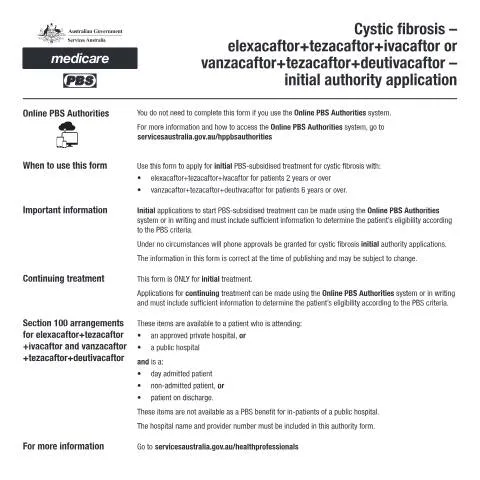
Completing the Cystic fibrosis - elexacaftor+tezacaftor+ivacaftor or vanzacaftor+tezacaftor+deutivacaftor - initial authority application form (PB286) is a pivotal step in accessing essential medications for managing cystic fibrosis (CF). This process is designed for patients who require specific treatments that are not available over the counter. The form plays a crucial role in the approval and funding of these medications through the Pharmaceutical Benefits Scheme (PBS) in Australia. Understanding how to fill out this form correctly can significantly affect the speed and success of the application process.
Who Should Be Involved in the Application Process?
The application for treatments covered under the PB286 form primarily involves healthcare professionals who are directly managing the treatment of cystic fibrosis patients. This includes but is not limited to:
- Respiratory Physicians: Specialists who handle the overall management of CF.
- Pediatricians: For children diagnosed with CF, pediatricians will often be the primary healthcare providers.
- General Practitioners (GPs): In some cases, GPs may assist in the application process, especially for ongoing treatments.
- Cystic Fibrosis Centres: These specialized facilities often provide comprehensive support in navigating the application process.
Each of these professionals plays a critical role in gathering necessary medical evidence, ensuring the application is as robust as possible, and can help expedite the approval process through accurate and detailed submissions.
Understanding the Patient Profiles
Multiple factors determine the eligibility of patients for the medications listed in this application. These factors can include:
- Age: Different formulations may be approved for specific age groups, often with varying criteria for children and adults.
- Genetic Mutations: The specific genetic mutation associated with cystic fibrosis may affect which treatment a patient can access.
- Severity of Condition: Patients suffering from more severe manifestations of CF may find that they qualify for additional treatments not available to those with milder symptoms.
Healthcare providers must ensure that the patient's profile aligns with the requirements stated in the clinical guidelines to validate the application.
Unpacking the Unique Aspects of Form PB286
Form PB286 is specifically tailored to address the unique needs associated with cystic fibrosis treatments. This is what sets it apart from other authority application forms:
- Targeted Medications: The form specifically pertains to medications such as elexacaftor, tezacaftor, ivacaftor, and vanzacaftor, which are not addressed in other PBS application forms.
- Streamlined Criteria: The criteria for approval are based on detailed clinical guidelines that reflect the latest evidence-based practices specific to cystic fibrosis.
- Additional Documentation: PB286 often requires additional medical evidence that is not typically needed for other applications, ensuring a comprehensive review of the patient's condition.
Understanding these differences is critical to ensuring that the application is filled out correctly and submitted with all necessary documentation in support of the patient’s request.
The Broader Impact of PB286 on Patient Care
For patients, submitting the PB286 form can have substantial implications:
- Access to Medications: Successful approval means access to essential medications that can dramatically improve the quality of life.
- Financial Implications: As these medications can be costly, obtaining authority allows for subsidization through the PBS, reducing out-of-pocket expenses significantly.
- Holistic Care Framework: The application process often aligns with broader care strategies provided by healthcare teams, ensuring that treatment plans are both comprehensive and individualized.
Failing to submit this form or providing incomplete information can delay treatment and exacerbate health issues. Therefore, meticulous attention to detail during the preparation is essential.
Timeline for Submission and Approval
Understanding the timeline associated with the PB286 application can aid both healthcare providers and patients in planning effectively. Generally, here’s what to expect:
| Stage | Typical Duration |
|---|---|
| Preparation of Documentation | 1-2 weeks |
| Submission of PB286 Form | Immediate upon completion |
| Processing by Services Australia | 2-4 weeks |
| Notification of Approval | Within 2 weeks post-processing |
It is critical for healthcare providers to communicate these timelines to patients, as delays in the application can lead to interruptions in treatment plans. By anticipating these stages, teams can better manage patient expectations and ensure a smoother flow of care.
Gathering Necessary Documentation
Before submitting the PB286 form, gathering relevant medical documentation is essential. This may include:
- Patient Medical History: Comprehensive records detailing the patient's diagnosis and treatment history.
- Genetic Testing Results: Documentation showing the patient’s specific genetic mutations affecting their CF.
- Previous Treatment Responses: Evidence of how the patient has responded to past medications or therapies.
Each document must be current and accurately reflect the patient’s ongoing treatment needs. Healthcare professionals should ensure that all materials are well-organized and submitted alongside the form to facilitate a smooth review process.
How Services Australia Processes the PB286 Application
After submission, the PB286 form enters a detailed processing phase managed by Services Australia. Here’s what occurs:
- Verification: Services Australia verifies the information provided, checking for completeness and accuracy.
- Clinical Review: A panel of medical professionals may assess the application against PBS criteria to determine eligibility.
- Communication: If further information is required, Services Australia will reach out to the healthcare provider for clarification. It is crucial to maintain open lines of communication during this phase.
This comprehensive review process is designed to safeguard that public funds are spent responsibly, ensuring that only patients who meet specific clinical guidelines receive subsidized treatments.
Monitoring and Following Up on Your Application
Once the application has been submitted, it’s vital for the healthcare provider to monitor its status through various channels. Providers can:
- Contact Services Australia: Regularly checking in can help ensure that any issues are addressed promptly.
- Patient Follow-Up: Keeping the patient informed about the application status helps manage their expectations and healthcare needs effectively.
Being proactive about following up can assist in hastening the approval process and mitigate potential delays due to administrative oversight.
The Essential Role of Form PB286 in the Treatment Journey
The PB286 form is more than just a piece of paperwork; it represents a critical gateway to vital treatment resources for those battling cystic fibrosis. Understanding its intricacies can make a significant difference in patient outcomes. The successful navigation of the application process encapsulates the collaborative effort between patients, healthcare providers, and Services Australia.
To maximize the chances of approval, all stakeholders must work together to ensure thorough documentation, clear communication, and adherence to procedural requirements. This ensures that individuals living with cystic fibrosis have timely access to the necessary therapeutic interventions, thus enhancing their quality of life.