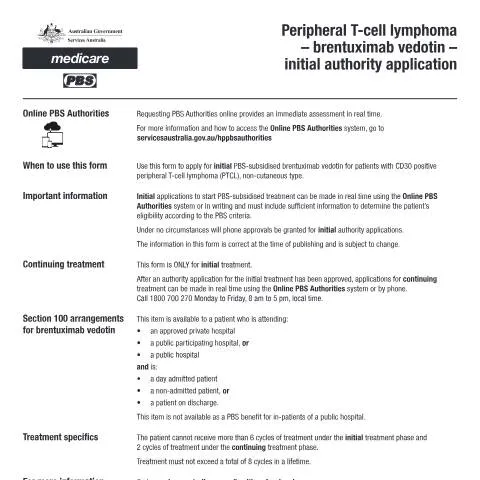
Understanding Peripheral T-cell Lymphoma: The Role of Form PB314
The diagnosis of Peripheral T-cell lymphoma (PTCL) can be overwhelming for both patients and healthcare professionals. The necessity for effective treatment options is paramount, and this is where the initial authority application form (PB314) plays a crucial role. By understanding the context and significance of this document, health professionals can navigate the application process more effectively, ensuring their patients receive timely access to the treatment they need.
Who Needs to Complete Form PB314?
Form PB314 is specifically designed for healthcare professionals who are prescribing brentuximab vedotin for patients diagnosed with PTCL. The form must be completed in the following scenarios:
- Oncologists prescribing the medication as part of a treatment plan.
- General practitioners referring patients to specialists for treatment.
- Nurse practitioners who are authorized to prescribe treatment for PTCL.
It's important to note that patients themselves cannot submit this form; it must be completed by a registered healthcare professional who has a comprehensive understanding of the patient's medical history and treatment needs.
The Legal Framework Governing PB314
Form PB314 operates under the auspices of Services Australia and is governed by the Administrative Decisions (Judicial Review) Act 1977 (Cth). This legal framework ensures that applications are reviewed fairly and that patients have a right to challenge decisions made regarding their treatment options if necessary. Understanding this legal backdrop is essential for healthcare professionals to appreciate the implications of completing the form accurately and thoroughly.
Merit-Based Review Process
Once submitted, applications for treatment using brentuximab vedotin undergo a merits review process through the Administrative Appeals Tribunal (AAT). This means that if an application is denied, practitioners can appeal the decision. It is vital for health professionals to provide robust evidence in support of the application to facilitate a positive outcome during this review stage.
Completing the Form: Key Sections and Information Required
Filling out Form PB314 requires meticulous attention to detail. Each section must be completed accurately to avoid delays or potential rejections. Here’s a breakdown of crucial components that need to be addressed:
- Patient Identification: Ensure that the patient's full name, date of birth, and contact details are correctly entered.
- Medical History: A comprehensive overview of the patient's medical background is necessary, including previous treatments for PTCL and any other relevant health issues.
- Prescribing Information: Include the dosage, frequency of administration, and the anticipated duration of treatment with brentuximab vedotin.
In addition to these sections, it is essential to provide any necessary supporting documents, such as pathology reports and previous treatment records, to substantiate the application.
Submitting Form PB314: The Next Steps
After completing the form, the next step is submission. This can typically be done through the myGov platform, which streamlines the process for both healthcare providers and Services Australia. Here are essential points to keep in mind:
- Submission Channels: Ensure you are familiar with the digital submission process via myGov, as this is the preferred method for submitting Form PB314.
- Confirmation: Once submitted, healthcare professionals should obtain confirmation of receipt to keep a record of the application.
- Follow Up: Regularly check the status of the application through the myGov portal to stay informed about any updates or additional information requests.
The Impact of PB314 on Patient Care
Completing Form PB314 effectively can significantly impact patient outcomes. By facilitating access to brentuximab vedotin, health professionals are enabling their patients to receive timely and necessary treatment. The implications of this document extend beyond mere paperwork; it represents a critical step in the patient’s healthcare journey.
Moreover, understanding the nuances of this application process can empower healthcare providers to advocate more effectively for their patients. Failure to submit this form correctly or in a timely manner could potentially delay treatment, which could lead to adverse health outcomes.
Patient Rights and Obligations
Patients have specific rights regarding their treatment applications, including:
- The right to be informed: Patients should be kept informed about the status of their application and potential treatment options.
- The right to appeal: If treatment is declined, patients can work with their healthcare provider to appeal the decision through the AAT.
On the other hand, patients also have obligations to ensure that their healthcare providers are provided with all necessary information to facilitate the application process. Open communication regarding medical history and treatment preferences is essential.
Common Challenges When Using PB314
Despite its importance in facilitating treatment access, healthcare providers may encounter several challenges when completing Form PB314:
- Incomplete Information: Omissions or inaccuracies in the patient’s medical history can lead to delays or denials.
- Complex Cases: Patients with multiple health conditions or previous treatments may require more detailed documentation, which can complicate the submission process.
- Familiarity with the System: Newly graduated healthcare professionals may struggle with the nuances of the myGov platform or the specifics of the PB314 form.
Addressing these challenges head-on requires thorough training and ongoing education for healthcare professionals about the PB314 and the broader context of PTCL treatment.
Special Circumstances: What to Consider
In certain situations, such as when dealing with minor patients or non-residents, additional considerations apply when completing Form PB314. These unique cases may necessitate variations in the documentation or additional consent:
- Minors: Parental or guardian consent is mandatory for patients under 18 years of age. This may require additional documentation showing consent from a legal guardian.
- International Patients: For non-resident patients, specific provisions regarding eligibility for brentuximab vedotin must be considered, and more extensive documentation may be requested.
Understanding these nuances is critical for healthcare providers to ensure compliance with legal and ethical standards when completing Form PB314.
A Look at Related Forms and Procedures
While Form PB314 has a specific purpose, there are other related documents that healthcare providers may encounter during the treatment process. Recognizing the differences between these forms can prevent confusion and streamline patient care:
| Form Name | Purpose | Key Differences |
|---|---|---|
| PB314 | Initial authority application for brentuximab vedotin | Specific to PTCL treatment; requires detailed medical history. |
| PB316 | Authority application for other oncology medications | Broader scope; not specific to PTCL; different medications. |
| PB325 | Application for ongoing treatment approvals | Focuses on renewal or continuity of care; follows initial approvals. |
Being well-versed in these related forms allows healthcare providers to facilitate smoother transitions in patient care and avoids unnecessary delays in treatment authorizations.
The Importance of Ongoing Education and Training
Continued education for healthcare professionals regarding the use of Form PB314 and the treatment of PTCL is vital. Regular training sessions and updates about changes in the procedures or regulations can significantly enhance a practitioner’s ability to navigate the administrative landscape effectively.
Joining professional networks or attending workshops focused on oncology treatment can provide valuable insights and help practitioners stay informed about the best practices related to the PB314 form and its application process.
In summary, the completion and submission of Form PB314 is a pivotal step in securing access to necessary treatment for patients diagnosed with Peripheral T-cell lymphoma. With a clear understanding of the process, healthcare professionals can ensure that their patients receive timely and effective care, ultimately leading to better health outcomes.
Understanding Peripheral T-cell Lymphoma (PTCL)
Peripheral T-cell lymphoma (PTCL) is a group of aggressive hematological malignancies arising from T-cells, which are critical components of the immune system. PTCL comprises various subtypes, each with unique characteristics and clinical behaviors. The most common subtypes include Peripheral T-cell Lymphoma Not Otherwise Specified (PTCL-NOS), Anaplastic Large Cell Lymphoma (ALCL), and Angioimmunoblastic T-cell Lymphoma (AITL).
Patients diagnosed with PTCL often experience a wide range of symptoms, including lymphadenopathy, fever, weight loss, and night sweats. The diagnosis generally involves a combination of clinical assessment, imaging studies, and histopathological examination of lymph node biopsies. The prognosis for PTCL can vary significantly depending on the subtype and the patient’s overall health at the time of diagnosis. Treatment options for PTCL typically include chemotherapy, radiation, and immunotherapy, with brentuximab vedotin emerging as a particularly effective option for certain subtypes.
Brentuximab Vedotin: Mechanism of Action and Treatment Protocols
Brentuximab vedotin is an antibody-drug conjugate that plays a crucial role in the management of specific types of PTCL, particularly ALCL and PTCL-NOS. It consists of an anti-CD30 monoclonal antibody linked to a potent cytotoxic agent, MMAE (monomethyl auristatin E). This unique structure allows brentuximab vedotin to selectively target CD30-expressing malignant cells, delivering the cytotoxic agent directly to the tumor site while minimizing damage to healthy tissues.
The treatment protocol for brentuximab vedotin typically involves intravenous administration every three weeks. Clinical trials have shown that this therapy can lead to significant improvements in response rates, especially in patients who have relapsed or are refractory to traditional chemotherapy regimens. However, potential side effects, including peripheral neuropathy, infusion reactions, and cytopenias, must be carefully monitored throughout the treatment process.
For Australian patients, access to brentuximab vedotin may be facilitated through the Pharmaceutical Benefits Scheme (PBS), contingent upon an initial authority application. This process requires detailed documentation from the healthcare provider to establish the medical necessity of the treatment for the specific patient’s condition, aligning with PBS guidelines.
Navigating the Initial Authority Application for Brentuximab Vedotin (PB314)
The initial authority application form (PB314) for brentuximab vedotin is a critical step in securing access to this medication through the PBS in Australia. The application process is designed to ensure that patients receive treatments that are both clinically appropriate and financially supported by the government.
When completing the PB314 form, healthcare providers must provide comprehensive clinical information, including the patient's diagnosis, treatment history, and the rationale for using brentuximab vedotin. It is essential to demonstrate that all alternative treatment options have been considered and that the patient meets the clinical criteria set forth in the PBS guidelines.
Once the application is submitted, it will be reviewed by the Department of Health and relevant authorities. Depending on the completeness of the information and the evidence provided, approval can take anywhere from a few days to several weeks. Providers should ensure that all supporting documents, such as pathology reports and previous treatment outcomes, are included to expedite the review process.
In instances where the initial application is rejected, there is an avenue for appeal through the Administrative Appeals Tribunal (AAT). The AAT allows patients and their healthcare providers to challenge decisions based on the merits of the case. This process can require additional documentation and the provision of expert opinions to support the appeal, and it is advisable to seek assistance from a legal professional familiar with healthcare law to navigate this process effectively.
Moreover, it is important to stay informed about any changes in the PBS criteria or updates regarding the application process, as these can significantly impact access to brentuximab vedotin and other crucial treatments for PTCL. Engaging with professional organizations and support networks can provide valuable resources and updates for both patients and healthcare providers.