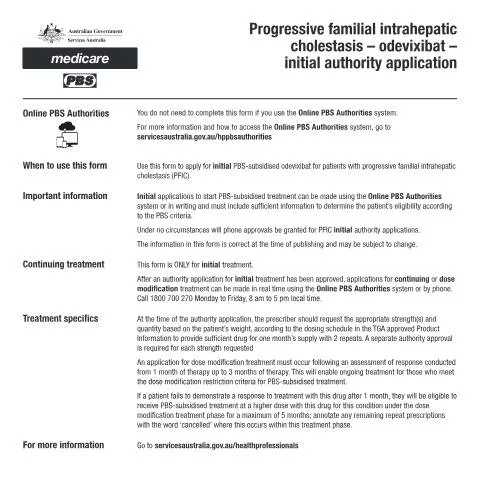
Understanding the Progressive Familial Intrahepatic Cholestasis Authority Application (PB392)
Individuals affected by Progressive Familial Intrahepatic Cholestasis (PFIC) face numerous challenges. The application for authority to prescribe odevixibat, a treatment option for this condition, is a crucial step in accessing necessary medical care. The PB392 form, specifically designed by Services Australia, plays an essential role in this process, enabling health professionals to secure authorization for their patients to receive the required treatment.
The Role of PB392 in Securing Treatment
Submitting the PB392 form is necessary for healthcare professionals seeking approval to prescribe odevixibat for patients diagnosed with PFIC. This application process ensures that the treatment aligns with Australia's health policies and funding frameworks. By filling out this form, healthcare providers assert the medical necessity of odevixibat for patients who may experience debilitating symptoms without timely intervention.
Why Medical Authority is Required
The requirement for medical authority when prescribing certain medications, such as odevixibat, stems from governmental regulations aimed at responsible medication management. This ensures that treatments are used appropriately, helping to minimize misuse and ensure that patients receive safe and effective care.
Who Needs to Complete the PB392?
Typically, the responsibility of completing and submitting the PB392 rests with healthcare professionals who have an established relationship with the patient. However, a few important factors come into play regarding who exactly can fill out this application:
- Primary Prescribers: Doctors who specialize in hepatology or gastroenterology are the most common prescribers for PFIC treatments.
- Children and Adolescents: For patients under 18, a parent or guardian will need to provide consent and relevant medical information.
- Patients in Specialized Care: Individuals in regional or rural locations might be managed by general practitioners who consult with specialists.
Such scenarios illustrate that while the form is primarily targeted at specialists, it also accommodates the diverse Australian healthcare environment.
Decoding the PB392: Each Section Explained
Completing the PB392 form requires careful attention to detail. Each section has specific requirements that, if mismanaged, could lead to delays in treatment. Here’s a breakdown of the critical sections:
Patient Information
- Name and Date of Birth: Ensure accuracy, as discrepancies can lead to processing delays.
- Health Record Number: This number is crucial for tracking the patient’s medical history within Australia’s healthcare system.
Clinical Indications
In this section, health professionals must provide a thorough description of the patient's symptoms, diagnosis, and treatment history. It’s important to detail:
- The severity of the patient's condition and symptoms.
- Previous treatments attempted, including their outcomes.
Health professionals should use precise terminology to avoid ambiguity and ensure that the application clearly demonstrates the medical necessity for odevixibat.
Supportive Evidence
Backing up claims with documentation is essential. This section may require:
- Medical reports from specialists.
- Test results that corroborate the diagnosis.
These documents lend credibility to the application and facilitate a faster review process.
Common Pitfalls in Completing the PB392
Even minor errors in the PB392 can result in delays or denials. Here are a few common pitfalls to avoid:
Inaccuracies in Patient Data
Double-checking the patient's personal details is vital. Mistakes here can lead to miscommunication with Services Australia, complicating the approval process.
Insufficient Clinical Detail
While the form might seem straightforward, a lack of comprehensive clinical evidence can lead to a rejected application. Be as detailed as possible, illustrating why odevixibat is necessary.
Missing Documentation
Providing inadequate supporting documentation is a frequent misstep. Ensure that all relevant medical evidence accompanies the application to substantiate claims.
Submitting the PB392: The Process Unpacked
Once the PB392 is complete, it must be submitted to Services Australia. Understanding the submission process is essential for a smooth experience.
Online Submission via myGov
The preferred method for submitting the PB392 is through the myGov platform. Here are the steps to follow:
- Log in to your myGov account.
- Select the option for Services Australia.
- Upload the completed PB392 form along with any required documentation.
Online submissions can streamline processing times and reduce the chance of documentation getting lost.
Alternative Submission Methods
If online submission isn't feasible, healthcare professionals can mail the completed form. However, note that this method may extend processing times. Ensure that all documents are securely fastened and sent using a reliable postal service.
After Submission: What Comes Next?
Once Services Australia receives the PB392, several steps follow:
Review Process
The application undergoes a thorough review by medical assessors. The timeframe for this can vary, but it's crucial for prescribers to remain patient. Services Australia aims to process applications efficiently, but complexity might influence timing.
Communication from Services Australia
Health professionals will receive notifications regarding the outcome of the application. Outcomes can include:
- Approval: The prescription can proceed, allowing the patient access to odevixibat.
- Request for Further Information: Additional information may be needed to support the application.
- Denial: This may occur if the criteria aren’t met, prompting a need for re-evaluation or additional documentation.
Addressing Potential Denials or Delays
Receiving a denial or experiencing a delay can be disheartening. However, understanding the next steps can aid in navigating the situation effectively.
Requesting a Review
If the application is denied, healthcare professionals have the right to request a review. This may involve:
- Gathering additional evidence or clarifying previous information.
- Providing a detailed letter explaining the need for reconsideration.
Engaging with Services Australia to understand the specific reasons for denial can also provide clarity on how to proceed.
Recognizing the Urgency of Care
In situations where a patient’s health is at risk, expediting the review process may be warranted. Ensuring that clear and compelling evidence of urgency is presented can facilitate quicker decisions.
Broader Context: PB392 Within the Healthcare Framework
The PB392 form is part of a more extensive healthcare framework designed to govern medical prescriptions in Australia. Understanding its place within this system highlights its significance.
Interactions with Other Forms
While PB392 is specific to odevixibat, other forms exist for different treatments or conditions. It’s essential to distinguish between them, as submitting the incorrect form may lead to complications. Healthcare providers should be well-versed in these distinctions to navigate the system effectively.
The Role of Health Professionals in the Process
Ultimately, health professionals play a pivotal role in ensuring their patient’s access to necessary medicines. This includes educating patients about the process and maintaining open channels of communication with Services Australia. Recognizing the full scope of their responsibilities enhances patient care.
The Importance of Patient Advocacy
In navigating the complexities of the PB392 process, patient advocacy becomes paramount. Healthcare professionals must advocate for their patients not only by submitting the PB392 but also by ensuring they understand their options.
- Providing Emotional Support: Patients often face uncertainty regarding their health. Offering support and guidance can alleviate anxiety.
- Educating on the Process: Patients should be informed about what the PB392 entails, including timelines and possible outcomes.
- Encouraging Communication: Establishing a relationship wherein patients feel comfortable expressing concerns can lead to better health outcomes.
Final Considerations: The PB392 in Practice
Filling out and submitting the PB392 application is a critical step in ensuring that patients with PFIC can access effective treatment through odevixibat. Understanding the nuances of this process empowers healthcare professionals to navigate the system effectively and advocate for their patients’ needs. As the healthcare landscape continues to evolve, staying informed about administrative processes like the PB392 will remain essential for ensuring timely and appropriate patient care.
Understanding Progressive Familial Intrahepatic Cholestasis (PFIC)
Progressive Familial Intrahepatic Cholestasis (PFIC) is a rare genetic disorder affecting the liver's ability to excrete bile. As a result, bile acids accumulate in the liver, leading to various complications, including cholestasis, liver damage, and potentially liver failure. It is crucial for families dealing with PFIC to understand the nature of the condition, its symptoms, and the management options available.
PFIC is typically classified into several types, with PFIC Type 1, Type 2, and Type 3 being the most common. Each type is associated with mutations in different genes responsible for bile transport. For instance, PFIC Type 1 is linked to mutations in the ATP8B1 gene, while Type 2 is associated with the ABCB11 gene mutations. Symptoms usually manifest in childhood and can include severe itching, jaundice, and growth failure due to malabsorption of fats and fat-soluble vitamins. Early diagnosis is key for effective management and potential treatment options.
Currently, the treatment landscape for PFIC includes supportive care measures, such as the use of medications to manage itching and dietary adjustments to improve nutrient absorption. In some cases, surgical interventions such as a partial external biliary diversion may be considered. More recently, advancements in pharmaceutical treatments have led to the development of drugs specifically targeting bile acid metabolism, such as odevixibat, which has shown promise in clinical trials.
Applying for Initial Authority for Odevixibat (PB392) in Australia
The application for Odevixibat, particularly through the Initial Authority Application Form (PB392), is a crucial step for families whose children are diagnosed with PFIC. Odevixibat acts by inhibiting the ileal bile acid transporter (IBAT), significantly reducing bile acid levels in the liver and bloodstream. This mechanism helps alleviate the symptoms of PFIC, particularly the debilitating itch associated with the condition.
When preparing to submit the PB392 form, it is essential to gather all relevant clinical information regarding the child’s health status, including laboratory results, previous treatments tried, and any other pertinent medical history. A detailed medical report from the treating physician should accompany the application, outlining the diagnosis of PFIC and rationale for the use of odevixibat. This report should clearly delineate the severity of the condition and the impact it has on the child's quality of life.
In Australia, the PB392 form is available online via the Services Australia website. To access the form, users will need to log in to their myGov account. It is vital to ensure that the form is filled out accurately to prevent delays in the approval process. Each section of the form requires careful attention, from personal and contact details to comprehensive medical information.
Once submitted, the application will be reviewed for medical necessity, and a decision will be communicated. Patients and caregivers should be prepared for potential follow-up requests for additional information or clarification from the reviewing authority. Understanding the criteria that guide the decision-making process for medications like odevixibat can provide insight and prepare families for the next steps.
Navigating the Appeals Process for Odevixibat Denial
If the Initial Authority Application for odevixibat is denied, it can be disheartening for families seeking treatment options for PFIC. However, there are established avenues for appealing such decisions through the Administrative Appeals Tribunal (AAT). The appeals process can be complex, but understanding the steps involved can empower families to advocate effectively for their loved ones.
The first step in the appeal process is to carefully review the reasons for the denial provided by Services Australia. This information is crucial, as it informs the grounds on which to base the appeal. Families can then gather additional evidence, such as expert opinions or new clinical data that may support the need for odevixibat. It is essential to present a well-rounded case that addresses any deficiencies cited in the initial decision.
Filing an appeal with the AAT requires the completion of specific forms, which can also be accessed through their website. Families should be aware of the submission timelines and ensure that all documentation is submitted within required periods. The AAT will schedule a hearing where families can present their case. It is advisable to have a healthcare professional or legal representative present to provide expert testimony and support.
After the hearing, the AAT will make a determination, which could lead to the approval of odevixibat. If the decision remains unfavorable, families can seek further advice on potential next steps, including judicial review options under the Administrative Decisions (Judicial Review) Act 1977 (Cth). Seeking support from advocacy groups specialized in PFIC can provide additional resources and guidance through this challenging process.