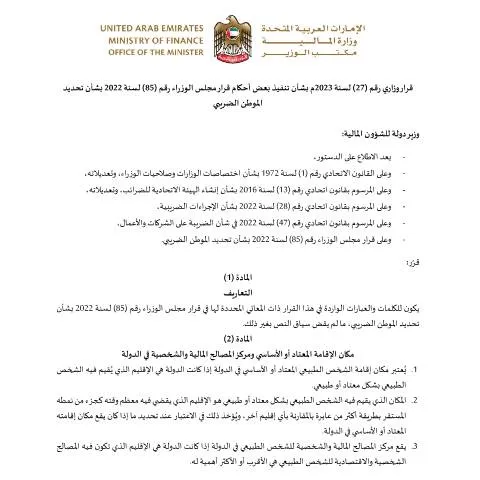
Understanding the Role of القرار وزاري رقم (27) لسنة 2023 in Tax Residency Determination
The decision encapsulated in القرار وزاري رقم (27) لسنة 2023 serves as a pivotal framework within the UAE's tax legislation, specifically addressing the delineation of tax residency as stipulated in القرار مجلس الوزراء رقم (85) لسنة 2022. The essence of this regulation is to facilitate the identification and determination of an individual's tax residency status, which can significantly impact both personal and corporate tax obligations within the Emirates.
The document is crucial for individuals and entities engaged in economic activities across the UAE, as it sets forth definitions, eligibility criteria, and the procedural guidelines to ascertain where a person is deemed a tax resident. This understanding is fundamental for compliance with the federal tax laws, particularly in the context of the Federal Tax Authority (FTA) regulations.
Chronological Overview: From the Trigger to Submission
To navigate through the tax residency determination process, it is vital to follow a structured timeline, which typically unfolds as follows:
- Identification of Residency Criteria: This is the initial step where individuals assess whether they meet the residency requirements outlined in the القرار وزاري رقم (27) لسنة 2023.
- Compilation of Necessary Documentation: Individuals must gather supporting documents, which may include proof of physical presence, employment contracts, and evidence of personal and economic ties to the UAE.
- Completion of Relevant Forms: The specific forms will require detailed information regarding the applicant’s stay in the UAE and their socio-economic links.
- Submission of Application: The complete application must be submitted to the Federal Tax Authority (FTA) for processing.
- Awaiting Determination and Notification: Following submission, applicants should monitor for any communications from the FTA regarding their residency status.
Preparation of Supporting Documentation: A Detailed Guide
Proper documentation is critical in the residency determination process. Here’s a breakdown of what might be required based on different scenarios:
- If Employed in the UAE:
- Employment contract
- Salary statements
- Tax declarations (if applicable)
- If Self-Employed:
- Permits and licenses demonstrating your business operations in the UAE
- Invoices and contracts with local clients
- Bank statements reflecting income generated within the UAE
- If Retired or Not Employed:
- Evidence of residence (e.g., rental agreements or property ownership documents)
- Proof of regular income, such as pension statements or investment returns
Administrative Processing and Tracking Your Application
Once the application has been submitted to the FTA, it undergoes a systematic review process. Here’s how you can follow up:
- Check Submission Confirmation: Ensure that you have received acknowledgment from the FTA confirming the submission of your application.
- Inquiry on Processing Status: Utilize the FTA’s electronic platforms to track the status of your application. This might include checking for any requests for additional information.
- Response Time Expectations: Familiarize yourself with the average processing times, though the FTA aims to expedite reviews, delays can occur due to high application volumes.
Key Dates and What to Expect: From Submission to Decision
Understanding the timeline of the residency determination process is essential:
| Stage | Explicit Period | Key Actions |
|---|---|---|
| Submission of Application | Immediate upon completion | Ensure all documents are accurate and complete |
| Processing Period | Typically 30-60 days | Monitor application status |
| Final Decision Notification | Upon completion of review | Prepare for any potential follow-up or appeal |
Navigating Denials or Errors: A Proactive Approach
In the event that your application is denied or requires further information, knowing the next steps is crucial:
- Request for Clarification: If your application is denied, you will receive a notification detailing the reasons. It is essential to understand these so you can address them effectively.
- Submitting Additional Documentation: Depending on the feedback from the FTA, be prepared to provide supplementary evidence or clarification regarding your residency claims.
- Filing for Appeal: If you believe the denial was unwarranted, you can file an appeal within the stipulated timeframe outlined in the decision notification.
Historical Context and Regulatory Framework Behind القرار وزاري رقم (27) لسنة 2023
The regulatory landscape that encompasses this decision is rooted in several key legislative documents and frameworks that establish the UAE's tax system. The decision draws from:
- The UAE Constitution: Establishing the federal structure and the autonomy of emirates in tax matters.
- Federal Law No. 1 of 1972: Outlining the powers and duties of ministries and ministers.
- Federal Decree-Law No. 13 of 2016: Instituting the Federal Tax Authority.
- Federal Decree-Law No. 28 of 2022: Governing tax procedures, including residency determination.
- Federal Decree-Law No. 47 of 2022: Focusing on corporate tax regulations.
Final Insights: Embracing the Digital Shift in Administrative Processes
As the UAE continues to embrace digitalization, the process for filing and managing tax residency applications has transitioned largely online. Through the UAE Pass and the Emirates ID, citizens and residents can efficiently manage their submissions and interactions with the Federal Tax Authority. This digital transformation not only streamlines processes but also enhances compliance and reduces processing time.
Understanding and navigating the implications of القرار وزاري رقم (27) لسنة 2023 is vital for individuals and businesses alike, ensuring that they remain compliant with the evolving tax landscape of the UAE.
Understanding Tax Residency and Its Implications for Foreign Nationals in the UAE
In light of the Ministerial Decision No. (27) of 2023, which seeks to reinforce the provisions of Cabinet Decision No. (85) of 2022, it is crucial to understand the nuances of tax residency for foreign nationals residing in the UAE. The tax residency status is pivotal, as it determines an individual's liabilities under the UAE's tax framework.
Under the UAE tax regulations, a foreign national may be considered a tax resident if they meet specific criteria, including the duration of stay in the country, the nature of employment, and established ties such as owning property or family connections. It is essential for expatriates to maintain records of their presence in the UAE, as this documentation can substantiate their claims for residency status.
Moreover, the implications of being classified as a tax resident extend beyond local compliance, as they can affect tax obligations in the individual’s home country. Several countries have tax treaties with the UAE, allowing for the avoidance of double taxation—an aspect that foreign nationals should thoroughly investigate to optimize their tax positions.
Key Steps for Compliance with the Ministerial Decision
To stay compliant with the stipulations of the Ministerial Decision No. (27) of 2023 and align with the overarching legislative framework, individuals and businesses are encouraged to follow several key steps. First, it is advisable to consult with a tax advisor who is well-versed in UAE laws and international tax treaties. This can help ensure that all aspects of tax residency are correctly interpreted and applied.
Second, individuals should actively engage with the Federal Tax Authority (FTA) to ascertain their residency status and any requisite documentation that may be needed. This includes understanding the implications of the new regulations on their existing tax obligations and filing requirements. The FTA provides comprehensive resources through its official portal, which can guide users in fulfilling their responsibilities.
Additionally, it is beneficial for businesses employing foreign nationals to conduct regular audits of their payroll practices to ensure compliance with the latest tax residency rules. Accurate record-keeping and timely reporting of employee statuses will not only foster compliance but also strengthen the overall integrity of the organization’s financial operations.
Future Outlook: The Evolution of Tax Policies in the UAE
The enactment of the Ministerial Decision No. (27) of 2023 represents a significant step in the UAE's evolving tax landscape. As the country continues to adapt to global financial standards and practices, it is pertinent to consider how these changes will influence future tax policies. The UAE has been increasingly aligning its regulations to meet international standards, particularly in relation to tax transparency and compliance.
Looking ahead, it is anticipated that further refinements will be made to tax residency rules to enhance clarity and provide greater predictability for taxpayers. Additionally, the UAE may expand its network of double taxation agreements, creating more opportunities for foreign nationals to optimize their tax situations while residing in the country.
In sum, the ongoing evolution of tax policies in the UAE reflects a commitment to fostering a business-friendly environment while adhering to global standards. It is advisable for both individuals and businesses to stay informed about potential changes and seek proactive strategies to navigate this dynamic landscape effectively.