Understanding the Role of the Tax Residency Certificate
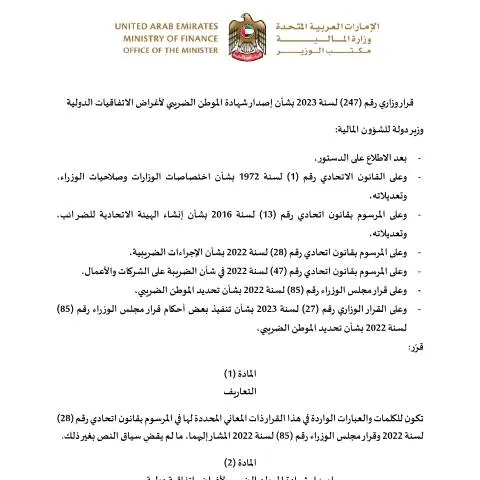
In the intricate world of international finance and taxation, the Tax Residency Certificate (شهادة الموطن الضريبي) plays a pivotal role. This certificate, issued under Ministerial Resolution No. 247 of 2023 concerning tax residency for international agreements, is vital for entities and individuals engaged in cross-border transactions. It serves as a formal declaration of tax residency, which can significantly affect tax obligations and benefits in different jurisdictions. Understanding its purpose is essential for anyone looking to optimize their tax planning amidst the complexities of international treaties.
Who Needs to Apply and Why?
The application for the Tax Residency Certificate is mandated for individuals and corporations seeking to leverage the benefits of double taxation treaties or tax agreements that the United Arab Emirates (UAE) has with other countries. This certificate is crucial for:
- Foreign Investors: Individuals and companies looking to establish or maintain business operations in the UAE.
- UAE Residents: Tax residents seeking to claim tax benefits in other jurisdictions.
- Companies with International Operations: Those engaged in activities that require proof of residency to mitigate withholding taxes on dividends, interest, or royalties.
By possessing this certificate, applicants not only comply with the requirements set by the Federal Tax Authority (FTA) but also enhance their credibility in international business dealings.
Step-by-Step Process: From Application to Receipt
Initiating Your Application
The journey to obtaining the Tax Residency Certificate begins with filling out the application form available on the FTA’s official website. Applicants must provide accurate personal or corporate details as well as supporting documentation that validates their residency status. The key steps in the application process include:
- Gather Required Documentation: Compile necessary documents such as proof of residence, identification, and any relevant financial statements.
- Complete the Application Form: Fill out the appropriate sections of the form meticulously to avoid delays.
- Submit Your Application: Applications can be submitted through the Emirates ID system or directly via the FTA platform.
Monitoring Your Application Status
After submission, the waiting period typically spans several days. During this time, applicants can monitor the status of their application through their online account on the FTA portal. Should the authorities require additional documentation or clarification, applicants will receive notifications prompting them to address the requests swiftly.
Navigating Refusals and Corrections
Should your application be rejected, understanding the reasons for the refusal is crucial. Common reasons include:
- Insufficient documentation.
- Discrepancies in the information provided.
- Failure to meet residency criteria.
In the event of a rejection, applicants have the right to appeal the decision. The first step involves reviewing the feedback provided and making necessary amendments to the application. Once corrections are made, the resubmission can be initiated, ensuring all additional requests from the FTA are duly addressed.
Deciphering the Application Form: Key Sections Explored
The Tax Residency Certificate application form is structured to gather essential information about the applicant. Here’s a breakdown of the critical sections to pay close attention to:
| Section | Description | Common Pitfalls |
|---|---|---|
| Name of Applicant | Full legal name as per official documents. | Omissions or misspellings of the name. |
| Nationality | Country of citizenship. | Incorrect or outdated nationality information. |
| Residential Address | Current residential address in the UAE. | Failure to provide a comprehensive address can cause delays. |
| Passport Number | Valid passport details. | Inaccurate passport number may lead to rejection. |
| Tax Identification Number | ID issued by the tax authority in the applicant’s home country. | Missing or incorrect tax ID numbers can complicate application validation. |
Each section of the form requires careful attention to detail. It is advisable to double-check all information before submission to mitigate the risk of errors that could delay processing.
Implications of the Tax Residency Certificate
Possessing a Tax Residency Certificate opens numerous avenues for residents and businesses alike. Not only does it facilitate smoother transactions with foreign entities, but it also:
- Reduces Tax Liabilities: By leveraging double taxation agreements, tax residents can significantly diminish their tax burdens.
- Enhances Business Credibility: This certificate can improve a business’s reputation when entering international markets.
- Streamlines Compliance: Helps in adhering to international tax regulations, thereby reducing the risk of audits and penalties.
Failure to apply or errors in submission can result in missed opportunities for tax relief, thereby stressing the importance of accuracy and timeliness in the application process.
Timeline and Important Dates in the Application Process
Understanding the timeline of the application process is crucial for effective tax planning. The processing time for the Tax Residency Certificate typically spans 5 to 10 working days following the submission of the application. It is advisable to submit applications well in advance of any significant international transactions or tax obligations. Here’s a typical timeline:
- Application Submission: Date of submission via the FTA portal.
- Processing Time: 5 to 10 working days for standard applications.
- Notification of Status: Communication from FTA regarding approval or any additional requirements.
- Certificate Issuance: Issued upon approval and can be downloaded from the FTA portal.
Staying informed about these dates can help in planning ahead and ensuring that all international obligations are met timely.
Special Scenarios: Unique Cases and Exceptions
There are specific scenarios that might require additional considerations when applying for a Tax Residency Certificate. For instance:
- Foreign Nationals: Additional documentation may be necessary to verify residency status in the UAE.
- Minors: Applications on behalf of minors must include consent from parents or legal guardians and relevant identification.
- Complex Situations: Individuals with dual residency or those involved in partnerships may need to provide more comprehensive financial documentation to substantiate their claims.
- Urgent Requests: If time-sensitive matters arise, applicants should contact the FTA directly to discuss expedited processing options.
Each of these scenarios may introduce unique challenges in obtaining the certificate, necessitating careful attention to the specific requirements laid out by the FTA.
Final Insights: Keeping Compliance at the Forefront
As the global economy continues to evolve, understanding the intricacies of tax residency becomes increasingly important for individuals and businesses alike. The Tax Residency Certificate, as outlined in Ministerial Resolution No. 247 of 2023, stands as a testament to the UAE's commitment to fostering a transparent and efficient tax system. By adhering to the guidelines and ensuring the accuracy of the information submitted, applicants can navigate the application process effectively, maximizing their benefits under international agreements.
Staying proactive regarding tax compliance not only benefits the individual or corporation but also contributes to the overall integrity of the UAE's financial reputation on the global stage.
Understanding the Tax Residence Certificate in UAE: Key Definitions and Framework
The Tax Residence Certificate (TRC) is a crucial document for individuals and businesses in the UAE seeking to benefit from double tax treaties (DTTs) with other countries. The issuance of this certificate is governed by Ministerial Decision No. (247) of 2023, which follows the guidelines set forth by the Federal Tax Authority (FTA).
According to the decision, a Tax Residence Certificate serves as proof of residency for tax purposes and is valid for one year, aligning with the fiscal year. This certificate is mandatory for expats and local entities that wish to avail themselves of tax benefits when engaging in international business operations.
It is essential to understand that a Tax Residence Certificate is not a universal tax exemption but rather a means to avoid double taxation. By obtaining the TRC, individuals and corporations can assert their residency status to foreign tax authorities, potentially reducing their tax liabilities in countries where they may also be subject to taxation.
Eligibility Criteria for Obtaining the Tax Residence Certificate
To qualify for the Tax Residence Certificate as per the new ministerial decision, applicants must fulfill specific criteria set forth by the FTA:
- Proof of Residency: Applicants must provide documents that establish their physical presence in the UAE for a minimum of 183 days within a 12-month period preceding the application. This includes Emirates ID, tenancy contracts, utility bills, or any official document with a corresponding address.
- Business Operations: For businesses, a valid trade license issued by the Department of Economic Development (DED) in the relevant emirate is necessary. The business must demonstrate that it is actively operating within the UAE and generating income.
- Tax Compliance: Both individuals and corporate applicants must be in good standing with the FTA, having no outstanding tax liabilities. This includes fulfilling VAT obligations, if applicable.
- Application Submission: The application must be made through the FTA's online portal or through a designated authorized provider, attaching all supporting documents as stipulated by the FTA guidelines.
It is worth noting that those who do not meet these criteria may face delays or rejections in their applications, emphasizing the importance of thorough preparation.
The Role of the Federal Tax Authority in Issuing TRCs
The Federal Tax Authority (FTA) plays a pivotal role in the administration and issuance of Tax Residence Certificates under Ministerial Decision No. (247) of 2023. The FTA is not only responsible for overseeing the tax compliance of individuals and businesses but also for ensuring that the TRC process is efficient and compliant with international tax standards.
The authority has implemented a streamlined digital process whereby applicants can submit their applications online, track the status of their requests, and receive notifications upon approval or if any additional information is required. This level of digitalization is in line with the UAE government's broader initiative to enhance governmental services through technology.
Furthermore, the FTA regularly updates its provisions, ensuring that the criteria for obtaining a TRC align with international best practices and treaties that the UAE has entered into with various countries. This ongoing adjustment ensures that the UAE maintains a competitive edge as a global business hub while adhering to its commitments in international tax compliance.
The FTA also provides guidance and resources for applicants, including FAQs and detailed instructions on the application process. This outreach is vital to help clarify any misconceptions regarding the TRC and to aid businesses and individuals in navigating the sometimes complex landscape of international taxation.