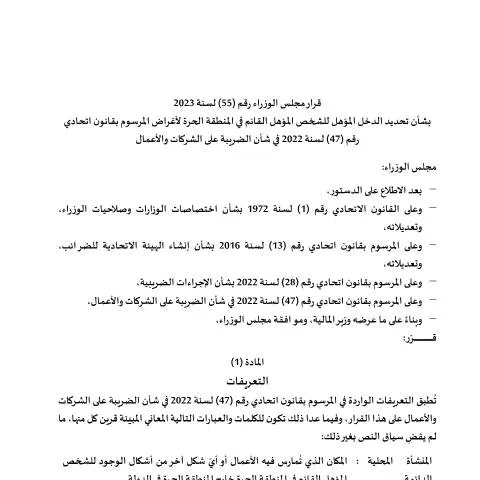
Overview of the Ministerial Decision No. 55 of 2023 on Eligible Income for Free Zone Entities for Corporate Tax Purposes
The United Arab Emirates continues to refine its tax framework to align with its strategic economic objectives and ensure compliance with international standards. A recent key legislative development is the issuance of Ministerial Decision No. 55 of 2023 by the Council of Ministers, which delineates the criteria for determining the eligible income of persons operating within free zones for the purposes of federal corporate tax legislation.
Context and Purpose of the Decision
This decision is issued in the context of the UAE's broader tax reform agenda, particularly concerning the implementation of Federal Decree-Law No. 47 of 2022, which introduced a comprehensive corporate tax regime. The legislation aims to create a clear framework for assessing taxable income, especially for entities established within free zones, which are a vital component of the UAE’s economic diversification strategy.
The primary objective of Ministerial Decision No. 55 of 2023 is to specify the parameters for identifying the "eligible income" of persons operating in free zones, thereby ensuring their compliance with the applicable tax laws. This clarity supports both tax authorities and taxpayers in understanding their obligations and benefits under the new legal environment.
Scope and Who Is Affected
This decision applies to all persons and entities registered and operating within the designated free zones of the UAE that are subject to federal corporate tax regulations. It particularly targets those who are considered "qualified persons" under the law, meaning entities that are recognized as operating in free zones with specific legal and operational characteristics.
The decision provides guidance on how to determine the income that qualifies for favorable tax treatment, which is essential for entities seeking to benefit from the incentives associated with free zone status. It is relevant for tax consultants, legal advisors, and the entities themselves, ensuring they align their financial reporting and compliance practices accordingly.
Key Provisions and Definitions
The decision elaborates on the criteria used to define "eligible income," focusing on the origin, nature, and allocation of income derived from activities conducted within the free zone. It emphasizes the importance of distinguishing between income generated within the free zone and income attributable to activities outside its jurisdiction.
Furthermore, it stipulates that income earned from activities that are directly related to the free zone's core operations, such as manufacturing, trading, or service provision within the zone, may qualify as eligible. Conversely, income from activities outside the free zone or unrelated to its core operations may be excluded from the eligible income calculation.
Implications for Tax Compliance and Planning
For entities operating within free zones, this decision underscores the importance of meticulous record-keeping and clear delineation of income streams. Accurate identification of eligible income is crucial to benefit from the preferential tax treatment and to ensure compliance with the federal corporate tax law.
Taxpayers are advised to review their income allocation strategies and consult with legal or tax professionals to align their practices with the provisions of Ministerial Decision No. 55 of 2023. Proper documentation and adherence to the criteria outlined in the decision can facilitate smoother audits and reduce the risk of disputes with tax authorities.
References and Regulatory Framework
This decision complements the broader legislative framework established by the UAE government, including the federal corporate tax law and related regulations. It is issued by the Council of Ministers and is part of the ongoing efforts to enhance transparency, fairness, and competitiveness of the UAE's tax system.
Entities and professionals should stay informed about updates from the Federal Tax Authority (FTA) and other relevant authorities to ensure ongoing compliance and to leverage available incentives effectively.
Conclusion
Ministerial Decision No. 55 of 2023 represents a significant step toward clarifying the tax treatment of free zone entities in the UAE. By defining the criteria for eligible income, it provides a solid foundation for entities to plan their operations and tax obligations effectively, supporting the UAE’s strategic objectives of economic diversification and international competitiveness.