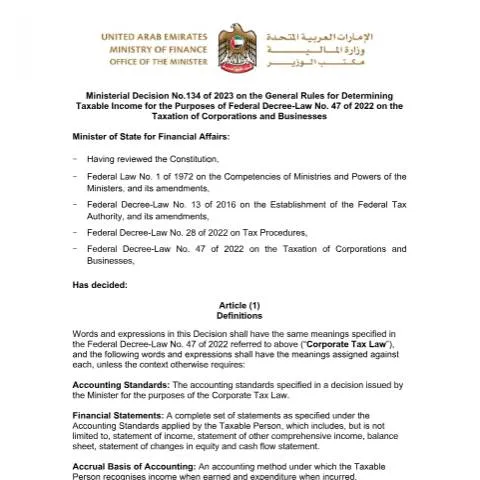
Overview of Ministerial Decision No (134) of 2023 on Taxable Income Determination
The Ministry of Finance has issued Ministerial Decision No (134) of 2023, establishing the comprehensive framework for calculating taxable income for corporations and businesses operating within the United Arab Emirates. This decision forms a key component of the UAE's ongoing efforts to align its tax legislation with international standards and enhance fiscal transparency and compliance across all sectors.
Scope and Purpose of the Decision
This ministerial decision applies to all taxable entities subject to federal corporate taxation under the provisions of Federal Decree-Law No (47) of 2022. Its primary aim is to provide clear, standardized rules for determining taxable income, ensuring consistency and fairness in the application of tax laws. The decision delineates the methods and criteria for calculating income, expenses, and deductions, offering guidance to businesses and tax practitioners on how to comply with the legal framework effectively.
Core Principles and Main Provisions
Definition of Taxable Income
The decision defines taxable income as the net income derived from business activities after accounting for allowable expenses, deductions, and exemptions. It emphasizes the importance of accurate financial reporting and adherence to recognized accounting standards to determine the correct taxable base.
Rules for Revenue Recognition
Guidelines are provided on when and how revenue should be recognized for tax purposes. The decision underscores the importance of aligning revenue recognition with actual economic activity, ensuring that income is taxed in the appropriate fiscal period.
Deductible Expenses and Allowances
The decision clarifies the criteria for expenses to be considered deductible, including operational costs, salaries, depreciation, and other relevant expenditures. It also specifies limitations and conditions under which certain expenses may be disallowed or partially deductible.
Adjustments and Reconciliations
Provisions are included for adjustments to be made in cases of discrepancies between accounting profits and taxable income, such as non-deductible expenses or income not subject to tax. The decision guides taxpayers on how to perform these adjustments to ensure compliance.
Implications for Taxpayers and Compliance
Businesses operating in the UAE must review their accounting and financial reporting practices in light of this decision. Accurate documentation and adherence to the outlined rules are essential for calculating taxable income correctly, avoiding penalties, and ensuring smooth tax filings.
Furthermore, the decision encourages the use of digital tools and platforms available through the UAE's integrated tax and customs systems, facilitating efficient compliance and reporting processes. Taxpayers are advised to consult with qualified tax advisors and utilize official resources to interpret and implement these rules effectively.
Conclusion: Enhancing Transparency and Fairness in UAE Taxation
Ministerial Decision No (134) of 2023 represents a significant step in the UAE’s tax regulatory landscape. By establishing clear, consistent rules for determining taxable income, it aims to foster a fair, transparent, and predictable tax environment. This aligns with the UAE’s broader vision of economic diversification and international cooperation in tax matters, ultimately supporting the sustainable growth of its business sector.