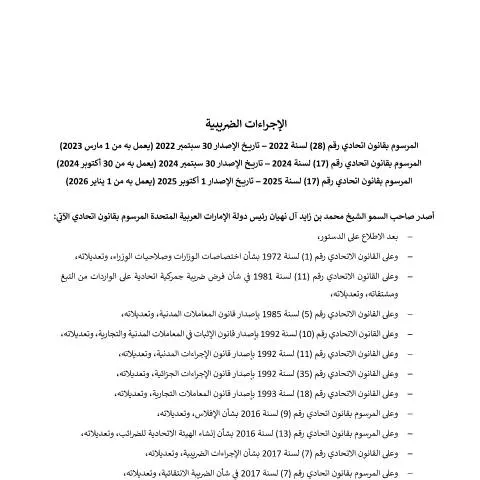
Overview of Federal Decree-Law No. 28 of 2022 and Its Amendments in the UAE Tax Legislation
The Federal Decree-Law No. 28 of 2022, along with its subsequent amendments, represents a significant development in the United Arab Emirates' (UAE) legal framework concerning taxation. As part of the country's ongoing efforts to enhance fiscal transparency, compliance, and economic diversification, this legislation consolidates and updates the UAE's tax regulations, aligning them with international standards and the nation's strategic economic objectives.
Scope and Purpose of the Legislation
This decree-law primarily aims to establish a comprehensive and clear legal structure for tax administration within the UAE. It delineates the responsibilities of tax authorities, sets out procedures for tax registration, assessment, collection, and enforcement, and defines the rights and obligations of taxpayers. Its overarching goal is to facilitate a fair, efficient, and transparent tax system that supports the UAE’s vision of becoming a global business hub while ensuring compliance with international best practices.
Who Is Affected by This Legislation?
The legislation applies broadly to individuals and entities engaging in economic activities within the UAE. This includes:
- Resident and non-resident businesses conducting taxable operations.
- Legal entities registered under UAE law, including companies, partnerships, and sole proprietorships.
- Individuals involved in economic activities subject to taxation, such as freelancers and self-employed professionals.
- Foreign entities with taxable presence or economic interests in the UAE.
Furthermore, the legislation impacts tax advisors, auditors, and other professionals involved in tax consultancy and compliance services within the country.
Key Provisions and Reforms
Tax Registration and Compliance
The decree-law emphasizes the importance of proper registration with the Federal Tax Authority (FTA). Taxpayers are required to register through the official digital platforms provided by the FTA, ensuring a streamlined and paperless process. The legislation stipulates clear timelines and documentation requirements for registration, aiming to simplify compliance and reduce administrative burdens.
Tax Assessment and Collection
Procedures for tax assessment have been clarified to promote transparency and fairness. The FTA is empowered to conduct audits, assess liabilities, and enforce collection through various legal channels. The legislation also introduces measures to prevent tax evasion and ensure accurate reporting by taxpayers.
Amendments and Updates
The legislation's amendments reflect the UAE’s commitment to adapt to changing economic conditions and international standards. These updates may include adjustments to tax rates, thresholds, or procedural requirements, all aimed at maintaining the effectiveness and competitiveness of the tax system.
References and Regulatory Authorities
The primary authority responsible for implementing and overseeing this legislation is the Federal Tax Authority (FTA). The FTA provides detailed guidelines, digital services, and support to facilitate compliance with the tax laws. Additionally, the legislation aligns with broader legal frameworks established by the UAE government, including the UAE Constitution, which emphasizes federal oversight and the autonomy of individual emirates within the federation.
Conclusion
The Federal Decree-Law No. 28 of 2022 and its amendments signify a strategic step towards modernizing the UAE’s tax environment. By establishing clear legal standards, promoting digital efficiency, and fostering transparency, the legislation aims to support the UAE’s economic growth and international reputation as a compliant and attractive destination for business. Stakeholders are encouraged to stay informed about updates from the Federal Tax Authority and ensure their practices align with the evolving legal landscape.