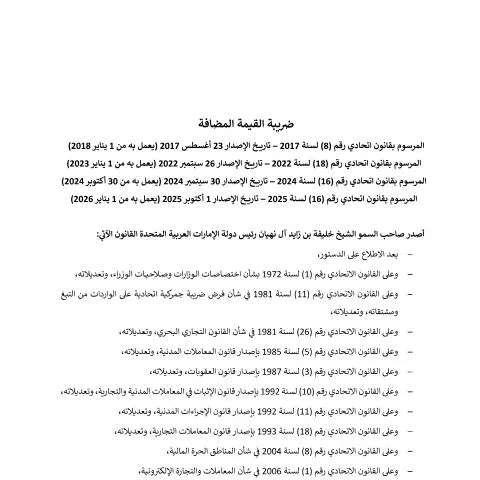
Overview of Federal Decree-Law No. 8 of 2017 and Its Amendments: Tax Legislation in the United Arab Emirates
The Federal Decree-Law No. 8 of 2017, along with its subsequent amendments, represents a significant milestone in the development of the United Arab Emirates' (UAE) legal framework concerning taxation. As part of the nation's efforts to diversify its revenue sources and strengthen its economic infrastructure, this legislation establishes the foundational principles and regulatory mechanisms governing tax obligations and compliance within the country.
Context and Scope of the Legislation
The decree is issued under the authority of the UAE's federal legal system, which operates alongside the autonomous legal frameworks of individual emirates. Its primary aim is to regulate the taxation process, including the imposition, collection, and administration of taxes across various sectors. The legislation aligns with the UAE's broader economic vision, emphasizing transparency, digital integration, and international compliance.
It applies to all entities and individuals engaged in taxable activities within the UAE, including residents, non-resident entities with economic presence, and certain designated sectors. The law delineates the scope of taxable income, tax rates, and procedures to ensure adherence to national and international standards.
Key Provisions and Principles
Taxation Framework
- Taxable Persons: The legislation defines who qualifies as a taxable person, including corporations, partnerships, sole proprietors, and other legal entities engaged in economic activities.
- Taxable Activities: It specifies the types of activities subject to taxation, covering commercial, industrial, and professional services, among others.
- Tax Rates and Payments: While specific rates are determined separately, the law establishes principles for calculating tax liabilities and the timing of payments, emphasizing compliance through digital channels.
Administrative Procedures
- Registration: Taxable persons are required to register with the relevant federal authorities, primarily through the designated digital platforms such as the Federal Tax Authority (FTA).
- Filing and Payment: The law mandates electronic filing of tax returns and payments, supporting the UAE's digital government initiatives.
- Audits and Compliance: The legislation grants authorities the power to conduct audits, enforce compliance, and impose penalties for violations, ensuring a fair and transparent tax system.
Amendments and Evolving Tax Policy
The original decree has been subject to amendments aimed at refining tax procedures, expanding the scope of taxable activities, and aligning with international tax standards. These updates reflect the UAE's commitment to creating a progressive and adaptable tax environment that supports economic growth while maintaining fiscal discipline.
Stakeholders are encouraged to stay informed about legislative updates through official channels such as the Federal Tax Authority (FTA) and the UAE's official government portals. The amendments also emphasize the importance of digital compliance, leveraging the UAE Pass and other electronic identification tools to facilitate seamless interactions with tax authorities.
References and Regulatory Authorities
The legislation is implemented and overseen by the Federal Tax Authority (FTA), which is responsible for the registration, collection, and enforcement of tax laws. The FTA provides comprehensive guidance, online services, and support to ensure entities and individuals adhere to their tax obligations.
For further details, interpretations, and updates regarding the Federal Decree-Law No. 8 of 2017 and its amendments, stakeholders should consult the official publications and resources provided by the FTA and other relevant government bodies. These sources offer official documentation, procedural guidance, and legal references essential for compliance and understanding of the UAE's tax landscape.