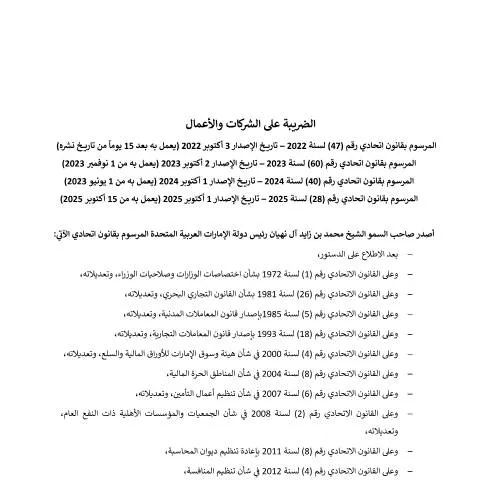
Overview of Federal Decree-Law No. 47 of 2022 on Corporate Taxation in the United Arab Emirates
The Federal Decree-Law No. 47 of 2022, along with its subsequent amendments, establishes the legal framework governing corporate taxation within the United Arab Emirates (UAE). As part of the country's ongoing efforts to align with international tax standards and diversify its economy, this legislation introduces comprehensive rules and guidelines that impact businesses operating within the UAE's federal and emirate jurisdictions.
Scope and Objectives of the Legislation
This decree-law aims to create a clear and consistent tax environment for corporate entities, ensuring compliance with international standards while supporting the UAE’s strategic economic development. It delineates the scope of taxable persons, defines taxable income, and sets out the principles for calculating and paying corporate taxes. The legislation also emphasizes transparency, reporting obligations, and compliance mechanisms to foster a fair and efficient tax system.
Who Is Affected by the Decree-Law?
The legislation primarily targets resident and non-resident companies engaged in economic activities within the UAE. This includes:
- Legal entities registered under the UAE commercial registration system.
- Branches of foreign companies operating within the country.
- Partnerships and other entities involved in business activities that generate income subject to corporate tax.
Specific provisions may apply based on the size, type, and nature of the business activity, with certain exemptions or reduced rates potentially available for qualifying entities or sectors.
Key Provisions and Principles
Taxable Income and Rates
The decree-law defines taxable income as the net profit derived from business activities after allowable deductions. While the legislation sets the framework for tax rates, it emphasizes the importance of proper accounting and documentation to determine taxable income accurately.
Tax Filing and Payment Procedures
Businesses are required to register with the Federal Tax Authority (FTA) and obtain a Tax Registration Number (TRN). Tax declarations are to be submitted electronically via the FTA’s digital portal, ensuring a streamlined and transparent process. Payments are also made through the same digital channels, aligning with the UAE’s digital government initiatives.
Compliance and Reporting
Entities must maintain detailed records of their financial transactions and submit annual tax returns. The FTA has the authority to audit companies to verify compliance, and failure to adhere to reporting obligations may result in penalties or other legal consequences.
References and Regulatory Authorities
This legislation is part of the broader UAE tax legal framework overseen by the Federal Tax Authority (FTA). The FTA is responsible for implementing, monitoring, and enforcing the provisions of the decree-law, as well as providing guidance and support to taxpayers.
For detailed information, official updates, and procedural guidance, businesses and individuals are encouraged to consult the FTA’s digital portal and official publications. Additionally, legal and tax advisory services are available to assist entities in ensuring full compliance with the law.
Conclusion
The enactment of Federal Decree-Law No. 47 of 2022 marks a significant development in the UAE’s fiscal policy, reflecting its commitment to establishing a transparent, efficient, and internationally aligned corporate tax regime. Companies operating within the UAE should stay informed about their obligations under this legislation and leverage the available digital platforms for registration, filing, and payment processes to ensure compliance and optimize their tax management strategies.