Understanding the Role of NCTS Transit Procedures in Andorra
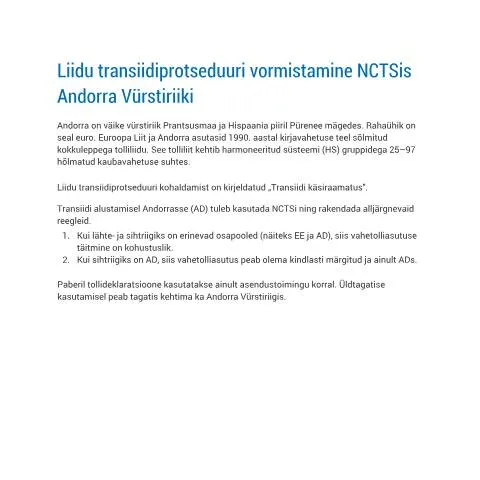
Liidu transiidiprotseduuri vormistamine NCTSis Andorra Vürstiriiki is a critical document for businesses and individuals looking to conduct trade with Andorra, a small principality nestled in the Pyrenees between France and Spain. Established through a customs union agreement in 1990, Andorra’s relationship with the European Union necessitates specific procedures for the movement of goods across borders. This document ensures compliance with necessary regulations and facilitates the transit of goods while minimizing delays and maximizing legal adherence.
Historical Context and Regulatory Framework
To fully grasp the importance of the Liidu transiidiprotseduuri vormistamine NCTSis, it’s essential to dive into the historical and regulatory framework that governs its usage. The customs union between the European Union and Andorra established a harmonized system for customs procedures, allowing for smoother trade operations.
The Administrative Procedure Act and the Digital Signatures Act provide the legal backbone for this document, enabling fully digital public services. This framework not only promotes efficiency but also supports Estonia’s commitment to e-governance and digital innovation. With a focus on reducing bureaucracy, the NCTS forms part of a broader initiative towards a near-paperless administration.
The NCTS System Explained
The New Computerized Transit System (NCTS) is the electronic system that facilitates the movement of goods through customs in the European Union and associated countries, including Andorra. The system ensures that customs procedures are streamlined and that all necessary data is available in real-time to customs authorities.
- Efficiency: Reduces paperwork and time spent at the border.
- Compliance: Ensures that all transit procedures align with international laws.
- Traceability: Allows for tracking of goods throughout their journey.
Who Needs to Fill Out the NCTS Document?
The Liidu transiidiprotseduuri vormistamine NCTSis is primarily utilized by traders, transport companies, and exporters/importers involved in the transit of goods to Andorra. It's crucial to identify specific profiles that may necessitate the use of this document:
- Businesses Engaging in Trade: Companies exporting or importing goods to and from Andorra.
- Transport Operators: Logistics companies responsible for moving goods across borders.
- Agents and Brokers: Individuals or companies acting on behalf of businesses to manage customs compliance.
Additional considerations apply based on the nature of the goods, the countries involved, and previous customs history, including:
- Types of goods being transported (e.g., perishable items, hazardous materials).
- Prior customs infractions may require more thorough documentation.
- Special permits or licenses for regulated goods.
Completing the NCTS Document: A Step-by-Step Guide
Filling out the Liidu transiidiprotseduuri vormistamine NCTSis involves several key steps that need to be approached with precision. Each section of the document has specific requirements that must be met for successful submission. Here’s a breakdown:
- Identification of Parties: Clearly state the information of the consignor and consignee, including their personal identification codes (isikukood).
- Details of Transportation: Include information regarding the mode of transport, vehicle registration numbers, and estimated time of transit.
- Goods Description: Provide a detailed description of the goods, including harmonized system codes and value.
- Customs Procedure Code: Select the appropriate customs procedure code applicable to the transit.
- Declaration of Guarantee: If required, specify the guarantee coverage for the transit operation, particularly if entering Andorra.
Digital Submission Options
The submission of the Liidu transiidiprotseduuri vormistamine NCTSis is primarily facilitated through digital channels. This approach not only streamlines processing but also aligns with Estonia’s e-governance initiatives. There are two main channels for submission:
- Online Portal: Through the official e-government platform where users can complete the form digitally.
- Directly through Customs Authorities: In specific cases, submissions may need to be made directly to the customs office, particularly if issues arise or further clarification is required.
Post-Submission: What Happens Next?
Once the Liidu transiidiprotseduuri vormistamine NCTSis is submitted, the process continues as follows:
- Customs Review: Customs authorities will review the submission to ensure all information is accurate and compliant with regulations.
- Verification of Guarantee: If a guarantee was declared, it will be verified to ensure it meets the necessary coverage for the transit.
- Issuance of Transit Document: Upon approval, a transit document will be generated, allowing for the movement of goods.
It's essential to monitor the status of the transit throughout its progression. In case of any discrepancies or additional requirements flagged by customs, parties will be notified promptly. Failure to address these issues can result in delays or complications during transit.
Understanding the Role of Guarantees in NCTS Procedures
For many transit operations, particularly those involving Andorra, understanding the role of guarantees is crucial. The customs guarantee is essentially a financial commitment that ensures customs duties and taxes will be paid should the conditions of the transit fail to be met. Here's how it typically works:
| Type of Guarantee | Description | Applicable Situations |
|---|---|---|
| General Guarantee | Covers all transit operations under a single agreement. | Frequent traders with established compliance history. |
| Specific Guarantee | Required for individual operations, often covering specific goods. | New traders or those with particular high-risk goods. |
| No Guarantee | Applicable only under certain conditions, such as low-value goods. | Small traders or specific exemptions as per regulations. |
Distinguishing NCTS from Similar Transit Documents
It is also essential to distinguish the Liidu transiidiprotseduuri vormistamine NCTSis from other transit documents that may often be confused with it. Here are some of the primary differences:
- Waybill: Primarily used in road transport, it does not necessarily imply customs clearance, whereas NCTS is specifically for customs purposes.
- Customs Declaration: A broader category that encompasses various forms of goods entry; NCTS is specifically for transit procedures.
- Export Declaration: This is specifically for goods leaving the EU, while NCTS applies to goods in transit through or to Andorra.
Understanding these differences is crucial for traders to ensure they're using the correct documentation for their specific needs, thereby avoiding unnecessary delays or potential legal issues.
Final Insights on the NCTS Transit Process
Completing the Liidu transiidiprotseduuri vormistamine NCTSis may seem daunting, yet it plays a crucial role in ensuring that goods pass through customs in compliance with international laws. By understanding the steps involved, the necessary guarantees, and the regulatory framework, traders can streamline their operations and enhance their efficiency when engaging with Andorra.
Efficiently managing customs transit is essential in today’s globalized economy, and utilizing the NCTS appropriately can provide significant advantages. Adopting a proactive approach to compliance, while leveraging digital tools available through the Estonian e-government system, will ensure successful navigation of customs procedures and a smoother trading experience.
Transiidiprotseduuri tähendus ja eesmärk
Transiidiprotseduur, eriti NCTS (New Computerised Transit System), mängib olulist rolli kaubavahetuses, tagades sujuva ja tõhusa kaubarongide liikumise Euroopa Liidus. NCTS-i süsteem on loodud selleks, et lihtsustada ja digitaliseerida transiidimenetlusi, võimaldades deklareerida kaupu elektrooniliselt, mis vähendab paberitöö ja aja kulu. Eriti oluline on see, kui kaubad liiguvad Andorra Vürstiriiki, mis on kolmas maa, ja seeläbi tuleb järgida spetsiifilisi protseduure, et tagada seaduslik kohaletoimetamine.
NCTS süsteem võimaldab kaupade kiiret ja tõhusat jälgimist, vähendades samas piirikontrolli koormust. Protseduurid, mida tuleb järgida, tagavad, et kõik osalised, sealhulgas saatjad, vedajad ja sihtkoha tolli ametnikud, on teadlikud kauba staatust ja asukohta. NCTS-i kaudu toimub kogu teabe edastamine elektrooniliselt, mis muudab selle süsteemi usaldusväärseks ja efektiivseks.
Dokumentatsioon ja andmete edastamine NCTS-is
NCTS-is liitumiseks on hädavajalik vältida dokumentide puudumist ning veenduda, et kõik andmed on õigesti edastatud. Selliste dokumentide hulka kuuluvad kaubadeklaratsioonid, saatmised ja muud vajalikud formaalsused, mis peavad olema esitatud enne kauba transportimist. Kõik andmed peavad olema seotud isikukoodiga, et tagada informatsiooni jälgitavus ning vajadusel ka õiguslik vastutus.
Andmete edastamisel on vajalikud järgmised sammud:
- Vormi täitmine (nt Vorm A), kus on kirjas kõik kauba kohta vajalik teave, sealhulgas saadetise väärtus, kauba päritolu ja sihtriik.
- Andmete edastamine elektrooniliselt RIA kaudu X-Road platvormi kasutades, mis tagab andmete turvalise ja kiire edastamise.
- Veenduge, et kõik puuduvad dokumendid on komplekteeritud ja lisatud, sealhulgas kõik vajadusel vajalikud litsentsid ja sertifikaadid.
Dokumentide korrektsus ja täielikkus on hädavajalikud, et vältida viivitusi või probleeme tolliprotseduuride käigus. Samuti on oluline jälgida, et kõik nõuded vastaksid kohalikele ja Euroopa Liidu regulatsioonidele, et tagada sujuv kaubavahetus Andorra Vürstiriigiga.
Vead ja probleemid transiidimenetlustes NCTS-is
Transiidimenetluste käigus võivad esineda erinevad probleemid ja vead, mis võivad mõjutada kauba liikumist ja kohaletoimetamist. Selliste probleemide vältimiseks on oluline olla kursis tavaliste vigade ja probleemide ning nende lahendamise viisidega.
Peamised vead, millega võib kokku puutuda, hõlmavad:
- Valeandmete esitamine: see võib hõlmata vale kauba kirjeldust, vale väärtuse määramist või vale saatja või saaja andmeid, mis võivad põhjustada tõsiseid viivitusi ja isegi trahve.
- Dokumentide puudumine: kui vajalikud dokumendid, nagu kaubadeklaratsioon või saateleht, ei ole esitatud, võib see põhjustada kaupa kinni hoidmise tollis ja täiendavaid kontrolle.
- Tehnilised probleemid: süsteemi tõrked või vigased andmesisestusprotseduurid võivad takistada edastamist või põhjustada andmete kadumise.
Probleemide korral tuleb kiiresti tegutseda. Soovitav on võtta ühendust EMTA (Maksu- ja Tolliamet) esindajatega, kes saavad aidata leida lahendusi ja anda nõu, kuidas vältida sarnaseid probleeme tulevikus. Lisaks võib olla vajalik uuesti esitada korrektsed andmed ja võtta arvesse kõik nõutavad dokumendid, et tagada sujuv protsess.