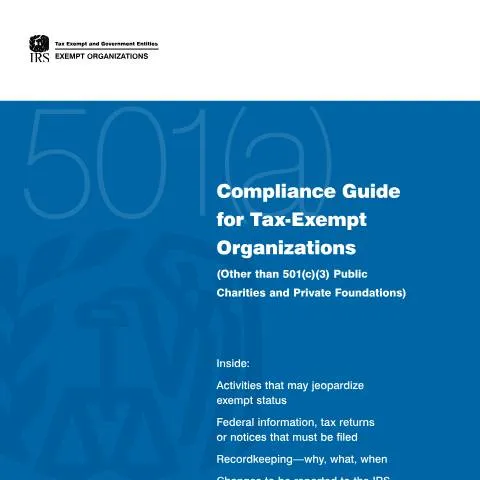
Understanding IRS Publication 4221NC: A Comprehensive Overview
When navigating the complexities of operating a tax-exempt organization in the United States, awareness of the necessary documentation is paramount. Among these documents, IRS Publication 4221NC, serves as a critical resource for organizations exempt from federal income tax under section 501(a), specifically those that do not fall under the public charity category of 501(c)(3). This publication provides vital guidance on compliance requirements, activities that may jeopardize tax-exempt status, and record-keeping obligations.
Navigating the Compliance Landscape: Historical Context and Regulatory Framework
To fully appreciate the significance of IRS Publication 4221NC, it is essential to understand the historical context in which it exists. Tax-exempt status was pioneered in the United States to encourage non-profit efforts and provide relief from the financial burdens that could stifle charitable and community-oriented initiatives.
The Internal Revenue Service (IRS) governs tax-exempt organizations through a set of regulations established by the Internal Revenue Code (IRC). These regulations are designed to ensure that organizations operate in accordance with their stated exempt purposes, avoiding any activities that could be construed as private benefits or political in nature. The IRS's Publication 4221NC emerged from the need to clarify these expectations and outline potential pitfalls that organizations must avoid to maintain their status.
Key Regulatory Frameworks Influencing Publication 4221NC
- Section 501(c): This section categorizes tax-exempt organizations, and 501(a) is a broad category that encompasses various exempt entities.
- Revenue Ruling 68-121: This ruling provides guidance on activities that can jeopardize tax-exempt status, laying the groundwork for the recommendations found in Publication 4221NC.
- Administrative Procedure Act: Governing the procedural framework through which the IRS develops and publishes guidance, ensuring transparency and public participation.
Who Needs to Pay Attention to Publication 4221NC?
The scope of IRS Publication 4221NC extends to a variety of organizations that qualify for tax-exempt status, notably including:
- Social clubs (501(c)(7)): Organizations structured for social and recreational purposes.
- Labor unions (501(c)(5)): Groups formed to promote the interests of laborers.
- Business leagues (501(c)(6)): Organizations created to promote common business interests.
It is crucial to note that each category has its own unique compliance requirements and potential concerns regarding activities that may threaten their exempt status. For example, while social clubs may engage in limited lobbying, business leagues must avoid political campaigning to maintain their tax-exempt status.
Specific Considerations for Sub-Categories
- Social Clubs: Must ensure that the majority of their activities are social in nature and not for profit. An excess of unrelated business income could jeopardize their exempt status.
- Labor Unions: Should avoid engaging in political activities that could be seen as taking a political stance rather than advocating for labor rights.
- Business Leagues: Should focus on activities that enhance business conditions and not on lobbying or engaging in direct political activities, which could lead to loss of status.
Completing Guidance on Publication 4221NC: Step-by-Step Process
To utilize IRS Publication 4221NC effectively, organizations must follow a structured approach that facilitates compliance with the guidelines outlined. The first step is thoroughly reviewing the publication's contents to understand the necessary requirements.
Preliminary Review
Before diving into specific requirements, organizations should:
- Assess their current operational activities: Ensure that all activities align with the organization's exempt purpose.
- Conduct an internal risk assessment: Identify potential areas that may pose compliance challenges, such as lobbying activities or unrelated business income.
Document Preparation
Once a preliminary review is complete, organizations should prepare their documentation. Key documents include:
- Bylaws: Ensure that bylaws are up to date and reflect the organization's exempt purpose.
- Financial records: Maintain accurate records of income and expenditures, ensuring clear delineation between exempt and unrelated business income.
- Meeting minutes: Keep records of board meetings and decisions taken regarding the organization's operations.
| Type of Document | Purpose | Frequency of Update |
|---|---|---|
| Bylaws | Define the organization's purpose and operational framework | As needed (major changes) |
| Financial Records | Document income and expenses for compliance | Ongoing |
| Meeting Minutes | Record decisions made by the board of directors | After each meeting |
Depositing Your Compliance Documents: Proper Channels and Timing
Once the relevant documents are prepared, organizations must follow specific protocols for submission to ensure compliance with IRS guidelines. Understanding the timing of submissions and the appropriate channels is crucial for maintaining tax-exempt status.
Filing Requirements and Deadlines
Organizations are required to file specific forms depending on their classification. For instance:
- Form 990: Required for most tax-exempt organizations, this form provides detailed information regarding financial activities and operational structure.
- Form 990-EZ: A shorter version of Form 990 for organizations with gross receipts below a certain threshold.
- Form 990-N (e-Postcard): For organizations with gross receipts under $50,000, this simplified filing is essential for maintaining tax-exempt status.
The annual filing deadline for these forms typically falls on the 15th day of the 5th month after the close of the organization’s fiscal year. For organizations operating on a calendar year, this means the deadline is generally May 15.
What Happens After Submission? Monitoring Compliance and Responding to Issues
After successfully submitting the required forms and documentation, organizations should shift their focus to ongoing compliance monitoring and addressing any potential issues that may arise.
Staying Vigilant: Annual Reviews and Monitoring
Organizations should conduct regular reviews of their activities and compliance status. This includes:
- Annual meetings: Review compliance and financial status during board meetings to ensure alignment with tax-exempt purposes.
- Financial audits: Regular audits can help identify discrepancies and areas requiring attention, ensuring transparency and adherence to regulations.
What to Do in Case of Non-Compliance
In the event that an organization receives a notice of non-compliance or audit from the IRS, immediate action is crucial. Organizations should:
- Review the audit notice thoroughly: Understand the specific concerns raised by the IRS.
- Gather documentation: Assemble all necessary materials that demonstrate compliance with IRS regulations.
- Consult with a tax professional: If needed, seek expert advice to address the IRS’s concerns effectively.
Common Pitfalls: Navigating Misunderstandings Around IRS Publication 4221NC
Organizations often encounter challenges in understanding how IRS Publication 4221NC differentiates from other forms or publications. This can lead to unnecessary complications and risk non-compliance.
Distinguishing IRS Publication 4221NC from Similar Documents
- Publication 526: Focuses on charitable contributions, while 4221NC centers on compliance for tax-exempt organizations.
- Publication 557: This document deals with tax-exempt status for organizations but lacks the specific compliance focus provided in 4221NC.
- Form 1023: The application for 501(c)(3) status, differing significantly from the compliance guidance provided in Publication 4221NC.
Addressing Errors and Missing Pieces: A Guide to Corrections
In the event that an organization identifies errors in submitted documents or receives notices about missing pieces, a structured approach to rectification is essential.
Steps to Rectify Errors
- Identify the error: Determine the specific area that requires correction.
- Prepare amended documents: Revise the necessary forms or documents to reflect accurate information.
- Submit corrections promptly: Ensure that the corrections are sent to the appropriate IRS office in a timely manner to avoid penalties.
Handling Missing Documentation
If an organization discovers that documentation is missing:
- Conduct a thorough search: Review organizational records and files to locate the missing documents.
- Document the search process: If documentation cannot be found, keep records of the search to demonstrate due diligence to the IRS.
- Contact the IRS: If the situation cannot be resolved, reach out to the IRS for guidance on how to proceed.
Understanding IRS Publication 4221NC: A Comprehensive Guide for Nonprofit Organizations
IRS Publication 4221NC is an essential resource for nonprofit organizations (NPOs) in the United States, particularly focusing on the compliance requirements relating to tax-exempt status. This publication is specifically tailored for non-profit entities, providing them with the requisite information to maintain their 501(c)(3) or other relevant tax-exempt status.
One of the primary functions of this publication is to break down the operational norms that nonprofit organizations must adhere to. These include the prohibition on private inurement, the necessity of serving charitable purposes, and the requirement to engage primarily in activities that further their exempt purposes. Understanding the nuances of these regulations is crucial for nonprofit leaders and board members to avoid potential pitfalls that could jeopardize their tax-exempt status.
In addition to outlining compliance requirements, IRS Publication 4221NC also addresses the importance of record-keeping and documentation. Nonprofits are expected to maintain accurate records of their activities, financial transactions, and contributions received. This documentation is vital not only for internal governance but also for providing transparency to stakeholders and satisfying IRS audit requirements. The publication details the types of records that should be kept, including minutes from board meetings, financial statements, and receipts for donations.
Moreover, the publication highlights the significance of filing annual information returns, such as Form 990, which provides the IRS with a comprehensive overview of an organization’s financial status, governance practices, and operational activities. Filers must be aware of specific deadlines, typically due on the 15th day of the 5th month after the end of the organization's fiscal year, to avoid penalties and maintain good standing.
For organizations that receive substantial funding through grants or contributions, IRS Publication 4221NC stresses the importance of adhering to the conditions attached to such funding. Not only does this ensure compliance with federal regulations, but it also reinforces the organization's credibility and trustworthiness in the eyes of donors and the community.
Common Misconceptions About Tax-Exempt Status
Understanding tax-exempt status can be fraught with misconceptions that can lead to compliance issues for nonprofit organizations. One common myth is that once an organization achieves tax-exempt status, it is exempt from all taxation. While it is true that these organizations are exempt from federal income tax, they may still be liable for other taxes such as property taxes, sales taxes, and employment taxes, depending on state and local regulations.
Another misconception is that tax-exempt organizations can operate like for-profit businesses. While nonprofits have more flexibility in certain operational aspects, they are still bound by specific restrictions that do not apply to for-profit entities. For instance, any earnings must be reinvested in the organization’s mission rather than distributed to shareholders or members. Additionally, nonprofits must avoid engaging in substantial lobbying activities or political campaigning, as doing so could jeopardize their tax-exempt status.
Furthermore, many individuals believe that all contributions to nonprofits are tax-deductible for the donor. While it is generally true that donations to qualified 501(c)(3) organizations are deductible, there are conditions. For example, donations made in exchange for goods or services may not be fully deductible. Therefore, organizations need to provide donors with appropriate documentation that clearly states the value of any benefits received in return for their contributions.
Resources and Support for Nonprofit Organizations
For organizations navigating the complexities of maintaining their tax-exempt status, numerous resources are available. The IRS website offers a wealth of information, including webinars, FAQs, and direct access to IRS representatives who can answer specific questions. Nonprofit organizations can also benefit from local workshops and training sessions hosted by community foundations or nonprofit resource centers, which aim to educate leaders on compliance, governance, and best practices.
In addition to IRS resources, professional associations such as the National Council of Nonprofits provide helpful guidance, advocacy, and networking opportunities for nonprofit organizations. These associations often publish newsletters that keep members informed about changes in tax laws, best practices, and emerging trends in the nonprofit sector.
Moreover, organizations may also find assistance from legal and financial advisors specializing in nonprofit law. These professionals can provide tailored guidance on compliance issues, help draft organizational bylaws, and offer advice on tax matters. While there may be associated costs, this investment can protect the organization from costly fines and preserve its tax-exempt status long-term.
As nonprofits continue to adapt to regulatory changes and the evolving landscape of philanthropy, staying informed through IRS Publication 4221NC and other resources is paramount for sustaining an effective and compliant organization.