Unpacking IRS Publication 5968: Your Guide to Clean Energy Tax Credits
As the push for renewable energy intensifies, many consumers find themselves navigating the complexities of tax credits aimed at promoting clean energy installations. IRS Publication 5968 serves as an essential resource for taxpayers looking to maximize their benefits under the Residential Clean Energy Credit scheme. This article delves into the intricacies of this document, unraveling its importance, details, and applications.
The Purpose and Significance of IRS Publication 5968
Unlike standard tax forms, Publication 5968 is an informational document designed to guide taxpayers through the process of claiming clean energy credits. It lays out the specifics of what installations qualify for tax credits, clarifying the often murky waters of eligibility and requirements.
By understanding the nuances highlighted in this publication, taxpayers can make informed decisions regarding their investments in clean energy, ultimately leading to both environmental and financial benefits.
Who Should Utilize Publication 5968?
This publication is particularly beneficial for homeowners and landlords who have invested in or are considering clean energy installations. Whether it's solar panels, geothermal heat pumps, or energy-efficient water heaters, knowing how to claim these credits can lead to substantial savings.
A Detailed Look at the Clean Energy Tax Credit Components
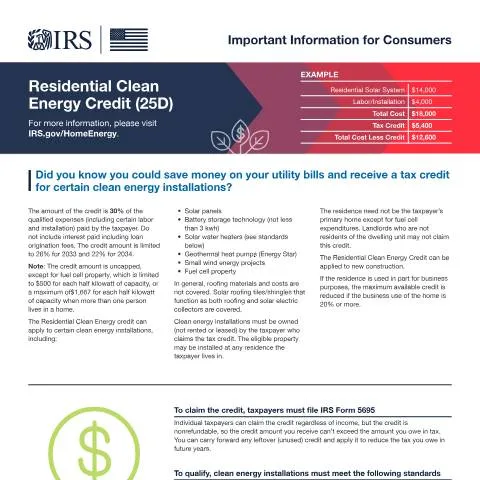
Publication 5968 outlines various types of installations that qualify for tax credits, providing specifics that taxpayers should be aware of:
- Solar Panels: Homeowners can claim a credit for the costs associated with purchasing and installing solar panels on their property.
- Battery Storage Technology: Systems with a minimum capacity of 3 kWh are eligible, which is crucial for those looking to store energy generated from renewable sources.
- Solar Water Heaters: These must be certified by the Solar Rating and Certification Corporation, ensuring that they meet necessary performance standards.
- Geothermal Heat Pumps: Must be Energy Star certified, promoting efficiency and environmental sustainability.
- Small Wind Energy Projects: Homeowners can leverage these installations for tax credits as well.
- Fuel Cell Property: This option is limited, but can provide substantial credits for qualifying installations.
Tax Credit Calculations and Limits
The credit amounts to 30% of qualified expenses, which includes both the purchase and installation costs, but excludes interest and loan origination fees. As we look towards future years, it's crucial to note that the credit rate will decrease to 26% for installations in 2033 and 22% for 2034.
| Year | Credit Percentage |
|---|---|
| 2023 | 30% |
| 2024 | 30% |
| 2025 | 30% |
| 2033 | 26% |
| 2034 | 22% |
Understanding Your Rights and Responsibilities
Taxpayers who claim these credits must be aware of their responsibilities under IRS guidelines. The clean energy installations must be owned outright by the taxpayer claiming the credit; renting or leasing does not qualify. Furthermore, if part of the residence is used for business, the credit may be reduced if the business use is 20% or greater.
It’s crucial to understand that while the credit can significantly reduce your tax liability, it is nonrefundable. In practical terms, this means that the credit amount cannot exceed the taxpayer's overall tax due. However, any unused credit can be carried forward to future tax years.
Filling Out IRS Form 5695 with Precision
The process of claiming the Residential Clean Energy Credit necessitates the completion of IRS Form 5695. Understanding how to fill out this form correctly is vital for ensuring that you receive the credits you're entitled to. Below are key sections of the form you should focus on:
- Section I: This part assesses your qualified solar electric property expenditures.
- Section II: This section totals your qualified solar water heating property expenditures.
- Section III: Here, you’ll list any other qualified expenses, such as geothermal heat pumps.
Each section requires specific details about the installations, including costs, installation dates, and equipment specifications. Accuracy is paramount; not only does it facilitate the processing of your claim, but it also mitigates the risk of audit flags from the IRS.
Common Pitfalls When Completing the Form
When filling out Form 5695, taxpayers should be cautious of several common mistakes:
- Omitting Installation Dates: Failing to include when the installation took place can delay processing.
- Incorrect Amounts: Double-check all claimed amounts against receipts and invoices.
- Missing Signatures: Ensure the form is signed to avoid rejection.
Channels for Submission: Online vs. Traditional Methods
When it comes to submitting IRS Form 5695, taxpayers have several options. Understanding these channels can aid in timely and accurate submission:
- Online Submission: Utilize IRS e-file for a faster processing time. Most tax software will guide you through including Form 5695 in your filing.
- Paper Filing: If submitting by mail, send your completed form alongside your tax return to the appropriate IRS address. This may take longer to process.
- In-Person Assistance: Some taxpayers prefer visiting local IRS offices for direct help. This can be beneficial for complex queries.
Comparing Submission Methods
| Method | Processing Time | Best For |
|---|---|---|
| Online Submission | 1-2 weeks | Quick, straightforward submissions |
| Paper Filing | 4-6 weeks | Taxpayers preferring traditional methods |
| In-Person Assistance | Varies | Complex cases needing direct support |
Legislative Context: How Publication 5968 Fits Within Broader Tax Reform
Understanding IRS Publication 5968 also requires a grasp of the legislative environment in which it operates. The Residential Clean Energy Credit is part of a broader push by the U.S. government to incentivize clean energy use, aligning with initiatives aimed at combating climate change. This credit's existence reflects a commitment to transitioning towards sustainable energy sources.
The ongoing evolution of tax policy means that taxpayers should stay informed about any adjustments to eligibility criteria or credit amounts. Regularly checking the IRS website and consulting the latest publications can provide necessary updates.
Conclusion: The Path Forward for Clean Energy Tax Credits
In summary, IRS Publication 5968 is an invaluable tool for taxpayers eager to take advantage of clean energy tax credits. By thoroughly understanding its provisions and ensuring accurate submissions, taxpayers can significantly enhance their savings while contributing to a more sustainable future.
As clean energy technologies continue to evolve, so too will the opportunities for tax savings. Engaging with IRS resources and staying current on updates can empower taxpayers and ultimately lead to better financial outcomes.
Understanding IRS Publication 5968: An Overview
IRS Publication 5968 serves as a crucial resource for taxpayers navigating complexities surrounding tax credits and deductions. This publication specifically focuses on the Earned Income Tax Credit (EITC), a benefit designed to assist low to moderate-income workers, particularly those with children, by reducing their tax burden and in some cases, providing a cash refund. Understanding the nuances of this publication can provide taxpayers with valuable insights into eligibility requirements, potential benefits, and the application process.
The IRS publishes these guidelines annually, reflecting the latest tax law changes and interpretations. Publication 5968 outlines eligibility criteria, qualifying income limits, and specific forms required to claim the EITC. For instance, taxpayers must have earned income and meet requirements related to age, filing status, and the number of qualifying children. The publication also highlights the importance of the Social Security Number (SSN), emphasizing that both the taxpayer and qualifying children must possess valid SSNs to claim this credit.
Navigating the Application Process for the EITC
Applying for the Earned Income Tax Credit entails a straightforward yet meticulous process. As per IRS guidelines, taxpayers must first determine their eligibility based on the criteria laid out in Publication 5968. After confirming eligibility, the next step is to collect necessary documentation. This typically includes W-2 forms, 1099 forms for any additional income, and records of any other relevant documents that substantiate earned income and qualifying dependents.
When filling out tax returns, taxpayers seeking to claim the EITC must use Form 1040 or Form 1040-SR, specifically including the EITC worksheet. This worksheet helps individuals calculate their credit based on their income and the number of qualifying children. For those who are self-employed or have non-traditional income sources, the process may involve additional steps, notably in documenting income accurately. Taxpayers should also remain cognizant of the filing timeframe, which typically falls on April 15, allowing for extensions if filed timely.
It's essential to note that the IRS conducts rigorous reviews of EITC claims to prevent fraud. Taxpayers should ensure that all information is accurate, as discrepancies can lead to disallowance of the credit and potential penalties. Engaging with Publication 5968 can clarify many of these aspects and assist in preparing a robust application.
Common Misconceptions About the EITC and Publication 5968
Despite its advantages, there are several misconceptions surrounding the Earned Income Tax Credit and how it is outlined in IRS Publication 5968. One prevalent myth is that only single parents or individuals with multiple children can qualify for the EITC. In reality, eligibility extends to married couples filing jointly and can include taxpayers without children, albeit with significantly lower income limits. Publication 5968 details these distinctions, making it clear that awareness of one’s specific situation is critical.
Another misconception involves the belief that the EITC is exclusively for those below a certain income threshold. While there are indeed limits, these thresholds are adjusted annually for inflation, and many taxpayers might be surprised to learn that they still qualify even as their income rises. The publication thoroughly elucidates these income limits and stresses the importance of checking current figures against past tax returns.
Furthermore, some taxpayers may assume that applying for the EITC guarantees a refund. While the credit can reduce tax liability significantly, it's essential to consider other factors that might influence the refund amount, such as other credits, deductions, and the overall tax situation. Clarifying these points in Publication 5968 can help taxpayers set realistic expectations while navigating the EITC process.
Additional Resources and Assistance for Taxpayers
For those requiring further assistance in understanding IRS Publication 5968 and navigating the EITC application process, several resources are available through official channels. The IRS website (www.irs.gov) offers a wealth of information related to tax credits, including interactive tools to determine eligibility. Additionally, the IRS provides a hotline specifically for questions related to the EITC, ensuring that taxpayers can access help when needed.
Local community organizations often offer free tax preparation services, particularly during tax season. These services can be particularly beneficial for those unfamiliar with the tax process or apprehensive about preparing their returns. Utilizing resources from the Volunteer Income Tax Assistance (VITA) program, for instance, can provide significant guidance in successfully claiming the EITC while ensuring compliance with IRS regulations.
Lastly, keeping abreast of updates to tax laws and regulations through the IRS mailing list or newsletter can help taxpayers remain informed about any changes that may affect their eligibility or filing requirements for the EITC as outlined in Publication 5968.