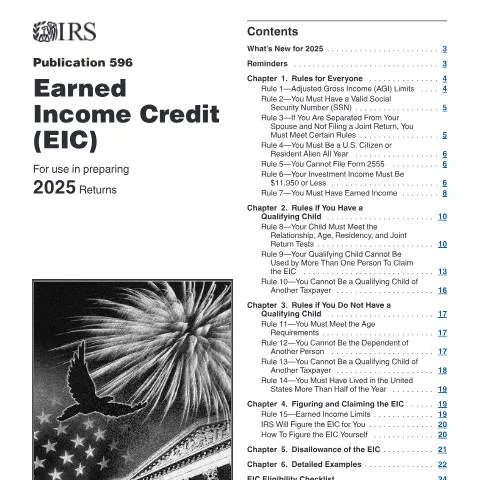
Understanding IRS Publication 596: The Pathway to the Earned Income Credit
When navigating the complexities of tax season, several documents play crucial roles in determining financial outcomes. Among these, IRS Publication 596 stands out as an essential guide for taxpayers seeking the Earned Income Credit (EIC). Understanding how to utilize this publication can significantly impact your tax liability and potential refund. With the right information, you can effectively claim your credits and understand the benefits available to you.
The Timeline of EIC Claims: From Eligibility to Refund
Taxpayers typically begin their journey towards claiming the EIC well before the April 15 deadline. Understanding the timeline is critical for anyone hoping to claim this credit.
Key Dates to Remember
- Tax Year Reference: The EIC rules and amounts are subject to change with each tax year. For 2025, IRS Publication 596 is essential to understand the current guidelines.
- Filing Deadline: The deadline for submitting your tax return is generally April 15 following the end of the tax year. For 2025, returns must be filed by April 15, 2026.
- Refund Timelines: If you e-file your return and choose direct deposit, you could receive your refund within 21 days. However, if you are claiming the EIC, the IRS may take additional time to process your return to prevent refund fraud.
Understanding these dates allows you to plan your filing and ensure you don't miss out on potential credits. Furthermore, any delays in filing could impact your refund timeline.
Navigating the Application: A Step-by-Step Approach
Completing the process to claim the EIC involves several distinct steps, with IRS Publication 596 acting as your roadmap. Here's a chronological breakdown of what to expect:
Initial Preparation
- Gather Documentation: Collect your income documents, Social Security numbers (SSNs) for yourself and any qualifying children, and information regarding your marital status.
- Determine Eligibility: Use the eligibility checklist provided in Publication 596 to ascertain if you meet the basic requirements for the EIC.
Filling Out Your Tax Return
- Complete Form 1040 or 1040-SR: Ensure you fill out the correct tax form, as forms may differ based on your age, income, and filing status.
- Utilize Worksheet 1: Instead of directly following instructions in Form 1040, refer to Worksheet 1 in Publication 596 to check eligibility for the EIC.
Submission and Follow-Up
- Submit Your Return: Choose to e-file or mail your return, ensuring all documents are correctly attached.
- Track Your Refund: Use the IRS “Where’s My Refund?” tool to monitor the status of your refund. Keep your SSN, filing status, and refund amount handy for this.
By adhering to this structured approach, taxpayers can navigate the complexities of claiming the EIC with greater ease and confidence.
Understanding the Decision Process: What Happens After Submission?
Once your tax return is filed, understanding the decision-making process at the IRS is crucial. Here's what you can expect:
IRS Review Process
The IRS utilizes a systematic approach to review tax returns claiming the EIC. This involves:
- Automated Checks: Initially, your return goes through automated systems that check for discrepancies in reported income and potential eligibility for the EIC.
- Manual Review: If there are flags raised during automated checks, the return may be sent to an agent for a manual review. This often results in a longer processing time.
Receiving Correspondence
Should the IRS require additional information or clarification, they will contact you via the address provided on your tax return. It's essential to respond promptly to any requests to avoid further delays in processing your refund.
Common Outcomes
- Approval: If approved, your refund will be processed, and you will receive the EIC as part of your tax refund.
- Disallowance: In cases where eligibility criteria are not met, the IRS may disallow the credit. If this happens, you have the right to appeal the decision or provide further information.
Understanding these outcomes prepares you for what to expect post-submission and allows you to act quickly should any issues arise.
Dealing with Challenges: What to Do in Case of Denials or Errors
Despite thorough preparation, challenges such as denials or errors can arise during the filing process. Knowing how to tackle these issues proactively is vital.
Steps to Take If Denied the EIC
- Review IRS Correspondence: Carefully read any communication from the IRS regarding your denial to understand their reasoning.
- Gather Supporting Documentation: Collect any documents that reinforce your eligibility—such as pay stubs, proof of residency, or dependency status.
- File an Appeal: If you believe the denial was unfounded, you can file an appeal with the IRS. Ensure that you do this within 30 days from the date on the notice.
Rectifying Errors on Your Tax Return
Errors may occur during the tax filing process, whether they be in calculations or missing documentation. To address these:
- Amend Your Return: Use Form 1040-X to amend your return if you realize that an error has been made. This form must be filed to correct any discrepancies.
- Keep Detailed Records: Maintaining meticulous records of your forms, communications, and receipts will facilitate resolutions and support your claims.
By remaining proactive and informed, you can navigate the complexities of the EIC claims process, even when faced with challenges.
Publication 596 in Context: Its Role in Broader Tax Strategies
IRS Publication 596 does not operate in isolation but is part of a larger framework of tax regulations and resources that can impact your overall tax strategy.
Complementary Publications and Forms
A variety of IRS publications and forms may intersect with your claim for the EIC:
- Publication 17: This publication covers the general rules for individuals and provides a broader look at tax filing.
- Form 2441: If you are claiming childcare expenses as part of your EIC application, this form will be required.
- Publication 501: Useful for understanding dependency exemptions, which can further influence your eligibility for the EIC.
Strategic Tax Planning
Utilizing IRS Publication 596 effectively allows for strategic tax planning. Consider the following:
- Tax Credits Versus Deductions: Understanding the difference between credits (which reduce your tax bill directly) and deductions (which reduce taxable income) is key in planning your tax strategy.
- Maximizing Refunds: If you qualify for credits like the EIC, it is crucial to ensure all eligibility criteria are met to maximize your refund.
- Year-Round Tax Strategy: Keep records throughout the year to allow for easy access to information when preparing for tax season.
By situating Publication 596 within this broader context, you can strategize effectively and ensure that you are making the most of available resources for your tax situation.
Decoding the Details: Unpacking the Contents of Publication 596
Delving into the specifics of IRS Publication 596 gives a clearer picture of its contents and how to navigate them effectively. Here's a detailed exploration of the chapters within the publication.
Rules for Everyone
The first section lays out several critical rules that serve as prerequisites for claiming the EIC:
- Adjusted Gross Income Limits: For the 2025 tax year, your AGI must fall below specified thresholds based on filing status and number of qualifying children.
- Valid Social Security Number: Ensure you have a valid SSN for yourself and any qualifying children.
- Residency Requirements: All claimants must be U.S. citizens or resident aliens for the entire year.
Qualifying Child: What You Need to Know
Claimants with a qualifying child must meet additional criteria, which include:
- Relationship and Age Tests: The child must meet specific age and relationship criteria to qualify.
- Residency: The child must have lived with the taxpayer for more than half the year.
Rules for Individuals Without a Qualifying Child
Not every claimant has a qualifying child. For those without, specific age and residency requirements must still be met to qualify for the EIC.
Calculating the EIC
Finally, the publication provides insight into how to calculate and claim the EIC accurately, offering worksheets and examples to illustrate the process.
Unique Scenarios: Addressing Special Cases
Taxpayers often find themselves in unique situations that require tailored approaches to claiming the EIC. Here are some of the most common scenarios:
Non-U.S. Citizens and Residents
If you are a non-citizen, eligibility for EIC is restricted to certain residency and income conditions. It's essential to review these conditions carefully to determine if you qualify.
Minors and Dependents
For taxpayers who are minors themselves or who may be dependents, special rules apply. Ensure familiarity with dependency regulations and age limits to navigate eligibility accurately.
Complex Financial Situations
Taxpayers with complex financial backgrounds may face additional scrutiny. Ensuring thorough documentation and clarity on all income sources is vital in these cases.
In conclusion, IRS Publication 596 serves as an indispensable tool for understanding and claiming the Earned Income Credit. By grasping the nuances of the publication and the EIC process, you position yourself to make informed decisions that can lead to significant financial benefits.
Understanding the Tax Implications of Being a Non-Resident Alien
When it comes to filing taxes, non-resident aliens must navigate a complex landscape that differs significantly from that of U.S. citizens and resident aliens. IRS Publication 596 provides guidance on the Earned Income Credit (EIC), but it is essential to note that non-resident aliens are generally not eligible for EIC. However, understanding your residency status is crucial, as it affects your tax obligations and potential benefits.
To be classified as a non-resident alien, an individual must not meet the "substantial presence test" for the calendar year. This test takes into account the number of days you are physically present in the United States over the past three years. If you are a foreign national working or studying in the U.S. temporarily, be sure to keep meticulous records of your travel and presence in the country.
Non-resident aliens typically file Form 1040-NR, U.S. Nonresident Alien Income Tax Return. This form is distinctly different from Form 1040 used by residents and citizens. It's essential to be aware of specific income reporting requirements for non-resident aliens. Income sourced within the U.S. is subject to taxation, while most foreign income is not. However, exceptions exist, such as when you have U.S. investments or business operations.
Tax treaties between the U.S. and your home country may also alleviate some tax burdens, allowing for certain income types to be exempt or taxed at a reduced rate. Always consult the specific treaty provisions and consider seeking advice from a tax professional familiar with international tax law.
As a non-resident alien, it’s also important to be aware of the tax identification number (TIN) requirements. If you do not have a Social Security Number (SSN), you may need to apply for an Individual Taxpayer Identification Number (ITIN) using Form W-7. This number will be necessary for filing taxes and claiming any eligible treaty benefits.
Common Misconceptions about Tax Credits and Deductions
Many taxpayers, including residents, citizens, and non-residents, often hold misconceptions about the availability of tax credits and deductions. With IRS Publication 596 specifically addressing the Earned Income Credit, it is crucial to clarify who qualifies for various tax credits and the implications of eligibility.
One common misconception is that all taxpayers automatically qualify for credits like the EIC simply due to income level. In reality, eligibility hinges not only on income but also on filing status and the number of qualifying children. For instance, to claim the EIC, you must have a valid SSN, meet income thresholds, and your children must meet certain age and relationship tests. Failing to meet any of these criteria will disqualify you.
Taxpayers may also think that they can claim deductions without proper documentation. However, the IRS requires careful documentation of expenses for claimed deductions. Common deductions, such as medical expenses or charitable contributions, often have specific thresholds that must be met before they can reduce taxable income. For example, medical expenses must exceed 7.5% of your adjusted gross income to be deductible.
Additionally, many taxpayers are unaware of the importance of filing status in determining eligibility for credits and deductions. For instance, Married Filing Jointly can yield different benefits compared to Head of Household or Single filers. Understanding how your filing status interacts with tax credits can significantly impact your overall tax liability.
Moreover, it’s critical to recognize that certain tax credits are non-refundable, meaning they can reduce your tax liability to zero but will not generate a refund beyond that point. Understanding these nuances is essential for effective tax planning and financial decision-making.
Navigating Tax Audits: What to Expect and How to Prepare
While most taxpayers fulfill their tax obligations without issue, the possibility of an IRS audit always looms. Understanding the audit process can help alleviate anxiety and prepare you for what lies ahead. IRS Publication 596 does not directly address audits, but familiarity with the general audit process is invaluable.
Once a tax return is selected for audit, the IRS will inform you via a written notice. This notification outlines the reasons for the audit and provides instructions on how to respond. It’s critical to respond promptly and thoroughly, as failure to do so could result in adverse consequences.
During an audit, the IRS may request documentation and additional information to verify income, deductions, or credits claimed on your return. This is where meticulous record-keeping becomes vital. Supporting documents might include receipts, bank statements, and Form 1099s or W-2s as proof of income.
There are generally three types of audits: correspondence audits, office audits, and field audits. A correspondence audit is the simplest, requiring taxpayers to respond to inquiries via mail. Office audits take place at an IRS office and usually pertain to specific issues on your return, while field audits involve an IRS agent visiting your home or business to review your records in detail.
Preparation for an audit begins long before your return is filed. Keeping accurate and organized records will not only help in the event of an audit but also ensure you claim all eligible deductions and credits. If you suspect discrepancies in your return, consider proactively addressing them before filing to mitigate potential audit risks.
If an audit reveals issues that require correction, the IRS may propose changes to your return, which you can accept or dispute. You have the right to appeal any adverse findings, and understanding the appeals process can help protect your interests.