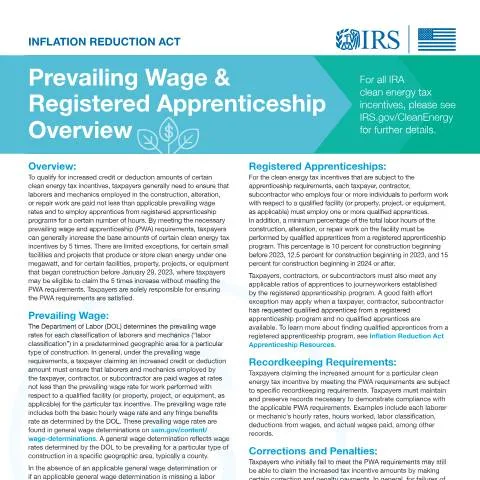
Diving into IRS Publication 5855: The Essentials for Taxpayers
When navigating the labyrinth of U.S. tax regulations, understanding the nuances of IRS Publication 5855 can significantly impact both small business owners and individual taxpayers looking to maximize their clean energy tax incentives. This document serves as a vital tool, encapsulating the guidelines and requirements for claimed benefits under the Inflation Reduction Act. Through this article, we will explore the core components of Publication 5855, the intricacies of filling it out, and the potential outcomes of submissions.
The Foundation of Tax Incentives: Prevailing Wage and Registered Apprenticeship
At the heart of IRS Publication 5855 lies the prevailing wage and registered apprenticeship requirements. These stipulations were instituted to ensure that laborers engaged in clean energy construction projects receive fair compensation and that apprentices benefit from structured training programs.
Prevailing Wage Explained
The Department of Labor (DOL) plays a crucial role in determining what constitutes the prevailing wage for various labor classifications across the nation. This wage encompasses both base hourly rates and associated fringe benefits, ensuring that workers are compensated fairly in accordance with regional standards. Taxpayers aspiring to leverage increased clean energy tax incentives must ensure compliance with these wage rates.
- The prevailing wage can vary by geographic location and type of construction.
- Taxpayers must consult the DOL’s general wage determinations to ascertain the applicable rates.
- For unique classifications or missing determinations, taxpayers can request supplemental wage determinations.
Registered Apprenticeships: A Pathway to Skilled Labor
Taxpayers also bear the responsibility of incorporating registered apprentices into their workforce. This not only provides hands-on experience to apprentices but also fulfills the requirements for certain tax credits. The stipulations dictate:
- Employing one or more qualified apprentices if four or more workers are on site.
- The percentage of total labor hours performed by apprentices must meet specific thresholds depending on the construction start date:
- Taxpayers must adhere to established ratios of apprentices to journeyworkers as specified by their apprenticeship programs.
| Construction Start Date | Apprentice Labor Hours Percentage |
|---|---|
| Before 2023 | 10% |
| 2023 | 12.5% |
| 2024 or After | 15% |
Completing IRS Publication 5855: Step-by-Step Guidance
Filling out IRS Publication 5855 requires attention to detail and a thorough understanding of the information requested. This document is pivotal for taxpayers intending to claim increased amounts for clean energy tax incentives based on prevailing wage and apprenticeship compliance.
Key Sections of Publication 5855
When approaching Publication 5855, taxpayers should familiarize themselves with its primary sections, each designed to capture essential information relevant to compliance:
- Taxpayer Information: Basic identification details, including the name, address, and Tax Identification Number (TIN) of the taxpayer.
- Project Details: Description of the project, including location, type of work performed, and total cost of labor.
- Labor Compliance: Inclusion of prevailing wage details for each labor classification, along with supporting documentation.
- Apprenticeship Information: Documentation proving the employment of registered apprentices and adherence to percentage labor hour requirements.
Pitfalls to Avoid When Completing the Form
When completing IRS Publication 5855, it's critical to avoid common missteps that could jeopardize claims for tax incentives:
- Inaccuracies in reported wage rates can result in significant penalties and disqualification of tax credits.
- Failure to provide adequate documentation supporting apprenticeship hours may lead to an incomplete filing.
- Neglecting to check for updated prevailing wage determinations could result in claims being denied due to outdated rates.
Filing Publication 5855: Submission and Follow-Up Process
Once IRS Publication 5855 is completed, the next step is submission. Understanding the filing process is essential to ensure timely and accurate claims for tax incentives.
Where and How to File
The completed form must be submitted to the IRS along with the appropriate tax return forms. Depending on whether you file electronically or via mail, the submission process can vary:
- Electronic Filing: Many tax software programs allow for the integration of IRS Publication 5855 within the electronic filing process, ensuring automatic calculations.
- Mail Submission: For those opting to file by mail, send the completed form and any necessary attachments to the designated IRS address provided in IRS instructions for your tax return.
Monitoring Your Submission Status
After filing, it is crucial to monitor the status of your submission. Taxpayers can check the status of their refund through the IRS “Where’s My Refund?” portal, which provides updates on processing times and any potential issues.
Responding to IRS Actions: When Things Go Awry
Even with the best intentions and practices, issues can arise post-submission. Understanding how to handle potential complications can help mitigate financial risks.
In Case of a Denial or Request for Additional Information
If the IRS denies the tax incentive claim or requests supplemental information, take immediate action:
- Review the reasons for the denial. The IRS typically provides specific feedback on what was lacking in your submission.
- Respond promptly by gathering necessary documentation and addressing the concerns outlined in the IRS correspondence.
- Consider consulting with a tax professional to ensure an informed response, particularly for complex situations.
Dealing with Missing or Incorrect Documents
Should there be a claim of missing or incorrect documents, taxpayers should:
- Verify the documents previously submitted and look for any discrepancies.
- Submit any missing documentation through the appropriate channels, ensuring compliance with deadlines articulated in IRS communications.
- Keep detailed records of all correspondence and submissions for future reference.
Historical Context and Regulatory Underpinning of IRS Publication 5855
IRS Publication 5855 is not an isolated document; rather, it reflects broader efforts by the federal government to promote clean energy initiatives through tax incentives. The foundation of this publication can be traced back to the Inflation Reduction Act of 2022, which sought to reinforce the economic viability of clean energy projects.
The Inflation Reduction Act: A Legislative Milestone
The Inflation Reduction Act introduced a suite of measures aimed at enhancing the financial appeal of clean energy investments, particularly through increased tax credits for projects that meet specific labor standards. This legislative framework advocates for:
- Fair wages for workers in clean energy sectors.
- Long-term investment in registered apprenticeship programs to cultivate skilled labor.
- Significant increases in tax incentives for compliant projects, potentially boosting returns on investment for taxpayers.
Regulatory Compliance and the Role of the IRS
The IRS is tasked with not only administering tax laws but also enforcing compliance with labor standards associated with federal tax incentives. This oversight ensures that benefits are allocated fairly and that taxpayer funds are used for projects that meet the government’s social and economic objectives.
Final Thoughts: The Path Ahead with IRS Publication 5855
Understanding IRS Publication 5855 is imperative for anyone looking to benefit from clean energy tax incentives under the Inflation Reduction Act. Through diligent record-keeping, compliance with prevailing wage standards, and effective use of registered apprentices, taxpayers can unlock significant financial opportunities while contributing to a sustainable future. Ensure you stay informed of any changes to the guidelines or rates, as these can affect your claims considerably.
In the rapidly evolving landscape of clean energy tax incentives, taxpayer awareness and proactive engagement with IRS requirements can make all the difference. Familiarity with IRS Publication 5855 is not merely beneficial but essential for maximizing potential tax credits and ensuring compliance in an increasingly competitive market.
Understanding IRS Publication 5855: Key Concepts and Implications
IRS Publication 5855 provides valuable insights into the intricacies of federal tax rules concerning certain tax-exempt organizations. It outlines the criteria for maintaining tax-exempt status and the necessary compliance requirements that these entities must adhere to. A crucial aspect to consider is the definition of what constitutes a tax-exempt organization as per IRS regulations. Organizations that qualify under section 501(c)(3) are typically charitable, educational, or scientific institutions, whereas other sections delineate different organizations such as social clubs or fraternal organizations.
Moreover, Publication 5855 clarifies the acceptable activities for these organizations, emphasizing that substantial involvement in political campaigns or lobbying activities can jeopardize their tax-exempt status. Understanding these implications is vital for organizations seeking to navigate the often-complex landscape of tax regulations. Noncompliance can lead to revocation of tax-exempt status, generating significant financial burdens, including owing back taxes and penalties. Therefore, it is recommended that organizations maintain detailed records of their activities and consult with tax professionals to ensure adherence to IRS mandates.
Filing Requirements and Record-Keeping for Exempt Organizations
Organizations that qualify for tax-exempt status under IRS Publication 5855 are not exempt from all filing requirements. In fact, many of these organizations must file annual returns, such as Form 990, Form 990-EZ, or Form 990-N, depending on their financial activities and gross receipts. These forms are designed to provide transparency about the organization’s operations, governance, and financial health to both the IRS and the public.
Additionally, record-keeping is essential for maintaining tax-exempt status. Organizations should keep meticulous records of income, expenses, and transactions to substantiate their claims of tax exemption. This includes maintaining logs of donations, receipts for expenditures, and documentation supporting any program services provided. Furthermore, IRS guidelines recommend that organizations retain these records for at least three years from the date of filing or the due date of the return, whichever is later. This practice not only supports compliance but also serves as a safeguard against potential audits by the IRS.
The Consequences of Non-Compliance and Revocation of Exempt Status
Non-compliance with the guidelines outlined in IRS Publication 5855 can lead to severe consequences for tax-exempt organizations. The IRS has the authority to revoke the tax-exempt status of an organization if it fails to meet operational or reporting requirements. This revocation means that the organization would be liable for federal income taxes on its earnings, and donations made to it would no longer be tax-deductible for donors.
When an organization finds itself facing the threat of revocation, it is crucial to act promptly. The organization can file a Form 1023 or 1024 to apply for reinstatement of its tax-exempt status if it was involuntarily revoked. This process involves providing a detailed explanation of the reasons for non-compliance and outlining steps taken to rectify the situation. Organizations can also request a private letter ruling (PLR) from the IRS to clarify specific tax issues, helping to prevent future misunderstandings regarding compliance.
Additionally, the IRS provides options for organizations that may be at risk of losing their status, including the possibility of entering into a compliance agreement. This allows organizations to correct their errors while maintaining their tax-exempt status, providing a pathway to restore their operational credibility.