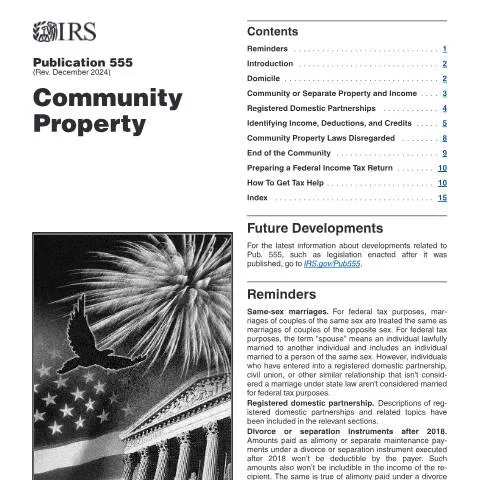
Navigating the Complexities of IRS Publication 555
The IRS Publication 555 serves as an indispensable guide for married taxpayers and registered domestic partners residing in community property states. Given the intricate regulations surrounding community property laws, understanding the nuances of this publication can significantly impact tax filing strategies and overall financial health. This document outlines how community property laws interact with federal income tax returns, offering clarity for those affected by these specific laws.
Understanding Community Property Laws
Community property laws exist to determine how income, property, and debts are distributed between spouses or partners in states that recognize such regulations. Generally, community property states include Arizona, California, Idaho, Louisiana, Nevada, New Mexico, Texas, Washington, and Wisconsin. In these jurisdictions, property acquired during the marriage is considered jointly owned, impacting how individuals report their income to the IRS.
The Role of IRS Publication 555
Publication 555 specifically addresses how community property laws affect tax returns for individuals filing separately. It provides detailed guidance on:
- Identifying community versus separate income.
- Understanding the implications of community property in property inheritance.
- Clarifying filing statuses available to registered domestic partners (RDPs) and how they differ from traditional married couples under federal law.
Importantly, this publication is a necessary tool for taxpayers in community property states to ensure compliance with both state and federal tax laws, thereby avoiding potential penalties for incorrect filings.
Federal Tax Treatment of Community Property
The IRS designates that each spouse or partner reports half of the community income regardless of who earned it. This approach is essential for calculating taxes accurately. For instance, if one spouse earns $80,000 while the other earns $20,000, each spouse must report $50,000 on their tax returns if filing separately.
Income Identification and Reporting
Publication 555 outlines the steps to properly identify income belonging to community property:
- Community Income: This includes wages, salaries, and income from property acquired during the marriage.
- Separate Income: Income generated from property owned before marriage or by inheritance.
- Jointly Owned Property: Any income from jointly owned property must be split equally, regardless of who manages or controls it.
This classification is critical when it comes to deductions and credits that may be available, emphasizing the importance of careful evaluation during the tax preparation process.
Filing Strategies for Married Couples and Registered Domestic Partners
Importantly, the decision on whether to file jointly or separately can significantly influence tax liabilities. While filing jointly often provides better tax rates and eligibility for various credits, there are scenarios where filing separately may be more advantageous. IRS Publication 555 offers insights into these scenarios, particularly for married individuals and RDPs.
Comparing Filing Options
| Filing Status | Advantages | Disadvantages |
|---|---|---|
| Married Filing Jointly | Lower tax rates, eligibility for credits | Joint liability for tax obligations |
| Married Filing Separately | Individual liability, potential deductions | Higher tax rates, loss of certain credits |
By evaluating both filing options, individuals can strategize effectively to minimize tax burdens and maximize returns.
Process Flow: From Filing to Resolution
The process of filing taxes using Publication 555 begins with gathering necessary documentation and understanding how community property laws apply to one’s income and assets. Here’s a typical workflow:
- Gather Documentation: Collect all relevant financial documents, including W-2s, 1099s, and any records of community property income.
- Determine Filing Status: Decide whether to file jointly or separately, considering the pros and cons discussed earlier.
- Complete IRS Form 1040: Utilize appropriate schedules and forms, ensuring all community and separate income is accurately reported.
- Submit Tax Return: File the completed return by the April 15 deadline, ensuring all forms are correctly filled out.
- Respond to IRS Letters: Be prepared to address any correspondence from the IRS post-filing, especially if there are questions regarding community property income.
This structured approach lays the groundwork for a smooth filing experience and a greater likelihood of avoiding issues with the IRS.
Exploring the Historical Context of Publication 555
IRS Publication 555 has evolved over the years in response to changing laws and societal norms. With the legalization of same-sex marriages at the federal level, the publication has incorporated guidelines relevant to married couples regardless of gender. This shift signifies a broader acknowledgment of diverse family structures, impacting tax filings across the nation.
Key Legislative Changes
Several legislative changes have influenced the content of Publication 555:
- The Defense of Marriage Act (DOMA): Prior to its repeal in 2013, DOMA limited federal recognition of same-sex marriages, complicating tax matters for these couples.
- Obergefell v. Hodges (2015): This landmark Supreme Court decision granted same-sex couples the right to marry, requiring updates to IRS guidelines to reflect equal treatment in tax filing.
- Changes in Alimony Treatment (2018): Amendments to how alimony is treated for tax purposes have necessitated updates to tax publications, including Publication 555.
Each of these changes illustrates the IRS's adaptability in addressing the dynamic landscape of marital and partnership rights, making Publication 555 a vital resource for those affected.
Practical Tips for Completing IRS Publication 555
Successfully navigating IRS Publication 555 demands careful attention to detail. Here are practical tips for taxpayers:
- Review Eligibility: Ensure you meet the criteria for community property treatment based on your state of residence.
- Understand Your Income Sources: Clearly differentiate between community and separate income; this will guide your reporting.
- Utilize IRS Resources: Don’t hesitate to consult the IRS website or seek professional tax advisory services if uncertainties arise.
By following these guidelines, taxpayers can ensure compliance and optimize their tax filings effectively.
Final Considerations: Staying Updated with IRS Changes
The landscape of tax regulations is continually evolving, necessitating that taxpayers remain informed about updates to IRS publications, including Publication 555. Regularly visiting the IRS website, specifically the page dedicated to Publication 555, can provide the latest developments and changes impacting community property laws and tax filing practices.
In conclusion, IRS Publication 555 is not merely a document; it is a crucial element in the financial lives of married individuals and registered domestic partners residing in community property states. By understanding its role, implications, and the evolving legal landscape, taxpayers can navigate their obligations with clarity and confidence.
Understanding the Requirements for Claiming the Earned Income Tax Credit (EITC)
The Earned Income Tax Credit (EITC) is a significant tax benefit designed to support low- to moderate-income working individuals and families, particularly those with children. According to IRS Publication 555, to qualify for the EITC, there are several criteria that must be met, including income limits, filing status, and residency requirements. The credit amount varies based on the number of qualifying children in your household and can significantly reduce your tax burden.
For the tax year 2023, the maximum credit amount for a taxpayer with three or more qualifying children is up to $7,430, while those without qualifying children may still receive a benefit, albeit less substantial. To determine eligibility, you must meet specific income thresholds, which are subject to annual adjustments. The IRS provides a detailed table of qualifying income limits in their guidelines.
One key condition is that the taxpayer must have earned income, which includes wages, salaries, and self-employment income. On the other hand, unearned income, such as dividends or interest, does not count toward this requirement. It’s essential to file your tax return accurately and on time, as claiming the EITC can sometimes involve additional verification processes, especially if you are claiming multiple children. Furthermore, any discrepancies in claiming dependents could lead to delays or denial of the credit, so ensure all supporting documents are well-organized and available.
Lastly, remember that if you are eligible for the EITC, you must file a federal tax return, even if you do not owe any tax. Failure to file could mean missing out on a significant financial benefit, so it’s crucial to understand the nuances of this credit and ensure compliance with all requirements outlined in IRS Publication 555.
Special Considerations for Non-Resident Aliens and Dual-Status Taxpayers
For non-resident aliens and dual-status taxpayers, the tax filing landscape becomes more complex. Non-resident aliens typically must file Form 1040-NR, which has different rules and requirements compared to Form 1040 used by residents. Publication 555 outlines specific considerations for these individuals, particularly in relation to tax treaties and their impact on income taxation.
Non-resident aliens may encounter unique challenges when attempting to claim certain tax credits, such as the EITC. Generally, non-resident aliens do not qualify for the EITC unless they meet specific criteria, including having a qualifying child who is a U.S. citizen or resident. In contrast, dual-status taxpayers must navigate a year when they are considered both a non-resident and a resident for tax purposes, complicating their ability to claim various deductions and credits.
For those in dual-status scenarios, it is vital to understand that you may only claim certain deductions and credits for the period you are considered a U.S. resident. This means separating your income and deductions for the time you were a resident versus the time as a non-resident. IRS Publication 555 offers guidelines on how to effectively navigate these differences, ensuring compliance while maximizing potential benefits.
Moreover, if you're a non-resident alien with income effectively connected with a U.S. trade or business, you might still be eligible for certain deductions against that income. It is essential to consult the specific provisions of any applicable tax treaties, as they can play a crucial role in determining your tax liabilities and potential refunds. Always consider seeking expert advice or utilizing IRS resources to clarify your situation and ensure compliance with U.S. tax laws.
Implications of Changes in Tax Laws on Deductions and Credits
Tax laws are subject to frequent changes, and understanding how these changes impact deductions and credits is crucial for taxpayers. IRS Publication 555 details various provisions that may have been updated or newly introduced, impacting both the EITC and other relevant tax benefits. For instance, recent tax reform measures may have adjusted the income thresholds for the EITC or modified eligibility rules for claiming certain deductions based on filing status.
One recent change that taxpayers should be aware of is the modifications to the standard deduction. As of tax year 2023, the standard deduction has increased, which may influence whether you choose to itemize deductions or take the standard deduction. This decision can significantly affect your overall tax liability and the potential for claiming credits. Taxpayers should carefully evaluate their financial situations each year to determine the most beneficial filing strategy.
Additionally, with the changing landscape of employment, such as the rise of gig economy jobs, many taxpayers find their income sources have diversified. This diversification can complicate credit eligibility, as various forms of income may need to be aggregated to determine total earned income. The IRS continues to provide updated guidance, so staying informed about these changes ensures that you can take full advantage of available tax benefits.
Finally, the future implications of tax reforms can vary dramatically based on forthcoming legislation. Keeping an eye on proposed changes and understanding how they might affect deductions, credits, and overall tax liabilities can empower taxpayers to plan effectively. To navigate these complexities, it’s advisable to regularly consult IRS resources, attend tax workshops, and if necessary, seek professional assistance, ensuring that you remain compliant while optimizing your tax position.