Navigating IRS Publication 5534G: A Key Resource for Child Tax Credit Claims
For families expecting relief through the Child Tax Credit, IRS Publication 5534G stands as a pivotal resource. This publication details the essential steps to claim the remaining amount of the Child Tax Credit after advance payments have been distributed. Understanding its nuances can significantly impact your tax refund and financial well-being.
Understanding the Landscape: Child Tax Credit Overview
The Child Tax Credit (CTC) has undergone significant changes in recent years, particularly with the introduction of advance payments in 2021. Many families received a portion of their CTC via monthly payments, leaving them to claim the remainder when filing their tax returns. Publication 5534G outlines the framework for claiming these credits effectively.
Key Changes in 2021
- Increased credit amounts for qualifying children.
- Advance payments initiated to distribute credit in real-time.
- New eligibility criteria expanded to include more families.
As a result, understanding your entitlements and responsibilities is essential to maximizing your benefit. Publication 5534G helps clarify these aspects.
Decoding Letter 6419: Your Essential Document
Letter 6419 is critical for anyone who received advance Child Tax Credit payments. Upon receiving this letter, taxpayers should perform a few crucial tasks to ensure they complete their tax return accurately.
Contents of Letter 6419
- Advance Payment Amount: The letter specifies how much you received in advance, directly influencing your tax filing.
- Number of Qualifying Children: This figure determines your total CTC, which can vary based on your situation.
- Importance of Accuracy: Any discrepancies must be addressed immediately to avoid complications with your tax return.
For those who misplaced their letter, the IRS provides tools on their website to recover this information, ensuring you can still file correctly.
The Step-by-Step Process of Claiming Your Child Tax Credit
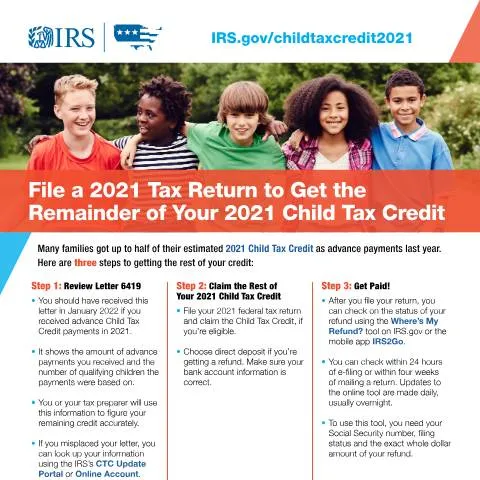
Filing your 2021 federal tax return entails several steps to claim the remainder of your Child Tax Credit, as outlined in Publication 5534G. Following these steps is essential for ensuring you receive the full credit to which you are entitled.
Step 1: Review Your Letter 6419
Before anything else, review your Letter 6419 thoroughly. This step is crucial for gathering accurate information, which will aid in your tax filing.
Step 2: File Your Federal Tax Return
When it comes time to file, ensure you:
- Complete Form 1040, ensuring you report the entire Child Tax Credit.
- Consult a tax preparer if necessary to navigate complexities.
- Opt for direct deposit to expedite your refund process.
Step 3: Check the Status of Your Refund
After filing, the final step is to track your refund. Utilize the “Where’s My Refund?” tool offered by the IRS to monitor your refund's progress, which updates daily. You will need:
- Your Social Security number
- Your filing status
- The exact amount of your refund
Who Benefits from the Child Tax Credit?
Publication 5534G is relevant to a broad range of taxpayers, but specific profiles may need to take additional considerations into account:
Eligibility Considerations
| Profile | Eligibility Criteria |
|---|---|
| Single Parents | Must take into account dependency exemptions and residency requirements. |
| Married Couples | Both spouses must meet income thresholds to qualify. |
| Grandparents or Guardians | Can claim the credit if they provide primary care and support for qualifying children. |
Understanding these profiles is vital for ensuring that the application is filed correctly and that all eligible parties receive their entitled benefits.
Common Pitfalls in Filing
Despite the straightforward nature of the process, several common pitfalls can hinder your ability to claim the Child Tax Credit effectively. Publication 5534G provides guidance to help avoid these mistakes.
Potential Errors to Watch For
- Incorrect Information: Inputting wrong figures from Letter 6419 can lead to a rejection or delay in your refund.
- Missing Children: Failure to list all qualifying children can reduce the total credit amount.
- Filing Late: Adhering to the IRS tax filing deadline, usually April 15, is crucial for timely credit claims.
Resolving these issues before submission will ensure a smoother process and minimize delays.
Consequences of Errors and Next Steps
In case of errors or missing pieces, it's essential to know how to rectify the situation. Publication 5534G outlines next steps for handling common scenarios.
What to Do If Your Return Is Rejected
If your tax return is rejected, you will receive a notification from the IRS detailing the reasons for rejection. Here’s how to respond:
- Review the rejection notice carefully to understand the issue.
- Correct the errors noted by the IRS.
- Resubmit your tax return, ensuring all corrected information is accurate.
Dealing with Missing Documentation
In the event you cannot locate a necessary document, such as Letter 6419, utilize the IRS online tools to remedy the situation quickly. Accessing the IRS CTC Update Portal or your Online Account can provide the necessary information without delay.
Timelines and Deadlines: What You Need to Know
Understanding the fiscal calendar is crucial for maximizing your benefits. Publication 5534G outlines important dates related to the Child Tax Credit:
Key Dates to Remember
| Date | Event |
|---|---|
| January 2022 | Letter 6419 should be received by all eligible families. |
| April 15, 2022 | Deadline for filing your 2021 federal tax return. |
| October 15, 2022 | Extended deadline for tax filing with an approved extension. |
Missing these deadlines can result in lost credits or delayed refunds, so it’s vital to be proactive in your approach to filing.
Clarifying the Purpose of Publication 5534G Against Similar Forms
Many taxpayers may confuse Publication 5534G with other IRS documents, but it is important to discern its specific purpose. Unlike general forms, this publication focuses specifically on the nuances of the Child Tax Credit related to 2021 tax filings.
Key Distinctions
- IRS Form 1040: This is the actual tax return form all individuals must complete, while Publication 5534G provides guidance specific to claiming the Child Tax Credit.
- IRS Form 8862: This form applies to those who need to claim the Earned Income Tax Credit after prior disallowance, not the Child Tax Credit.
- Publication 972: Focuses on Child Tax Credit claims but does not specifically address the advance payments or the specific steps outlined in Publication 5534G.
Clarifying these differences ensures that individuals use the correct resources when filing their taxes and claiming credits.
Final Thoughts on Maximizing Your Child Tax Credit
In navigating the complexities associated with the Child Tax Credit, IRS Publication 5534G serves as an invaluable guide. By understanding its contents, correctly interpreting Letter 6419, and adhering to timelines and procedures, families can maximize their tax refunds and secure the financial relief intended by this federal program.
As the deadline approaches, ensure that you take the necessary actions outlined in this publication to claim your rightful credits and avoid common pitfalls. Every eligible dollar matters, and being informed is your best tool for financial success.
Understanding IRS Publication 5534G: A Comprehensive Overview
IRS Publication 5534G offers essential insights into the regulations governing certain deductions and credits available to taxpayers. This publication is particularly important for those engaging in specific business activities, as it provides the detailed rules and guidelines necessary for compliance with federal laws. Taxpayers must be aware of the context in which these deductions apply, including the nature of their business and the eligibility criteria outlined in the publication. One of the key elements to understand is how these deductions interact with the larger framework of tax obligations imposed by the IRS.
For instance, the publication outlines the scenarios under which a taxpayer may claim a deduction for business-related expenses. Specific case studies, such as the treatment of travel expenses, can clarify how to properly allocate expenses between business and personal use. Taxpayers are encouraged to maintain meticulous records to substantiate claims made on their returns, as failure to do so could lead to disallowed deductions and potential penalties.
In addition to general business expense guidelines, IRS Publication 5534G also touches on the nuances of applying for tax credits that are contingent upon specific business activities. For example, businesses engaged in energy-efficient improvements may qualify for credits that can significantly reduce their tax burden. Taxpayers should also keep abreast of annual changes to these credits, as eligibility criteria and amounts can shift based on new tax legislation or IRS updates.
Navigating the Appeals Process: What to Do If You Disagree With IRS Publication 5534G Guidelines
If a taxpayer finds themselves in a disagreement with the IRS regarding the interpretation of guidelines set forth in Publication 5534G, understanding the appeals process is crucial. The IRS provides a structured framework for contesting determinations and seeking a resolution. A taxpayer can begin this process by filing a formal appeal, which typically involves submitting Form 9423, Request for Appeals Review.
Upon filing the appeal, it's important for taxpayers to prepare thoroughly by gathering supporting documentation that addresses the points of contention. This documentation should clearly align with the criteria outlined in Publication 5534G and include any relevant correspondence with the IRS. The appeals process can vary in duration; however, the IRS aims to resolve appeals promptly to promote fairness and transparency.
Taxpayers should be aware that the appeals process is not exclusive to federal tax matters; state tax authorities may also have separate guidelines on contesting tax assessments. Consequently, it is advisable to consult with a tax professional familiar with both federal and state regulations to develop a comprehensive strategy for resolving disputes.
Recent Changes and Implications for Taxpayers: Staying Updated with IRS Publication 5534G
As with many IRS publications, IRS Publication 5534G is subject to periodic revisions to reflect changing tax laws and regulations. Keeping up to date with these changes is essential for all taxpayers—especially those operating in dynamic business environments. The IRS typically releases updates on its official website, and taxpayers should regularly check for any new versions of Publication 5534G or related bulletins that might affect their tax filings.
Recent amendments may include adjustments to the amounts taxpayers can deduct, new eligibility requirements for specific credits, or changes in the documentation necessary to substantiate claims. For instance, changes to the allowable business expense deductions may arise from new legislation aimed at stimulating economic growth or incentivizing environmentally friendly practices.
Additionally, taxpayers should consider how broader economic trends and IRS announcements can impact their tax strategy. For businesses, understanding the implications of Publication 5534G can lead to significant tax savings and optimized financial planning. Engaging with a tax professional who can provide tailored advice based on the latest updates can be especially beneficial for business owners navigating this complex landscape.