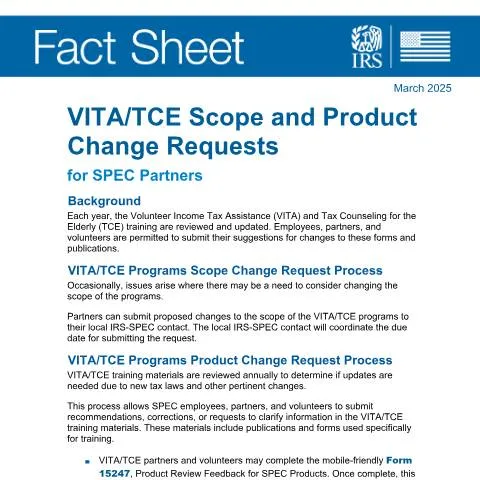
Deciphering IRS Publication 5395: A Vital Resource for VITA and TCE Programs
Tax time is an intricate dance of forms, regulations, and deadlines. For those involved in the Volunteer Income Tax Assistance (VITA) and Tax Counseling for the Elderly (TCE) programs, IRS Publication 5395 serves as a crucial guide. It's not just a document; it's a living resource that evolves to incorporate changes in tax laws and best practices. Understanding this publication is essential for volunteers, partners, and IRS personnel involved in these programs. What lies within its pages? Let’s explore the intricacies of the VITA/TCE program scope and the product change request process.
The Evolution of VITA/TCE Training Resources
Every year, the IRS updates the training materials for VITA and TCE volunteers. These updates are critical as they reflect changes in tax legislation, new interpretations of existing laws, and enhancements in program delivery methods. The evolution of IRS Publication 5395 is a response to these dynamic needs, ensuring that training is relevant and effective.
The Role of Stakeholders in Revisions
IRS Publication 5395 empowers stakeholders—whether they be employees, partners, or volunteers—to submit suggestions for changes. This inclusive approach ensures that the publication remains aligned with ground realities and user experiences. Stakeholders can provide feedback through various channels, including direct contact with local IRS-SPEC representatives.
- Feedback Mechanism: Suggestions can be made for both scope and product changes.
- Annual Review: Each year, the training materials undergo a rigorous review process to incorporate necessary updates.
Navigating the VITA/TCE Programs Scope Change Request
The VITA and TCE programs are designed to assist specific populations in understanding and filing their tax returns. However, as demographic and societal needs evolve, so too must the programs. The scope change request process allows for this adaptability.
Process Overview
Partners can initiate a scope change request by contacting their local IRS-SPEC representative. This step is vital for ensuring that the needs of the community are reflected in the services provided.
- Identify the need for a scope change based on community needs or feedback.
- Contact the local IRS-SPEC representative to discuss the intended change.
- Submit the formal request, adhering to any specified due dates provided by the IRS-SPEC contact.
How to Effectively Submit Product Change Requests
With the ever-changing landscape of tax law, the need for precise and accurate training materials has never been more critical. This is where the product change request process comes into play.
Steps for Submission
The product change request process is straightforward, yet requires diligence and attention to detail:
- Eligibility: Any volunteer or partner involved in the VITA/TCE programs is eligible to submit a request.
- Using Form 15247: Volunteers can complete a mobile-friendly version of Form 15247, which is designed for ease of use.
- Alternative Submission: If preferred, a PDF version can be downloaded or requested from the IRS-SPEC contact.
Once the form is completed, it should be routed to the SPEC Products, Systems & Analysis group for processing. This systematic approach ensures that all requests are logged, reviewed, and addressed accordingly.
Detailed Breakdown of Form 15247
Understanding the nuances of Form 15247 is vital for ensuring that submissions are accurate and meet IRS standards. This form is not merely a request; it encapsulates valuable insights and suggestions for improvement.
Key Sections of Form 15247
| Section | Description | Common Pitfalls |
|---|---|---|
| Contact Information | Details about the person submitting the request. | Omitting critical contact details can lead to delays. |
| Change Request Details | Specific changes being proposed for the VITA/TCE training materials. | Being too vague can result in rejection. |
| Justification for Change | Rationale behind the requested change. | Insufficient justification can diminish the likelihood of approval. |
Understanding the Implications of Changes in VITA/TCE
Changes in the VITA/TCE programs can have wide-reaching implications for both volunteers and the communities they serve. A well-informed volunteer is better equipped to provide valuable assistance to taxpayers, particularly those who may be elderly or underserved.
Benefits of Timely Updates
When the IRS updates training materials and forms, the benefits can be multi-faceted:
- Enhanced accuracy in tax preparation for clients.
- Improved volunteer confidence in navigating complex tax issues.
- Better alignment with current tax laws, reducing the risk of errors.
Connecting IRS Publication 5395 with Broader Tax Assistance Initiatives
IRS Publication 5395 does not exist in a vacuum. It is part of a broader ecosystem of tax assistance programs aimed at providing essential support to taxpayers.
Integration with Other IRS Resources
Understanding how IRS Publication 5395 fits into the larger framework of IRS resources involves recognizing the connections with other publications and tools:
- Complementary Publications: Other IRS publications that focus on specific tax topics enhance the overall understanding of tax-related issues.
- Online Resources: Digital tools and online training sessions that support VITA/TCE volunteers.
Stay Informed: Tracking Changes and Updates
As a volunteer or partner in VITA/TCE, keeping abreast of modifications to IRS Publication 5395 is essential. The IRS regularly updates its materials based on changing laws and feedback from the field, making vigilance crucial.
How to Stay Updated
To ensure that you are always working with the most current information:
- Regularly check the IRS website, particularly the VITA/TCE sections.
- Participate in training sessions that highlight the latest changes.
- Engage with fellow volunteers and share updates and insights.
In the world of tax assistance, IRS Publication 5395 stands as a testament to the IRS's commitment to adapting and refining its programs to meet the needs of the communities it serves. By understanding and utilizing this publication effectively, volunteers, partners, and IRS personnel can enhance their contributions to the VITA and TCE programs, ensuring a more informed and supportive experience for all taxpayers.
Understanding IRS Publication 5395: Key Highlights and Implications
IRS Publication 5395 offers a comprehensive guide on various tax considerations for individuals and businesses, particularly focusing on tax-exempt organizations. Aimed at both tax professionals and taxpayers alike, this publication clarifies the rules and regulations surrounding tax exemption under Section 501(c)(3) of the Internal Revenue Code (IRC). One significant aspect covered is the distinction between public charities and private foundations. By understanding these classifications, organizations can navigate their compliance requirements more effectively. Furthermore, the publication elaborates on the reporting obligations that these entities must fulfill, detailing the specific forms, such as Form 990, they need to submit annually to maintain their tax-exempt status.
Specific Reporting Requirements for Tax-Exempt Organizations
Organizations classified under the tax-exempt designation must adhere to stringent reporting requirements as outlined in IRS Publication 5395. The publication stipulates that organizations must file the Form 990, which is essential for ensuring transparency and accountability. This form requires comprehensive disclosures, including financial statements, governance structures, and operational details. The type of Form 990 to be filed varies based on the organization’s annual gross receipts and total assets. For example, organizations with gross receipts under $50,000 may file Form 990-N, also known as the e-Postcard, while larger entities would file either Form 990 or Form 990-EZ.
Additionally, IRS Publication 5395 emphasizes the importance of accurate record-keeping, which includes maintaining receipts, bank statements, and any documentation that supports income and expenses reported on these forms. Organizations must not only prepare these reports but also ensure that they are filed by the respective deadlines, typically the 15th day of the 5th month after the end of the organization’s tax year, to avoid penalties and possible loss of tax-exempt status.
Implications of Non-Compliance with IRS Guidelines
Failure to comply with the guidelines set forth in IRS Publication 5395 can lead to significant repercussions for tax-exempt organizations. Non-compliance may result in penalties, the revocation of tax-exempt status, and possible back taxes owed. The IRS may impose automatic penalties for failing to file the required Form 990, which can escalate depending on the number of days the form is overdue. Moreover, if an organization fails to file for three consecutive years, it risks losing its tax-exempt status altogether.
Organizations should also be aware of the potential for increased scrutiny and audits from the IRS if discrepancies are found in their filings. Maintaining compliance is not just about avoiding penalties; it enhances an organization’s credibility and trustworthiness in the eyes of donors, stakeholders, and the general public. By adhering to the guidelines in Publication 5395, organizations can ensure not only their financial legitimacy but also their ongoing eligibility for grants and funding opportunities.