Understanding IRS Publication 5327: A Crucial Resource for Employers
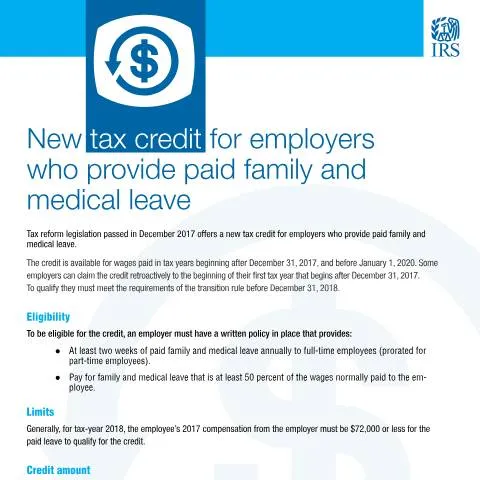
IRS Publication 5327 is designed to provide essential guidance to employers navigating the complexities of tax credits related to paid family and medical leave. This publication details the specifics of a new tax incentive aimed at encouraging employers to support their employees during critical life events.
The Tax Credit Landscape: Why IRS Publication 5327 Matters
In the wake of tax reform legislation passed in December 2017, the IRS introduced a tax credit for employers offering paid family and medical leave. This initiative is not merely a regulatory formality; it aims to bolster employee welfare while providing financial relief to businesses that prioritize family health.
Employers who comply with the guidelines outlined in Publication 5327 can significantly benefit from this credit. It creates a dual advantage: supporting employees during crucial times and enhancing the employer's bottom line.
Eligibility Criteria: Who Benefits?
To qualify for this tax credit, employers must meet specific requirements. Notably:
- A documented policy that ensures full-time employees are granted at least two weeks of paid family and medical leave each year.
- Part-time employees must receive prorated paid leave based on their hours worked.
- The compensation for family and medical leave must be at least 50% of the employee's regular wages.
Additionally, the employee's 2017 compensation must not exceed $72,000 for the paid leave to qualify for the credit during the 2018 tax year. This threshold is aimed at ensuring the credit reaches smaller to mid-sized businesses.
Breaking Down the Benefits: How Much Can Employers Claim?
The credit amount presented in IRS Publication 5327 is crucial for employers to understand. It ranges from 12.5% to 25% of the wages paid to qualifying employees during their leave. This percentage is directly linked to the employer's adherence to the outlined conditions, encouraging generous leave policies.
| Leave Payment Percentage | Credit Percentage |
|---|---|
| 50% of Employee Wages | 12.5% |
| Above 50% of Employee Wages | 25% |
This credit is not merely theoretical; it represents a tangible financial incentive that can help offset payroll costs, making it essential for businesses to familiarize themselves with the specifics of Publication 5327.
Preparing Documentation: What You Need to Gather
Employers must be diligent in preparing the necessary documentation to ensure compliance with IRS guidelines. Here are key documents to collect:
- Documented leave policies that outline the specifics of paid family and medical leave.
- Records of the employee's wages and hours worked to establish eligibility for the credit.
- Any communications with employees regarding leave entitlements.
Additionally, employers should maintain thorough records of all leave taken and the corresponding wages paid to employees during their leave to support the credit claim during tax time.
Special Circumstances: Navigating Unique Scenarios
While the guidelines are structured, there may be instances where special circumstances apply. For example:
- Part-Time Employees: Ensure that leave entitlements are prorated based on their hours.
- Seasonal Employees: Consider the time frame they worked within the year when calculated for leave credit.
- Contract Workers: They do not qualify for this credit, so clarity on employee status is crucial.
These variations necessitate careful examination of individual cases to ensure compliance and maximize the credit claim.
Filing Process: How to Submit for the Tax Credit
Once the necessary documentation is in order, employers need to understand how to file for the tax credit effectively. The IRS provides specific instructions on the process, which typically involves:
- Filling out the required forms meticulously, ensuring all information is accurate and complete.
- Submitting forms electronically through the IRS e-filing system or via traditional mail.
- Keeping copies of submitted forms for records and potential audits.
Filing online can expedite processing times, but employers should also consider the security and confidentiality of sensitive employee information when choosing their filing method.
What Happens After Filing? Understanding the Timeline
Compliance with the IRS Publication 5327 doesn't end with submission. Employers should be aware of the timeline associated with their filings:
- After submission, it may take the IRS several weeks to process the claims.
- Employers should monitor their tax account through the IRS portal to track the status of their claims.
- If discrepancies arise, the IRS will reach out for additional information, which must be promptly addressed.
Understanding this timeline allows businesses to plan financially, knowing when to expect credit disbursement.
Addressing Denials: What to Do If Your Claim Is Rejected
Despite careful preparation, employers may occasionally face denied claims. Common reasons for denial include:
- Insufficient documentation to prove compliance with eligibility requirements.
- Errors in reported employee wages or hours worked.
- Failure to meet the minimum leave requirements.
In the event of a denial, it is crucial to:
- Review the denial notice for specifics on what led to the rejection.
- Gather supporting documentation that addresses the issues raised.
- Submit a formal appeal to the IRS, providing a clear explanation and additional evidence to support the claim.
Staying proactive and responsive is vital to navigating the appeals process effectively.
Distinctive Features: Differentiating IRS Publication 5327 from Other Forms
It’s important to distinguish IRS Publication 5327 from other tax-related documents, as employers may confuse this publication with similar forms. Here’s what sets it apart:
| Document | Purpose |
|---|---|
| IRS Form 941 | Employers report income taxes, Social Security tax, or Medicare tax withheld from employee paychecks. |
| IRS Publication 5327 | Guidelines for employers to claim the tax credit for paid family and medical leave. |
| IRS Form 1040 | Individual taxpayers file their annual income tax returns. |
Understanding these distinctions ensures employers are utilizing the appropriate resources for their specific needs, maximizing their compliance and benefits.
Final Considerations: Staying Informed and Prepared
Employers are encouraged to stay updated on any changes regarding IRS Publication 5327 or related tax credits. The IRS regularly updates its guidelines to reflect current economic trends and societal needs. Regularly checking the official IRS website and subscribing to relevant newsletters can help businesses remain informed.
Moreover, consulting with tax professionals or legal advisors can provide tailored advice that aligns with a company's specific operational framework and enhance compliance with IRS regulations. By taking proactive steps, employers can better position themselves to leverage the benefits of IRS Publication 5327 effectively.