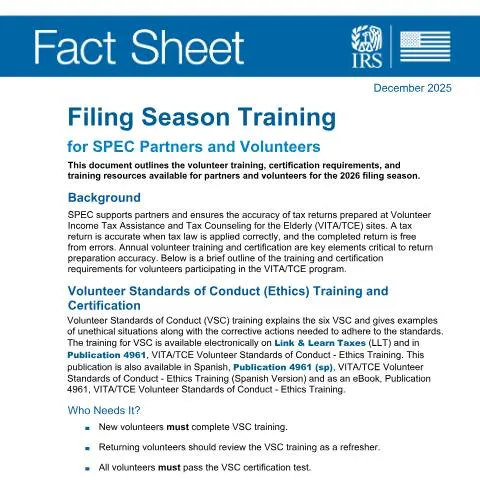
Navigating the Intricacies of IRS Publication 5325: A Vital Resource for Volunteer Training
As the annual tax filing season approaches, the importance of accurate tax return preparation cannot be overstated. IRS Publication 5325 serves as a critical guide, particularly for volunteers involved in the Volunteer Income Tax Assistance (VITA) and Tax Counseling for the Elderly (TCE) programs. This document outlines the essential training and certification requirements for volunteers who play a pivotal role in assisting taxpayers across the United States.
The Role of IRS Publication 5325 in the Volunteer Assistance Framework
IRS Publication 5325 is not merely a set of instructions; it is a cornerstone of the volunteer training ecosystem that the IRS has established. While the mission of VITA/TCE is to provide free tax preparation services to eligible individuals, the accuracy of these services hinges on well-trained volunteers. This publication is a roadmap that ensures volunteers understand their roles and adhere to ethical standards.
Every year, the IRS incorporates updates to address changing tax laws and improve the quality of training provided. Thus, Publication 5325 is crucial for maintaining the integrity of the tax preparation process.
Training Structure and Requirements
Volunteers involved in the VITA/TCE programs must undergo comprehensive training. The training is segmented into distinct areas to cover all necessary skills and knowledge:
- Volunteer Standards of Conduct (VSC) Training: This training emphasizes ethical practices and includes real-life examples of potential ethical dilemmas.
- Intake/Interview and Quality Review Training: Volunteers learn to effectively use the Form 13614-C, which is essential for gathering taxpayer information.
- Tax Law Training: This covers basic and advanced tax law topics, ensuring volunteers can handle various tax-related inquiries.
Who Should Engage with Publication 5325?
While the target audience is primarily volunteers, the implications of this publication extend to a broader circle, including:
- New Volunteers: Individuals who are just beginning their journey in tax assistance must complete all training sessions outlined in Publication 5325.
- Returning Volunteers: Experienced volunteers are encouraged to refresh their knowledge every year to stay updated with tax law changes.
- Site Coordinators: Those managing the VITA/TCE sites must also complete specific training to ensure site operations run smoothly.
Understanding the Ethical Framework: Volunteer Standards of Conduct
The ethical guidelines laid out in the VSC training are not just formalities; they are essential for fostering trust between volunteers and taxpayers. Volunteers learn about:
- Confidentiality: Protecting taxpayer information is paramount.
- Integrity: Upholding high standards of honesty in all interactions.
- Respect: Treating each taxpayer with dignity, regardless of their background.
The training provides scenarios that volunteers might encounter, preparing them for real-life situations where ethical judgment is essential.
Ethics Training Format
The ethics training is available in multiple formats, allowing for flexibility in learning:
- Online Training: Accessible through the IRS's Link & Learn Taxes (LLT), making it convenient for volunteers to learn at their own pace.
- Publication 4961: This resource is also available in Spanish, ensuring inclusivity for volunteers from diverse linguistic backgrounds.
Mastering the Intake Process: The Importance of Form 13614-C
Form 13614-C is a cornerstone document that volunteers use to conduct thorough interviews with taxpayers. Understanding how to maximize the effectiveness of this form is critical.
- Gathering Information: Volunteers are trained to extract all necessary information, including income sources, dependents, and potential deductions.
- Quality Review: Ensuring that the gathered data is accurate and complete to prevent errors in tax preparation.
This aspect of the training ensures that every taxpayer receives tailored assistance, which can significantly impact their tax experience.
Certification: A Key Component of Volunteer Preparedness
Passing the certification exams is non-negotiable for volunteers who wish to work in VITA/TCE programs. This ensures that all return preparers are adequately equipped with the necessary knowledge. The certification process includes:
- Passing the VSC certification test with a score of 80% or higher.
- Successfully completing the Intake/Interview and Quality Review certification test.
- Acquiring tax law certifications appropriate to the volunteer's role, such as Basic, Advanced, or specialized certifications for military or international tax.
Certification Levels and Their Importance
The various levels of tax law certification are designed to meet the diverse needs of taxpayers:
| Certification Level | Description | Prerequisites |
|---|---|---|
| Basic Tax Law Certification | For general tax preparation. | None |
| Advanced Tax Law Certification | Covers more complex tax issues. | Basic Tax Law Certification |
| Military Tax Law Certification | Specialized training for military tax issues. | Advanced Tax Law Certification |
| International Tax Law Certification | Focuses on taxation for international students or expatriates. | Advanced Tax Law Certification |
This structured approach to certification not only enhances volunteer confidence but also ensures that taxpayers receive high-quality assistance.
Future Implications and Preparing for Filing Season 2026
As the IRS prepares for the 2026 filing season, the role of volunteers becomes more crucial than ever. The expanding complexity of tax law necessitates continuous training and adaptation. IRS Publication 5325 will undergo further revisions to reflect any significant changes in tax legislation or IRS protocols.
Volunteers who remain engaged with the latest updates in this publication will be better equipped to assist the public, ensuring a smoother tax filing experience for all involved.
Conclusion: The Broader Impact of Volunteer Training
In the grand scheme of tax preparation, IRS Publication 5325 is more than just a guide for volunteers; it is a vital tool that enhances the overall integrity of the tax system. By equipping volunteers with the knowledge and ethical standards required, the IRS ensures that taxpayer trust is upheld and that services provided are beneficial to those in need. As volunteers prepare to engage with the upcoming filing season, their commitment to excellence reflects not only on their individual capabilities but also on the broader mission of the IRS and its partners.
Understanding the Importance of IRS Publication 5325 for Tax Professionals
IRS Publication 5325 provides critical insights for tax professionals who assist clients with the complexities of tax regulations surrounding disallowed credits, particularly in relation to claims for refunds. This publication serves as a guide not just for tax preparers, but also for those engaged in tax litigation or any advisory roles that involve navigating the intricate web of tax credits that the IRS deems ineligible under certain conditions.
One significant aspect covered in Publication 5325 is the overview of various credits—such as the Earned Income Tax Credit and the Child Tax Credit—and the documentation required to substantiate claims. Tax professionals must keep abreast of any changes made to these credits each tax year, as regulations, limits, and eligibility criteria can shift. The publication emphasizes the necessity of having thorough documentation to back up any claims made by clients. This ensures not only compliance with IRS rules but also provides a safety net in case of audits.
Furthermore, Publication 5325 outlines procedural guidelines for handling disputes regarding disallowed credits. Tax professionals must understand the avenues available for clients to appeal IRS decisions, including the Tax Court process, which can be quite intricate. Navigating these procedures requires a firm grasp of both the IRS regulations and the nuances of tax law, underscoring the importance of staying informed about updates in federal tax laws and IRS guidelines.
Navigating Changes in Tax Legislation and Their Impacts on IRS Publication 5325
The tax landscape is far from static, and IRS Publication 5325 is frequently updated to reflect changes in federal tax legislation. Taxpayers and professionals alike must remain vigilant about understanding how these legislative shifts affect tax credits and overall tax liability. For instance, adjustments to the tax code, such as the introduction or alteration of credits, can have direct implications for the information outlined in Publication 5325.
In recent years, legislation aimed at economic recovery and social support has introduced new credits or modified existing ones. For example, COVID-19 relief measures expanded certain tax benefits, and understanding these changes is vital for both tax preparers and taxpayers. Clients may expect their tax professionals to be well-versed in these shifts, which is where a thorough knowledge of IRS Publication 5325 becomes invaluable. It acts as a primer for understanding eligibility and claiming processes, ensuring that clients do not miss out on beneficial credits they may qualify for.
Moreover, tax professionals should also be aware of the implications of state-level legislation, as many states have their own versions of tax credits that might intersect with federal guidelines outlined in Publication 5325. These nuances can complicate clients' financial situations, particularly for those who live in states with unique tax laws. Keeping abreast of both federal and state requirements ensures comprehensive advice can be provided to clients, minimizing potential pitfalls.
Common Pitfalls to Avoid When Applying Information from IRS Publication 5325
While IRS Publication 5325 is a valuable resource, there are common pitfalls that both tax professionals and taxpayers may encounter when engaging with its content. One frequent error is over-reliance on outdated versions of the publication. Given that IRS guidelines can change, using an older version might result in missed updates or inaccuracies in the claims process.
Another pitfall is a misunderstanding of eligibility requirements for various credits. Each credit has specific stipulations regarding who qualifies, and failing to review these criteria can lead to disallowed claims. For instance, the qualifications for the Child Tax Credit are very specific and can vary significantly from year to year. Tax professionals must carefully review the current year's publication to ensure that their clients meet the necessary requirements.
In addition, some taxpayers may assume that filing for a credit is a straightforward process without acknowledging the documentation and substantiation requirements that come with it. The IRS requires thorough records, including income verification, family structure, and residency status, which must be meticulously compiled and submitted with the tax return. Failing to provide adequate documentation can lead to the denial of credits after submission, resulting in delays in refunds and potential penalties.
Furthermore, it is crucial to recognize the significance of timelines associated with filing claims for credits. Taxpayers often overlook deadlines for amending returns or filing claims for credits that could be beneficial. Understanding the specific deadlines that align with IRS Publication 5325 can help prevent missed opportunities.