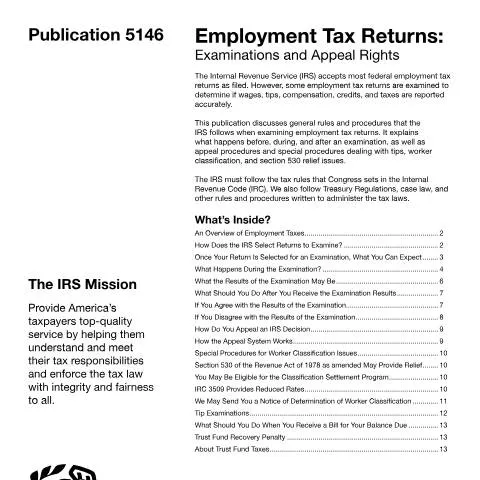
Understanding IRS Publication 5146: A Key to Navigating Employment Taxes
When it comes to managing employment taxes, clarity and proper understanding of the necessary regulations are crucial for both employers and employees. IRS Publication 5146 serves as an essential guide, providing comprehensive information about employment tax returns, the examination process, and the rights of taxpayers. This document is particularly important in the context of audits and examinations, which can have significant implications for businesses. Here's an in-depth look at what Publication 5146 entails, how it can be navigated, and what to expect in various scenarios.
The Purpose and Relevance of Publication 5146
Publication 5146 outlines the processes the IRS follows regarding employment tax returns, particularly focusing on what occurs when these returns are selected for examination. Many individuals assume that all tax returns are straightforward, but the IRS employs rigorous examination protocols designed to ensure accuracy in reported wages, tips, and taxes. Understanding this publication is vital for employers, as it impacts their compliance and potential liabilities.
Who Needs to Refer to This Publication?
- Employers filing employment tax returns
- Tax professionals assisting clients with employment taxes
- Business owners undergoing audits or examinations by the IRS
- Any taxpayer who wants to understand their rights during the examination process
Delving into the Examination Process: How Returns are Selected
One of the most critical components of IRS Publication 5146 is its explanation of how the IRS selects returns for examination. The process isn't random; it's based on advanced algorithms and historical data analysis to identify discrepancies that may indicate underreporting or non-compliance. This section provides an outline of the selection methods used by the IRS.
Methods of Selection
| Method | Description |
|---|---|
| Computer Programs | Utilizes algorithms to flag returns with potentially incorrect amounts based on historical data and patterns. |
| Compliance Projects | Evaluates returns based on information from various compliance studies, external records, and media reports to identify potential discrepancies. |
It's important to note that being selected for examination does not automatically imply wrongdoing. It’s simply a process to ensure accurate reporting and compliance with federal tax laws.
What to Expect During the Examination
Once a return has been selected for examination, the taxpayer will experience a defined procedure that the IRS follows. Understanding this process can help mitigate anxiety and ensure that all parties are prepared for what lies ahead.
Initial Communication
The IRS will notify the taxpayer in writing that their return has been selected for examination. This notice typically outlines the reasons for the examination and provides details on how to proceed. It is crucial for the taxpayer to respond promptly and accurately to any requests for additional information or documentation.
Examination Process Steps
- Documentation Review: The IRS will request specific documents, including payroll records, tax returns, and any other relevant paperwork.
- Interview: The examiner may conduct an interview with the taxpayer or their representative to clarify any discrepancies and gather further information.
- Conclusion: Following the review and interviews, the IRS will come to a conclusion regarding the examination, which can range from confirming the original return to proposing adjustments.
Understanding the Outcomes of the Examination
What happens after the examination? The results can vary widely depending on the findings of the IRS. Understanding these outcomes is crucial for any taxpayer involved in the process.
Potential Results
- No Changes: The examination may confirm that the filed return is accurate, resulting in no additional tax liability.
- Additional Tax Owed: If discrepancies are found, taxpayers may be required to pay additional taxes based on the IRS's findings.
- Refund Issued: In some cases, the examination may reveal overpayment of taxes, leading to a refund.
What to Do After Receiving Examination Results
After the results of an examination are delivered, taxpayers have specific rights and responsibilities. Understanding these can help in making informed decisions moving forward.
If You Agree with the Results
Taxpayers who agree with the conclusions of the examination may simply sign off on the findings and make any necessary payments. This process includes:
- Reviewing the findings closely to ensure understanding
- Paying any additional owed tax promptly to avoid penalties
- Keeping a copy of the examination report for future reference
Disagreement with the Findings
If a taxpayer disagrees with the examination results, they have the right to appeal the decision. Initiating an appeal involves several steps:
- Requesting a Meeting: Taxpayers can request a meeting with the examiner to discuss discrepancies and attempt to resolve them amicably.
- Formal Appeal: If the discussions do not yield satisfactory results, taxpayers may file a formal appeal with the IRS.
Navigating the Appeal Process
Publication 5146 also outlines the procedures for appealing an IRS decision, an essential tool for taxpayers who find themselves at odds with the IRS's findings.
How to File an Appeal
When proceeding with an appeal, taxpayers should adhere to the following steps:
- Submit a written protest detailing the disagreement and reasons for the appeal.
- Provide supporting documentation that reinforces their case.
- File the appeal within the timeframe specified by the IRS to avoid losing the right to contest the decision.
The Appeal System: A Closer Look
| Stage | Description |
|---|---|
| Initial Review | The IRS will conduct a review of the appeal and the evidence provided. |
| Resolution Options | Options may include a conference with an appeals officer or a written agreement. |
| Final Determination | The IRS will issue a final determination regarding the appeal's outcome. |
Special Considerations: Worker Classification and Tips
In addition to standard examinations, Publication 5146 also addresses specific scenarios related to worker classification and tip examinations, which can complicate matters for employers.
Worker Classification Issues
Misclassification of workers can lead to significant tax liabilities. Employers must be diligent in classifying workers correctly as either employees or independent contractors. The publication outlines specific tests and criteria that can help determine the correct classification:
- Behavioral Control
- Financial Control
- Type of Relationship
Implications of Misclassification
Misclassifying workers can result in:
- Liability for unpaid taxes
- Potential penalties from the IRS
- Legal ramifications regarding labor laws
Conclusion: Staying Informed and Compliant
Publication 5146 is more than just a guide; it is a valuable resource for understanding the intricacies of employment tax examinations and appealing IRS decisions. By staying informed and proactive, employers and tax professionals can effectively navigate the complexities of employment taxes and minimize risks associated with tax compliance.
Whether you are preparing for an examination, dealing with the IRS's findings, or considering an appeal, familiarity with IRS Publication 5146 will empower you to make informed decisions that protect your interests and ensure compliance with federal tax laws.
Understanding the Importance of IRS Publication 5146
IRS Publication 5146 serves as a critical resource for taxpayers, providing invaluable information about nonresident aliens and their obligations under U.S. tax law. As a taxpayer, especially if you're navigating the complexities of tax obligations while residing outside the United States, understanding this publication can significantly impact compliance and financial strategy.
The publication details the intricacies of determining tax residency, types of income subject to taxation, and available deductions or credits. For instance, nonresident aliens might not be aware of specific exemptions or reductions applicable to their unique situations. This is where IRS Publication 5146 comes into play, clarifying definitions and offering guidance on filing requirements.
Moreover, understanding the nuances of IRS Publication 5146 is essential for preventing double taxation. The United States has tax treaties with numerous countries, and Publication 5146 outlines the implications of these treaties. Familiarity with these provisions can help taxpayers avoid paying taxes on the same income in two different jurisdictions.
Navigating Tax Treaties for Nonresident Aliens
One of the pivotal aspects of IRS Publication 5146 is its discussion on tax treaties, which play a significant role in shaping the tax liabilities of nonresident aliens. The United States has entered into numerous tax treaties with various countries to prevent double taxation and foster economic cooperation. These treaties often provide favorable tax rates or exemptions on certain types of income, such as dividends, interest, and royalties.
Nonresident aliens must understand how to leverage these treaties to minimize their tax burden. IRS Publication 5146 includes instructions on how to determine residency status, which is crucial because the benefits of treaties typically apply only to residents of the respective treaty countries. Furthermore, it outlines the procedures to claim tax treaty benefits, including the necessity to provide Form W-8BEN or other required documentation to withholding agents.
It's vital to note that tax treaties can vary significantly in their provisions and stipulations. Therefore, nonresident aliens should review the specific treaty relevant to their country of residence and understand its implications thoroughly. Ignoring these details could lead to unexpected tax liabilities or issues with compliance.
Common Challenges Faced by Nonresident Aliens and How to Overcome Them
Nonresident aliens often encounter several challenges when navigating U.S. tax obligations, and IRS Publication 5146 addresses many of these hurdles. One common issue is the complexity of reporting income earned from U.S. sources. Unlike residents, nonresident aliens are only taxed on their U.S.-sourced income, but determining what constitutes U.S. income can be perplexing.
Publication 5146 provides clarity on this matter, identifying various types of U.S.-sourced income, including wages, dividends, and rental income. It also highlights situations that could lead to misclassification of income and potential tax consequences. Nonresident aliens need to be diligent in accurately reporting their U.S. income to avoid penalties.
Another challenge is the potential for misunderstandings regarding eligibility for deductions and credits. Many nonresident aliens mistakenly believe they are entitled to the same deductions as U.S. residents. Publication 5146 outlines the limitations placed on nonresident aliens, emphasizing that while some deductions may be available, others are exclusively for residents. Understanding these distinctions is crucial for accurate tax reporting.
Additionally, nonresident aliens often grapple with filing requirements and deadlines. Publication 5146 stresses the importance of meeting the tax filing deadline, typically April 15, for the preceding tax year, and provides insights into extensions and penalties for late filing. Familiarizing oneself with the specific filing requirements can help mitigate the risk of unnecessary penalties.