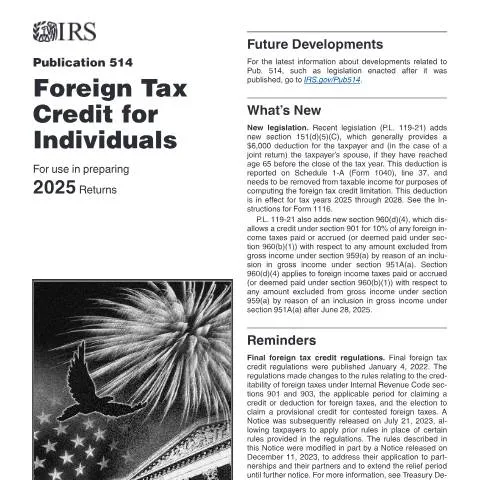
Navigating the Intricacies of IRS Publication 514: A Comprehensive Guide
Understanding the nuances of U.S. tax obligations can be a daunting task, particularly for those with international ties. Whether you are a U.S. citizen living abroad or a foreign national working in the United States, IRS Publication 514 offers critical information on the Foreign Tax Credit. This publication is essential for individuals who have paid taxes to a foreign government and want to avoid double taxation on their income. In this article, we will unravel the details of Publication 514, from its purpose to its importance in tax preparation.
Deciphering IRS Publication 514: Who Should Care?
IRS Publication 514 is designed for individuals who have foreign source income and have paid foreign taxes. The key stakeholders include:
- U.S. Citizens and Resident Aliens: Those who earn income internationally and are subject to U.S. tax laws.
- Foreign Nationals: Individuals working in the U.S. who may also owe taxes to their home countries.
- Tax Advisors: Professionals assisting clients in understanding their rights and obligations under U.S. tax law.
Understanding who this publication is for helps clarify its relevance and applicability to various scenarios. Below are some specific cases:
Examples of Individuals Impacted by Publication 514
- Expatriates: Americans living abroad who must file taxes both in the U.S. and their host countries.
- Foreign Workers: Non-U.S. residents earning income in the U.S. while also paying taxes in their home countries.
- Returning Citizens: U.S. citizens who have worked abroad and are returning home with foreign income.
What’s New in IRS Publication 514 for Filing Year 2025?
Legislative changes occur frequently, affecting how taxpayers compute their foreign tax credits. For the 2025 tax year, key updates include:
- New Deduction for Seniors: A $6,000 deduction is now available for individuals aged 65 and older, applicable when filing a joint tax return.
- Changes to Foreign Tax Credit Regulations: Final regulations released in early 2022 have altered how foreign taxes are credited under IRC sections 901 and 903.
Staying informed about these adjustments is crucial for taxpayers to maximize their credits and deductions. For the most current information, the IRS recommends visiting IRS.gov/Pub514.
Essential Steps for Completing Publication 514
Filing your taxes using Publication 514 involves a careful process to ensure compliance and maximize your benefits. Here’s a roadmap to guide you:
Step 1: Determine Eligibility for Foreign Tax Credit
To qualify for the foreign tax credit, you must:
- Have income from abroad that is subject to U.S. taxation.
- Pay foreign taxes that are considered “qualified” for credit purposes.
Step 2: Choose Between Credit or Deduction
Taxpayers must decide whether to take the foreign taxes as a credit or as a deduction. Taking it as a credit usually provides a more favorable tax outcome as it directly reduces tax liability.
Step 3: Fill Out Form 1116
Form 1116 is essential for claiming the foreign tax credit. Ensure that:
- You list all foreign taxes paid or accrued.
- You provide details about the foreign income sourced.
- You take note of any limitations on the credit that apply based on your overall income and tax liability.
Step 4: Submit Your Tax Return
Once Form 1116 is completed, attach it to your Form 1040 during the filing process. The deadline for filing your taxes is typically April 15 of the following year, unless you apply for an extension.
What to Do If You Encounter Issues: Refusals and Errors
Errors can happen during the filing process, whether due to missing information or misunderstandings about tax obligations. Here’s how to navigate these scenarios:
Common Issues and Resolutions
- Missing Documentation: If you fail to provide proof of foreign taxes paid, the IRS may deny your claim. Always keep records like foreign tax returns, receipts, or payment confirmations.
- Refusal of Credit: If your foreign tax credit is denied, you may appeal the decision. Gather all supporting documentation and file an appeal through the IRS appeals process.
- Incorrectly Reported Income: If you realize you've reported the wrong income or taxes, file an amended return using Form 1040-X as soon as possible.
Each of these issues emphasizes the importance of attention to detail and thorough documentation when dealing with tax matters involving foreign income.
Understanding Special Circumstances: International Tax Implications
When dealing with foreign taxes, certain unique circumstances can complicate the filing process. Below are some situations that may require special consideration:
Case 1: Non-Resident Aliens
Non-resident aliens may have different tax obligations than U.S. citizens. They might be exempt from certain taxes or eligible for different deductions. It is crucial for these taxpayers to consult the IRS guidelines specific to non-residents.
Case 2: Dual Taxation Treaties
The United States has tax treaties with many countries, which can influence your foreign tax credit eligibility. If you are a citizen of a country with a tax treaty, it’s essential to review its provisions carefully to determine the effects on your tax situation.
Case 3: Minors and Dependent Filers
Families with dependents earning foreign income may face additional complexities. Parents or guardians filing on behalf of minors must ensure that all foreign taxes paid are accurately represented to claim the appropriate credits.
A Timeline for Filing: When to Act and What to Expect
Understanding the timeline for filing taxes can help ensure you remain compliant with IRS regulations. Here’s a breakdown of key dates:
| Event | Date |
|---|---|
| Start of Tax Year | January 1 |
| Tax Filing Deadline | April 15 |
| Deadline for Requesting an Extension | April 15 |
| Extended Deadline | October 15 |
Understanding these dates helps to avoid penalties and ensures you have ample time to gather all necessary information and documentation.
Maximizing Your Benefits with IRS Publication 514
Utilizing IRS Publication 514 effectively can lead to significant tax savings for individuals with foreign income sources. Here are some practical tips to maximize your benefits:
1. Keep Diligent Records
Maintain thorough records of any foreign income and taxes paid. This documentation will be crucial when completing Form 1116 and supporting your claims.
2. Consult the IRS Resources
The IRS provides numerous resources and guidance documents that can clarify any ambiguities regarding foreign tax credits. Don't hesitate to reach out for assistance if needed.
3. Consider Professional Help
If your tax situation is complex, consider engaging a tax professional specializing in international taxation. They can provide tailored advice and ensure compliance with all applicable laws.
Understanding IRS Publication 514 is an essential component for those navigating foreign taxation. Armed with the right information and resources, taxpayers can effectively utilize the foreign tax credit to alleviate double taxation and optimize their tax outcomes.
Understanding IRS Publication 514: A Comprehensive Guide for Nonresident Aliens
IRS Publication 514 provides significant information for nonresident aliens who are dealing with taxation in the United States. Nonresident aliens must navigate a complex tax landscape that differs substantially from that of residents. This publication focuses primarily on the tax implications for nonresident aliens who receive income from U.S. sources and outlines the necessary forms and reporting requirements.
Nonresident aliens are required to file Form 1040-NR, the U.S. Nonresident Alien Income Tax Return, if they have any U.S.-sourced income. This includes wages, income from rental properties, and dividends. It's crucial to understand the distinction between nonresident and resident aliens, as the tax rates and deductions available can differ dramatically. For instance, nonresident aliens are typically subject to a flat tax rate on their U.S.-sourced income and may not be eligible for certain deductions that resident aliens can take advantage of.
Another critical aspect covered in Publication 514 is the concept of "effectively connected income" (ECI). Nonresident aliens are taxed on ECI at graduated rates, much like U.S. citizens and resident aliens. However, income that is not effectively connected with a U.S. trade or business is usually taxed at a flat rate of 30%. Understanding which income falls under ECI is vital for nonresident aliens, as it can significantly affect their overall tax liability.
The publication also highlights several forms that nonresident aliens might need to file to claim exemptions or lower tax rates based on tax treaties between the U.S. and their home countries. For example, Form W-8BEN is often used to claim these treaty benefits, allowing nonresident aliens to avoid or reduce withholding tax on certain types of income. Nonresident aliens should consult the specific tax treaty with their country to determine eligibility.
Effective record-keeping is paramount for nonresident aliens to ensure compliance with IRS regulations. This includes maintaining accurate records of all U.S. income, any taxes withheld, and relevant forms submitted. Nonresident aliens must also stay informed about the renewal of their Individual Taxpayer Identification Number (ITIN), as this is crucial for tax filing purposes.
Common Misconceptions About Nonresident Alien Tax Obligations
Many nonresident aliens have misconceptions about their tax obligations in the United States, which can lead to compliance issues. One prevalent myth is that nonresident aliens do not have to file taxes at all if their income is below a certain threshold. However, even if their U.S.-sourced income falls below the filing requirement, nonresident aliens may still be required to file a tax return to report income and claim any allowable refunds, particularly if taxes have been withheld.
Another common misconception centers around the notion of tax treaties. Some nonresident aliens believe that simply having a tax treaty between their home country and the United States automatically exempts them from U.S. taxation. While tax treaties can provide significant benefits, they often come with specific conditions and stipulations that must be met. Nonresident aliens must read the terms of the treaty carefully and ensure that they comply with all requirements to claim any benefits.
Additionally, many nonresident aliens are unaware of the impact of their residency status on their tax obligations. For instance, those who are considered dual-status aliens – individuals who are a nonresident for part of the year and a resident for another part – face unique filing requirements. Dual-status aliens must file using both Form 1040 and Form 1040-NR, and specific rules apply to determine how income is reported and taxed. Understanding one’s residency status is crucial for ensuring proper compliance with IRS regulations.
Filing Extensions and Payment Plans for Nonresident Aliens
Nonresident aliens who find themselves unable to meet the April 15 filing deadline for Form 1040-NR have options available for obtaining an extension. By filing Form 4868, they can request an automatic six-month extension to file their tax return. However, it is essential to note that this extension only applies to the filing of the tax return and does not extend the time for paying any tax owed. Nonresident aliens should be aware that interest and penalties can accrue on any unpaid taxes from the original due date.
In instances where a nonresident alien cannot pay the full amount of taxes owed, the IRS offers payment plans. Nonresident aliens can apply for an installment agreement, allowing them to pay their tax liabilities over time. This can alleviate the financial burden of meeting a large, lump-sum payment. It is important to understand that applying for a payment plan can incur additional fees and that the terms of the agreement must be strictly adhered to avoid further penalties.
For nonresident aliens seeking assistance in navigating their tax obligations, the IRS provides several resources. The IRS website has extensive information, including FAQs, guides, and even IRS assistance lines that cater specifically to international tax matters. Seeking professional tax advice can also be beneficial, especially if there are complications regarding residency status or treaty benefits. Understanding the various options available for extensions and payment plans can help ensure compliance while minimizing potential penalties.