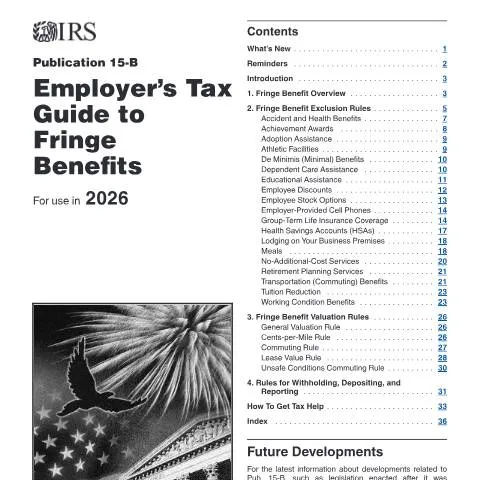
Understanding the Importance of IRS Publication 15-B in Employee Benefits Management
In the complex world of employee compensation, understanding the various tax implications of fringe benefits can often be overwhelming. IRS Publication 15-B serves as a crucial guide for employers seeking to navigate the intricacies of employee benefits taxation. This publication not only outlines the types of fringe benefits available but also specifies the rules for exclusion, valuation, and reporting, thereby playing an essential role in compliance and strategic planning for employers.
Who Should Reference IRS Publication 15-B?
While IRS Publication 15-B is primarily aimed at employers, it holds relevance for various stakeholders, including:
- Human Resources Professionals: They need to ensure compliance with tax regulations regarding employee benefits.
- Payroll Administrators: They rely on the publication for accurate withholding calculations and reporting.
- Business Owners: Understanding fringe benefits can assist in making informed compensation decisions that attract and retain talent.
- Tax Professionals: They use the publication to advise clients on the best practices regarding fringe benefits and to ensure compliance with IRS regulations.
A Step-by-Step Journey Through IRS Publication 15-B
To fully benefit from IRS Publication 15-B, users should follow these steps:
- Identify the Fringe Benefits Offered: Determine which fringe benefits your organization provides, such as health insurance, retirement planning, and educational assistance.
- Review the Exclusion Rules: Certain benefits may be excluded from taxable income. Familiarizing yourself with these exemptions is crucial for compliance.
- Understand Valuation Methods: Different benefits have distinct valuation approaches, impacting how they are reported to the IRS.
- Implement Withholding and Reporting Procedures: Establish processes for withholding taxes on fringe benefits and ensure accurate reporting on payroll forms.
- Stay Updated on Legislative Changes: Tax laws frequently change, making it essential to keep abreast of updates that may affect fringe benefits.
The Framework of IRS Publication 15-B: A Historical Perspective
The evolution of IRS Publication 15-B reflects broader trends in tax policy and employee benefits. Initially published as a straightforward resource for employers, it has grown to encompass a vast array of benefits and complex regulations. Understanding this historical context can help employers appreciate the publication’s importance:
- 1970s-1980s: The expansion of employee benefits led to the need for clearer tax guidelines.
- 1990s: The rise of Flexible Benefits Plans necessitated detailed regulations regarding the taxation of various fringe benefits.
- 2000s-Present: The ongoing changes in health care laws and tax reforms have further complicated benefit taxation, leading to the continuous revision of the publication.
Complex Situations: Special Cases to Consider
Employers often face unique challenges when administering fringe benefits. Here are several complex scenarios and how IRS Publication 15-B addresses them:
- Foreign Employees: Special rules apply to fringe benefits provided to foreign employees, requiring careful consideration of tax treaties.
- Dependent Care Benefits: Employers providing dependent care assistance must navigate specific exclusions and limits detailed in the publication.
- Executive Compensation: Certain fringe benefits given to executives may be subject to different tax rules, especially concerning valuation and reporting.
- Diverse Workforces: Organizations with a mix of full-time, part-time, and contract employees must ensure that benefit offerings comply with regulations across different employment types.
How to Effectively Use IRS Publication 15-B for Compliance
Employers must treat IRS Publication 15-B not just as a guideline but as an essential compliance tool. Here’s how to integrate it into your organizational framework:
- Conduct Regular Training: Equip HR and payroll teams with knowledge of the publication’s contents through regular training sessions.
- Review Benefits Annually: Reassess your fringe benefits package each year to ensure it aligns with IRS guidelines and employee needs.
- Create Detailed Policy Documents: Develop internal policies that reflect the guidelines set out in Publication 15-B for your employee benefits program.
- Utilize Technology: Implement payroll software that incorporates IRS regulations to automate withholding and reporting tasks.
Navigating the Timeline: Key Dates and Deadlines
Being aware of critical deadlines is essential for compliance regarding fringe benefits. Here’s a timeline of important dates:
| Event | Date |
|---|---|
| End of Current Fiscal Year | December 31 |
| IRS Tax Filing Deadline | April 15 |
| Start of Open Enrollment Period | Typically in October |
| Submission of Form W-2 | January 31 |
Monitoring these dates ensures timely compliance and avoids potential penalties.
Impact of Non-compliance: Consequences for Employers
Failing to adhere to the guidelines outlined in IRS Publication 15-B can lead to significant repercussions, including:
- Financial Penalties: The IRS may impose fines for discrepancies in reported fringe benefits.
- Back Taxes: Employers may owe back taxes if benefits are misclassified or improperly reported.
- Legal Consequences: Non-compliance can result in lawsuits from employees disputing their tax obligations.
- Reputational Damage: Maintaining compliance is crucial for a company’s reputation, affecting employee trust and engagement.
Conclusion: The Ongoing Relevance of IRS Publication 15-B
IRS Publication 15-B remains an indispensable resource for employers navigating the complexities of fringe benefits. By understanding its guidance, employers can ensure compliance, optimize their employee benefits programs, and ultimately foster a more engaged and satisfied workforce. Regular reference to this publication, staying updated with the latest changes, and implementing best practices will significantly enhance an organization’s ability to manage employee compensation effectively.
Understanding IRS Publication 15-B: Employer's Tax Guide to Fringe Benefits
IRS Publication 15-B provides essential guidance for employers on the tax implications of fringe benefits provided to employees. Fringe benefits can range from health insurance and retirement plans to more unconventional perks such as gym memberships and transportation allowances. It is crucial for employers to grasp the taxability of these benefits to ensure compliance with federal tax regulations and avoid potential penalties.
This publication outlines the various types of fringe benefits and explains which are taxable and which may be excluded from an employee's gross income. For instance, certain benefits such as qualified transportation fringe benefits and group-term life insurance may be exempt from taxation up to specific limits. Employers must be aware of these exemptions to accurately report employee compensation on Form W-2.
Employers can also find detailed information on reporting requirements for different types of fringe benefits. The IRS requires that taxable fringe benefits be reported on an employee's Form W-2 in Box 1, while nontaxable benefits may not need to be reported at all. Understanding these distinctions is crucial for accurate payroll processing, as misreporting can lead to issues with both employees and the IRS.
Practical Application: Calculating the Value of Fringe Benefits
Calculating the value of fringe benefits can be complex, particularly when benefits are provided that do not have a straightforward cash equivalent. For example, determining the fair market value of an employer-provided vehicle involves considering factors such as the vehicle's age, condition, and usage type. Employers must be diligent in documenting these valuations to support their calculations during IRS audits.
Another practical consideration is the valuation of employee discounts. If an employer provides a discount on merchandise or services, the IRS stipulates that the discount's value must be reported as income to the employee if it exceeds a certain threshold. Employers need to maintain transparent records of these discounts to ensure proper reporting and tax compliance.
Additionally, understanding how to treat fringe benefits provided to former employees can also present challenges. If a former employee receives a benefit such as health insurance coverage, specific tax rules apply regarding how to report these benefits. Employers should consult IRS guidance to navigate these nuances effectively.
Compliance Strategies for Employers: Staying Updated with IRS Regulations
Staying compliant with IRS regulations regarding fringe benefits is crucial for avoiding costly penalties. Employers should regularly review IRS publications and updates, as tax laws can change frequently. Subscribing to IRS newsletters and attending workshops can provide employers with the latest information on tax obligations and updates to fringe benefit regulations.
Employers might also consider consulting with tax professionals or legal advisors specializing in employee benefits. These experts can provide tailored advice, ensuring that businesses remain compliant with the latest IRS guidelines. Regular training for payroll staff on fringe benefits can also enhance compliance efforts, as staff will be better equipped to handle complexities associated with employee compensation.
Additionally, employing technology solutions such as payroll software that automatically updates with the latest IRS regulations can simplify the management of fringe benefits. Such tools can significantly reduce the risk of human error in calculations and reporting, ultimately leading to greater compliance and employee satisfaction.