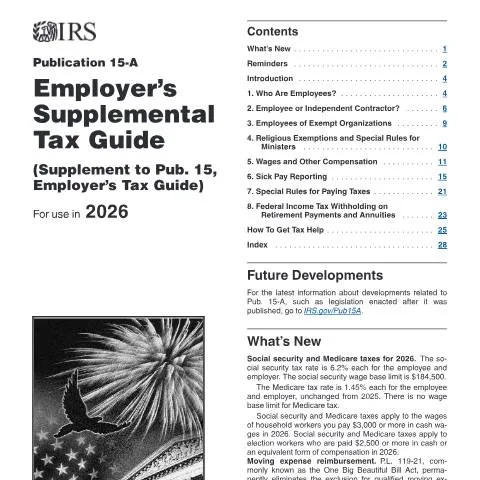
Understanding IRS Publication 15-A: A Key Resource for Employers
In the dynamic landscape of tax regulations, IRS Publication 15-A stands as an essential guide for employers navigating the complexities of payroll taxes and employee compensation. This publication is often seen as an extension of the fundamental Pub. 15, which provides a broader overview of employer tax responsibilities. However, Publication 15-A dives deeper into specific nuances, clarifying obligations that may arise for employers in varied circumstances. Whether you’re a seasoned business owner or a new employer, understanding the intricacies of this publication can streamline your payroll process and enhance compliance with federal tax regulations.
Navigating the Sections: What's Inside Publication 15-A?
IRS Publication 15-A is a detailed document that covers numerous aspects of employer tax compliance. It is structured into various sections, each addressing different facets of employee management and tax responsibilities. Here is an overview of key sections you’ll encounter:
- Who Are Employees? - This section defines who qualifies as an employee under tax laws, distinguishing them from independent contractors.
- Employee or Independent Contractor? - Understanding this distinction is crucial for tax obligations and benefits.
- Employees of Exempt Organizations - Special considerations for employees of organizations that may be exempt from certain taxes.
- Wages and Other Compensation - Guidelines on what constitutes taxable wages and how to report them.
- Sick Pay Reporting - How to handle tax implications for sick pay provided to employees.
Key Updates for 2026
As with every tax year, there are updates and changes that employers must be aware of. For 2026, the IRS has provided several important reminders:
- Social Security and Medicare tax rates remain at 6.2% for Social Security and 1.45% for Medicare for both employees and employers.
- The Social Security wage base limit is set at $184,500.
- New regulations concerning moving expense reimbursements, specifically for U.S. Armed Forces members, have been enacted.
Who Must File and When? Essential Deadlines
Publication 15-A is not just informational; it serves as a guide for compliance, stipulating who must adhere to its guidelines and the timelines involved. The primary responsibility for filing falls on employers who have employees subject to federal income tax withholding.
The typical deadline for Federal Employment Tax returns, including Form 941 (Employer’s Quarterly Federal Tax Return), is the last day of the month following the end of the quarter. However, employers should also be cognizant of specific scenarios that may alter their filing deadlines, such as:
- Seasonal Employees: Employers may need to adjust based on the employment timeline of seasonal workers.
- Out-of-State Employees: Different regulations may apply if you hire employees from other states.
- New Business Owners: Understanding your obligations during your first tax year can be critical.
Completing the Forms: Step-by-Step Guidance
Completion of the relevant forms, as outlined in Publication 15-A, should be approached with care. The forms required depend on the specific circumstances of the employer and employee. Here’s a breakdown of the essential components for various sections of Publication 15-A:
Identifying Employees vs. Independent Contractors
One of the crucial determinations you must make is whether your worker is classified as an employee or an independent contractor. This classification affects tax withholding and employer obligations greatly. The IRS employs a series of tests, including:
- Behavioral Control: Are you controlling how the work is performed?
- Financial Control: Do you provide significant investment in tools or resources?
- Type of Relationship: Are there written contracts or employee benefits?
Utilizing the IRS guidelines will help you ascertain the correct classification, thus preventing potential penalties.
Common Pitfalls and How to Avoid Them
While filling out forms in accordance with Publication 15-A, there are common mistakes employers make. Being aware of these can save you time and resources:
- Incorrect Reporting of Wages: Ensure that all taxable wages are accurately reported, including bonuses, overtime, and commissions.
- Failure to Withhold Proper Taxes: Verify that you’re withholding the correct amount for federal and state taxes.
- Reporting Sick Pay Incorrectly: Understand the distinctions in sick pay reporting to avoid misclassification.
What Happens After Filing? Understanding the Process
Once you have filed your forms, it's essential to know what steps to take next. Publication 15-A provides insights into the post-filing process:
Receiving Confirmation and Keeping Records
After submitting your forms, the IRS will process your return. It’s crucial to keep detailed records of all filings:
- Maintain copies of all filed forms for at least three years after the due date.
- Record any communication with the IRS related to your tax filings.
- Track payments made and the status of your filings through the IRS website.
Addressing Potential Issues: Errors and Corrections
In the event of discrepancies or errors in your filings, it’s vital to act quickly. The IRS provides guidance on how to address these situations:
- File Form 941-X to correct any errors made on Form 941.
- If notified by the IRS of any issues, respond promptly to avoid penalties.
- Maintain open communication with the IRS to clarify any misunderstandings.
The Importance of Staying Updated: Regular Revisions
IRS regulations and guidelines are not static. Each year brings changes that can affect how employers handle payroll and taxes. Keeping abreast of updates is crucial. Here are strategic steps to stay informed:
- Regularly visit the IRS.gov website for the latest publications and updates.
- Join forums or groups where tax professionals discuss implications of recent changes.
- Consider engaging a tax professional who specializes in employment taxes for personalized advice.
Staying informed will ensure that you comply with the latest regulations and avoid costly mistakes.
Unique Aspects of Publication 15-A Compared to Other IRS Forms
Publication 15-A may be often confused with other IRS documents, such as Pub. 15 or Form W-2. Understanding the distinctions is key for proper compliance:
| Publication/Form | Purpose | Who It Affects |
|---|---|---|
| Publication 15 | General employer tax guide | All employers |
| Publication 15-A | Supplemental tax guidance for payroll | Employers with complex payroll situations or specific employee types |
| Form W-2 | Annual wage and tax statement | Employees receiving wages |
Conclusion: Elevating Payroll Compliance with IRS Publication 15-A
Employers who effectively utilize IRS Publication 15-A as part of their payroll management strategy can navigate the complex tax landscape with confidence. By understanding the publication’s content, knowing how to accurately complete necessary forms, and staying updated on changes in tax laws, employers can minimize their risk of non-compliance and optimize their operational efficiency. This proactive approach not only safeguards against potential fines but also contributes to a more structured and organized payroll system, ultimately benefiting both employers and employees alike.
Understanding IRS Publication 15-A: Employee's Supplement
IRS Publication 15-A, also known as the "Employer's Supplemental Tax Guide," provides essential information for employers in understanding the various tax responsibilities that come with hiring employees. This publication is particularly crucial for businesses that are new to the employment landscape and may be unfamiliar with the intricacies of payroll tax obligations.
One of the key components outlined in Publication 15-A is the distinction between different types of workers. Employers must classify their workers correctly to determine their tax liabilities. This includes understanding the difference between employees and independent contractors, as misclassification can lead to significant penalties from the IRS. Employers should read the specific sections pertaining to worker classification to ensure compliance with the IRS guidelines.
Another important aspect covered in this publication is the various forms that employers need to file for their employees. For instance, Form W-4 is used by employees to indicate their tax withholding preferences. Employers must be aware of how to interpret these forms and adjust their payroll systems accordingly. Publication 15-A offers detailed instructions on how to handle these tax forms correctly, including any updates to withholding allowances or changes in tax rates that may come into effect.
Furthermore, the publication provides important guidelines on how employers should handle the payment of wages, including minimum wage laws and overtime pay regulations. Different states may have varying laws regarding minimum wage, so employers must ensure they comply with both federal and state regulations. Publication 15-A includes references to additional resources where employers can check their state’s specific requirements.
Key Tax Withholding Changes and Updates
Each year, the IRS updates its withholding tables, which can directly impact how much federal income tax is withheld from employee paychecks. Publication 15-A highlights these changes and their implications for both employers and employees. It's crucial for employers to stay informed about these updates, as they affect payroll processing and employee satisfaction.
For example, when the IRS revises the withholding tables based on adjustments for inflation or changes in tax law, employers must ensure that their payroll systems can accommodate these new rates. This might involve updating software, retraining payroll staff, or even communicating with employees about the changes. Publication 15-A provides a timeline and detailed instructions on when these changes take effect, allowing employers to adjust accordingly.
Additionally, Publication 15-A covers the implications of federal tax credits that may affect withholding. Employers should understand how to apply the Child Tax Credit and other credits that could impact employees' tax situations. Being knowledgeable about these credits can also facilitate better communication with employees, helping them to understand their withholdings and potentially improve employee morale.
Tax Filing and Reporting Responsibilities for Employers
Employers have numerous tax filing and reporting responsibilities that are outlined in IRS Publication 15-A. These obligations include not only withholding taxes from employee wages but also remitting those taxes to the IRS in a timely manner. For many employers, the failure to remit withheld taxes can result in severe penalties, including interest charges that can accumulate quickly.
Publication 15-A details the frequency with which employers must deposit withheld income taxes, Social Security taxes, and Medicare taxes. Typically, deposits are made either monthly or semi-weekly, depending on the employer's total tax liability. Employers need to calculate their deposit schedule correctly to avoid underpayment penalties and to ensure they remain compliant with federal regulations.
Moreover, the publication addresses the annual filing requirements for employers, including the need to complete and file Form 941 (Employer's Quarterly Federal Tax Return) and Form 940 (Employer's Annual Federal Unemployment Tax Return). These forms are crucial for reporting employment taxes and providing the IRS with information about employee wages and withholdings. Employers must be diligent in submitting these forms accurately and on time to prevent issues with the IRS.
Publication 15-A also emphasizes the importance of record-keeping. Employers must maintain sufficient records of their payroll and tax activities, including supporting documentation for any claims made on their tax returns. Good record-keeping practices not only help in case of an audit but also assist in resolving any discrepancies that may arise with the IRS.